↳
In-reply-to
»
The original twt is unavailable. It may have been edited or deleted, or is from an unknown or muted feed.
⤋ Read More
Also a “Publish who I follow” toggle: writes # follow = + # following = N into your feed like yarnd does. Off by default (it is your social graph 🤔), and only on the GitHub/Gitea backends for now where the app owns the feed file. twtd next 🤞
↳
In-reply-to
»
Next heat wave coming up?
⤋ Read More
@movq@www.uninformativ.de A mate showed me a graph reaching 40°C… :-O It’s going to be hell on earth.
Say hello to the Twtxt Social Graph 😅  #Twtxt #social #Graph
↳
In-reply-to
»
The original twt is unavailable. It may have been edited or deleted, or is from an unknown or muted feed.
⤋ Read More
you should see the new search engine stats page where I’ve added, spark lines, and time series graphs 👌
↳
In-reply-to
»
I disabled the compression of logs on my edge, which I'm hoping will fix the "instability" I see every now and again where my edge network just "falls off the face of the earth". Some folks don't really appreciate / understand this, but Disk I/O can kill your application(s) no matter what. I/O Wait is a real thing.
⤋ Read More
Great! Write a post about it, and twelve into details, providing graphs, or stats on how disk “I/O can kill your application(s) no matter what”.
Pretty happy with my zs-blog-template starter kit for creating and maintaining your own blog using zs 👌 Demo of what the starter kit looks like here – Basic features include:
- Clean layout & typography
- Chroma code highlighting (aligned to your site palette)
- Accessible copy-code button
- “On this page” collapsible TOC
- RSS, sitemap, robots
- Archives, tags, tag cloud
- Draft support (hidden from lists/feeds)
- Open Graph (OG) & Twitter card meta (default image + per-post overrides)
- Ready-to-use 404 page
As well as custom routes (redirects, rewrites, etc) to support canonical URLs or redirecting old URLs as well as new zs external command capability itself that now lets you do things like:
$ zs newpost
to help kick-start the creation of a new post with all the right “stuff”™ ready to go and then pop open your $EEDITOR 🤞
↳
In-reply-to
»
added opengraph to my blog :D https://bubblegum.girlonthemoon.xyz/articles/underground-soundcloud-remixes
⤋ Read More
@kat@yarn.girlonthemoon.xyz it is not showing for me, on a validator. Missing something?
↳
In-reply-to
»
i really wanna learn golang it looks fun and capable and i can read it kind of but every time i try it i'm immediately stuck on basic concepts like "what the fuck is a pointer" (this has been explained to me and i still don't get it). i did have types explained to me as like notes on code which makes sense a bit but i'm mostly lost on basic code concepts
⤋ Read More
@kat@yarn.girlonthemoon.xyz Pointers can be a bit tricky. I know it took me also quite some time to wrap my head around them. Let my try to explain. It’s a pretty simple, yet very powerful concept with many facets to it.
A pointer is an indirection. At a lower level, when you have some chunk of memory, you can have some actual values sitting in there, ready for direct use. A pointer, on the other hand, points to some other location where to look for the values one’s actually after. Following that pointer is also called dereferencing the pointer.
I can’t come up with a good real-world example, so this poor comparison has to do. It’s a bit like you have a book (the real value that is being pointed to) and an ISBN referencing that book (the pointer). So, instead of sending you all these many pages from that book, I could give you just a small tag containing the ISBN. With that small piece of information, you’re able to locate the book. Probably a copy of that book and that’s where this analogy falls apart.
In contrast to that flawed comparision, it’s actually the other way around. Many different pointers can point to the same value. But there are many books (values) and just one ISBN (pointer).
The pointer’s target might actually be another pointer. You typically then would follow both of them. There are no limits on how long your pointer chains can become.
One important property of pointers is that they can also point into nothingness, signalling a dead end. This is typically called a null pointer. Following such a null pointer calls for big trouble, it typically crashes your program. Hence, you must never follow any null pointer.
Pointers are important for example in linked lists, trees or graphs. Let’s look at a doubly linked list. One entry could be a triple consisting of (actual value, pointer to next entry, pointer to previous entry).
  _______________________
 /               ________\_______________
↓               ↓         |              \
+---+---+---+   +---+---+-|-+   +---+---+-|-+
| 7 | n | x |   | 23| n | p |   | 42| x | p |
+---+-|-+---+   +---+-|-+---+   +---+---+---+
      |         ↑     |         ↑
       \_______/       \_______/
The “x” indicates a null pointer. So, the first element of the doubly linked list with value 7 does not have any reference to a previous element. The same is true for the next element pointer in the last element with value 42.
In the middle element with value 23, both pointers to the next (labeled “n”) and previous (labeled “p”) elements are pointing to the respective elements.
You can also see that the middle element is pointed to by two pointers. By the “next” pointer in the first element and the “previous” pointer in the last element.
That’s it for now. There are heaps ;-) more things to tell about pointers. But it might help you a tiny bit.
Bluesky Passes Threads for Active Website Users, But Confronts ‘Scammers and Impersonators’
Bluesky now has more active website users than Threads in the U.S., according to a graph from the Financial Times. And though Threads still leads in app usage, “Prior to November 5 Threads had five times more daily active users in the U.S. than Bluesky… Now, Threads is only 1.5 times larger tha … ⌘ Read more
↳
In-reply-to
»
@codebuzz I have some shell scripts that handle some of the log formatting details, but I mostly write my mesages by hand. Lately I've been browsing twtxt.net since they aggregate most of the known network. I have a couple of demo aggregators sitting around, but I'm in the middle of some infra rebuilds so a lot of my services are offline rn. They're both built on a simple social graph analysis that extracts urls for your direct follows the follows listed on each of those feeds (friend-of-a-friend replication). certain formatting operations are awkward with my setup, so I may write an app of some kind in the future. likely gemini-based, but I have a number of projects ahead of that one in the queue.
⤋ Read More
FoaF is just a way to crawl the network. I prefer this method because it frontloads the network traffic using a heuristic that covers most of the content i’m likely to be interested in anyway and allows for some level of discovery. Also graph traversal is fun.
↳
In-reply-to
»
So I am really curious, now that I am building upon @sorenpeter's Timeline app, how other users write/add their twtxt, and how you follow conversations. Comment svp!
⤋ Read More
@codebuzz@www.codebuzz.nl I have some shell scripts that handle some of the log formatting details, but I mostly write my mesages by hand. Lately I’ve been browsing twtxt.net since they aggregate most of the known network. I have a couple of demo aggregators sitting around, but I’m in the middle of some infra rebuilds so a lot of my services are offline rn. They’re both built on a simple social graph analysis that extracts urls for your direct follows the follows listed on each of those feeds (friend-of-a-friend replication). certain formatting operations are awkward with my setup, so I may write an app of some kind in the future. likely gemini-based, but I have a number of projects ahead of that one in the queue.
Tick Marks
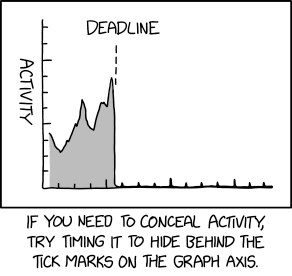 ⌘ Read more
I noticed that some of my software projects have a rather long lifetime, so I made a little graph:

Compact Graphs
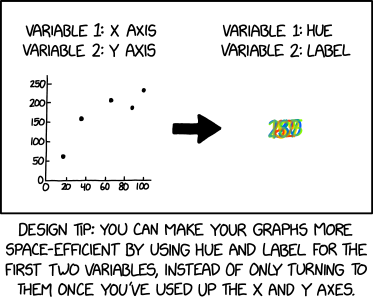 ⌘ Read more
A little app for drawing graphs: https://git.sr.ht/~akkartik/snap.love
Coordinate Plane Closure
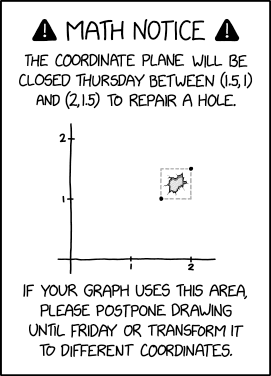 ⌘ Read more
↳
In-reply-to
»
I've started playing with Go today, just understood the basics and still a bit confused about the module and goroutine parts.
⤋ Read More
ahh this is useful https://go.dev/doc/modules/managing-dependencies. the go culture doesn’t typically have large dependency graphs like Ruby or JS.
Change in Slope
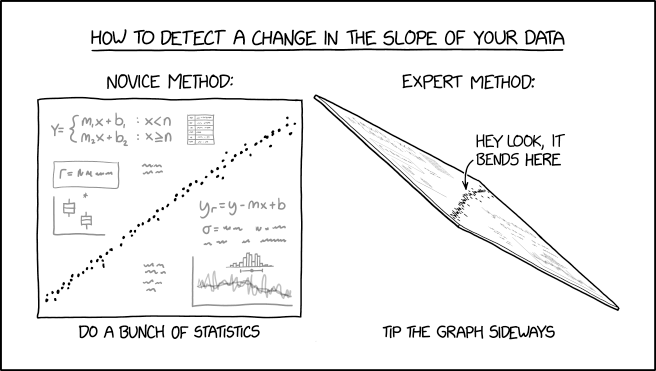 ⌘ Read more
Command palette and commands for managing a graph of notes: https://merveilles.town/@akkartik/108766067153506592
Inside every large graph is a small graph dying to get out. Tools for visualizing a codebase | Hacker News
inferno is not GPL anymore and i’m so happy. insta merge that shit boii https://src.sunshinegardens.org/~xj9/tomo/graph
New repository: aquilax/biograph - Life graphing library