I’ve gathers my ideas about mentions for twtxt/yarn here: Webmentions vs. custom mentions spec for twtxt/yarn - HedgeDoc
You are welcome to edit and comment in the doc, so our ideas are not fragment into a bunch of treads
↳
In-reply-to
»
wat da fuq does being "woke" even mean?! 🤦♂️
⤋ Read More
@bender@twtxt.net It is the new “politically correct”. Something that was used to describe acting in a more civilized way with one another. Turned into a scapegoat for the other side to label, demonize, and attack.
↳
In-reply-to
»
yarn should define its own federation protocol that extends the basic twtxt in ways that twtxt doesn't allow. it's time. and i've got ideas!
⤋ Read More
@shreyan@twtxt.net What do you mean when you say federation protocol?
Either use webfinger for identity like mastodon etc. or use ATproto from Bluesky (or both?)
We can use webmentions or create our own twt-mentions for notifying someones feed (WIP code at: https://github.com/sorenpeter/timeline/tree/webmention/views)
I’m not sure we need much else. I would not even bother with encryption since other platforms does that better, and for me twtxt/yarn/timeline is for making things public
yarn should define its own federation protocol that extends the basic twtxt in ways that twtxt doesn’t allow. it’s time. and i’ve got ideas!
You can’t catch the kill signal. Should this be syscall.SIGTERM instead of os.Kill, xuu? https://git.sour.is/sour-is/go-paste/src/branch/main/main.go#L21
You are totally right.. i think i was going for SIGTERM and SIGQUIT
↳
In-reply-to
»
Yeah, the lack of comments makes regular JSON not a good configuration format in my view. Also, putting all keys in quotes and the use of commas is annoying. The big upside is that's in lots of standard libraries.
⤋ Read More
@lyse@lyse.isobeef.org its a hierarchy key value format. I designed it for the network peering tools i use.. I can grant access to different parts of the tree to other users.. kinda like directory permissions. a basic example of the format is:
@namespace
# multi
# line
# comment
root :value

# example space comment
@namespace.name space-tag

# attribute comments
attribute attr-tag  :value for attribute

# attribute with multiple
# lines of values
foo :bar
      :bin
      :baz

repeated :value1
repeated :value2
each @ starts the definition of a namespace kinda like [name] in ini format. It can have comments that show up before. then each attribute is key :value and can have their own # comment lines.
Values can be multi line.. and also repeated..
the namespaces and values can also have little meta data tags added to them.

the service can define webhooks/mqtt topics to be notified when the configs are updated. That way it can deploy the changes out when they are updated.
↳
In-reply-to
»
@lyse Lack of comments are definitely a shortcoming of JSON. I don't like TOML because it lets you have nested categories (
⤋ Read More
[foo] [foo.bar] [foo.baz]) and it just feels confusing to me, even with indentation. Simple INI files are okay.
@mckinley@twtxt.net Don’t forget the syntax for arrays of sets [[foo.bars]] [[foo.bars]] [[foo.bars]]
↳
In-reply-to
»
Question of the day: What configuration file formats do you all like and use?
⤋ Read More
@lyse@lyse.isobeef.org Lack of comments are definitely a shortcoming of JSON. I don’t like TOML because it lets you have nested categories ([foo] [foo.bar] [foo.baz]) and it just feels confusing to me, even with indentation. Simple INI files are okay.
The Prosody XMPP server’s configuration file is just a Lua script because Prosody is written in Lua, and that’s excellent.
↳
In-reply-to
»
Question of the day: What configuration file formats do you all like and use?
⤋ Read More
Yeah, the lack of comments makes regular JSON not a good configuration format in my view. Also, putting all keys in quotes and the use of commas is annoying. The big upside is that’s in lots of standard libraries.
I think the appeal with YAML is that is has comments, is kind of easy to write and read and also provides unlimited nesting levels. But it has all its drawbacks, no question. Forbidding tabs, thousands of different string flavors, having so many boolean options (poor Norwegians) etc. I use it, but I don’t particularly enjoy it.
Among simple key value pairs, I like INI files, but with # for comments, not ;. I never used TOML, read up on it yesteray before writing this question, but it looks a bit weird and has some strange rules. I guess I have to give it a try one day.
And yes, as mentioned by several of you, it always depends on the complexity of the configuration at hand.
I’m developing something for the scouts at the moment with rather simple requirements on the config. Currently, there are just four settings. Even INI would be overkill with its section. I selected JSON for now, because that’s readily available with Go’s std lib. But I do not like it.
Btw. what’s your own config format, @xuu@txt.sour.is?
↳
In-reply-to
»
Question of the day: What configuration file formats do you all like and use?
⤋ Read More
@lyse@lyse.isobeef.org i made my own :D
I do prefer toml for the old school ini style with added support for object lists.
my second would be hjson or any other json with comments style.
I came across Google Summer of Code
This one looks interesting, I’ll apply soon, and perhaps is interesting for you as well
https://kiwix.org/en/google-summer-of-code/
Would ‘twtxt’ be a good project for the next one? 🤔
↳
In-reply-to
»
So I had three espressos before 11:00 - today's going swell.
⤋ Read More
@johanbove@johanbove.info dear lord! Can you still sleep at night?!
↳
In-reply-to
»
@prologic High five, I’m “generation Java” as well! 😂 There were some leftovers of C++, we used that in the computer graphics courses in Uni a lot. But pretty much anything else that involved programming was Java.
⤋ Read More
@movq@www.uninformativ.de Haha! yeah sounds about like my HS CS program. A math teacher taught visual basic and pascal. and over on the other end of the school we had “electronics” which was a room next to the auto body class where they had a bunch of random computer parts scavenged from the district decommissioned surplus storage.
The advanced class would piece together training kits for the basic class to put together.
↳
In-reply-to
»
I finally found the NASM assembler.
⤋ Read More
@prologic@twtxt.net High five, I’m “generation Java” as well! 😂 There were some leftovers of C++, we used that in the computer graphics courses in Uni a lot. But pretty much anything else that involved programming was Java.
(There was nothing even remotely resembling CS in our “high school”. That school neither had the required teachers nor the equipment / PCs.)
↳
In-reply-to
»
I keep muting accounts here (twtxt.net), and they keep popping back on after some time. It is nuts. :-(
⤋ Read More
I keep muting accounts here (twtxt.net), and they keep popping back on after some time. It is nuts. :-(
↳
In-reply-to
»
@movq before this century. Back when colleges taught C++ instead of Java for CS degrees.
⤋ Read More
@quark@ferengi.one pascal was high school for me 10th grade. I remember making an over the top Yahtzee game with text windows and everything. My instructor got mad at me because it was a ton of pages printed out to review.
↳
In-reply-to
»
@movq before this century. Back when colleges taught C++ instead of Java for CS degrees.
⤋ Read More
@xuu@txt.sour.is wow, I can tell I am older than you (I already knew this, but still). It was nothing but Pascal for me.
↳
In-reply-to
»
I finally found the NASM assembler.
⤋ Read More
@movq@www.uninformativ.de before this century. Back when colleges taught C++ instead of Java for CS degrees.
↳
In-reply-to
»
@xuu These are indeed iterators. Very weird syntax, though.
⤋ Read More
@lyse@lyse.isobeef.org Yeah the func in func threw me off.. The generic type iter.Seq[V] does make things a bit more clear though.
↳
In-reply-to
»
Go 1.22.0 introduces a new experiment for range functions. Have you tried them out? What do you think it can make easier to accomplish?
⤋ Read More
@xuu@txt.sour.is These are indeed iterators. Very weird syntax, though.
I would love to see a world where ones twtxt feed is defined by webfinger. So @xuu@txt.sour.is => https://text.sour.is/user/xuu/twtxt.txt
Then my identity can exist independent of the feed location. And I can host multiple protocol types for my feed. Ie. http/gopher/Gemini/irc DCC/etc
↳
In-reply-to
»
I finally found the NASM assembler.
⤋ Read More
@movq@www.uninformativ.de NASM is great. I remember playing with it back in my HS days. It has lots of little helps to make assembly more approachable.
↳
In-reply-to
»
@mckinley weird you mentioned my with the
⤋ Read More
anthony.buc.ci account. I am assuming these kind of bugs were never addressed by @prologic. :-(
@quark@ferengi.one @mckinley@twtxt.net
i think you have to be following the person so it does it correctly.
↳
In-reply-to
»
KTeaTime: A customizable tea steeping timer application from the KDE project: https://apps.kde.org/kteatime/
⤋ Read More
@mckinley@twtxt.net weird you mentioned my with the anthony.buc.ci account. I am assuming these kind of bugs were never addressed by @prologic@twtxt.net. :-(
↳
In-reply-to
»
I noticed that some of my software projects have a rather long lifetime, so I made a little graph:
⤋ Read More
@movq@www.uninformativ.de its always fun to look back on old projects. I talked to an old coworker about a codebase i made back in 2010 that still has lots of the same architecture i built into it back then and is still in heavy use.
↳
In-reply-to
»
After getting used to it, I'm loving this date format:
2024-02-06
⤋ Read More
@eapl.me@eapl.me the 24th of June 2002 was a pivotal year in my life.
↳
In-reply-to
»
seen near my house.. Media
⤋ Read More
@movq@www.uninformativ.de the location is real. A few in the ‘hood mentioned seeing this person directly. They live somewhere on the hillside in the background of the video.
↳
In-reply-to
»
Linus Torvalds Has 'Robust Exchanges' Over Filesystem Suggestion on Linux Kernel Mailing List
Linus Torvalds had "some robust exchanges" on the Linux kernel mailing list with a contributor from Google. The subject was inodes, notes the Register, "which as Red Hat puts it are each 'a unique identifier for a specific piece of metadata on a given filesystem.'"
⤋ Read More
@prologic@twtxt.net pretty nothing berger. The “blowout” was pretty tame coming from Linus kill yourself now. The world will be a better place” Torvold.
The issue was a dev making a “fix” that didn’t have a documented problem. They reused some specific low level functions they did not understand the reason they were made.
↳
In-reply-to
»
@prologic why am I getting this on your git? Media
⤋ Read More
@prologic@twtxt.net ahhh! Its the dark reader plugin breaking the page.
@prologic@twtxt.net why am I getting this on your git? 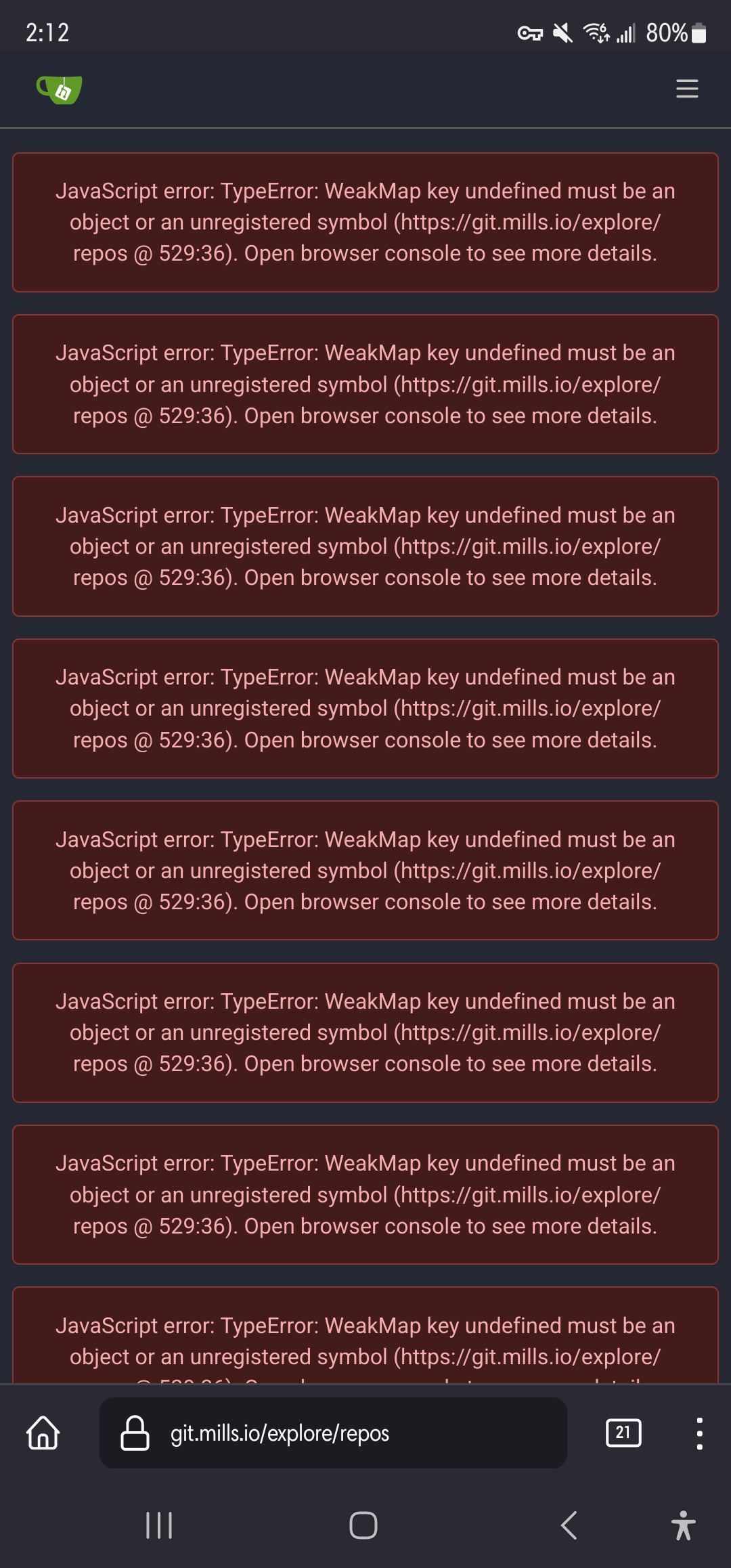
Twtxt spec enhancement proposal thread 🧵
Adding attributes to individual twts similar to adding feed attributes in the heading comments.
https://git.mills.io/yarnsocial/go-lextwt/pulls/17
The basic use case would be for multilingual feeds where there is a default language and some twts will be written a different language.
As seen in the wild: https://eapl.mx/twtxt.txt
The attributes are formatted as [key=value]
They can show up in the twt anywhere it is not enclosed by another element such as codeblock or part of a markdown link.
↳
In-reply-to
»
Ha, this is cool. Has its flaws, although is easy to remember.
⤋ Read More
@eapl.me@eapl.me: [boost]
↳
In-reply-to
»
Ha, this is cool. Has its flaws, although is easy to remember.
⤋ Read More
Ha, this is cool. Has its flaws, although is easy to remember.
An RNG that runs in your brain
↳
In-reply-to
»
Ha, this is cool. Has its flaws, although is easy to remember.
⤋ Read More
Ha, this is cool. Has its flaws, although is easy to remember.
An RNG that runs in your brain
Trying out a boost format. seems better with text after….
↳
In-reply-to
»
Ha, this is cool. Has its flaws, although is easy to remember.
⤋ Read More
@eapl.me@eapl.me trying out a boost format.
Ha, this is cool. Has its flaws, although is easy to remember.
An RNG that runs in your brain
↳
In-reply-to
»
What about using the blockquote format with
⤋ Read More
> ?
@sorenpeter@darch.dk this makes sense as a quote twt that references a direct URL. If we go back to how it developed on twitter originally it was RT @nick: original text because it contained the original text the twitter algorithm would boost that text into trending.
i like the format (#hash) @<nick url> > "Quoted text"\nThen a comment
as it preserves the human read able. and has the hash for linking to the yarn. The comment part could be optional for just boosting the twt.
The only issue i think i would have would be that that yarn could then become a mess of repeated quotes. Unless the client knows to interpret them as multiple users have reposted/boosted the thread.
The format is also how iphone does reactions to SMS messages with +number liked: original SMS
↳
In-reply-to
»
What about using the blockquote format with
⤋ Read More
> ?
@eapl.me@eapl.me this is interesting. Is the square bracket something used in the wild for multilingual twts?
@prologic@twtxt.net what are your thoughts? Should we extend the parser to handle [lang] and [boost] ? Or a generic attribute spec. Single word is a boolean attribute. And one with an = is a string key/value.
↳
In-reply-to
»
The original twt is unavailable. It may have been edited or deleted, or is from an unknown or muted feed.
⤋ Read More
What about using the blockquote format with > ?
Snippet from someone else’s post
by: @eapl.me@eapl.me
Would it not also make sense to have the repost be a reply to the original post using the (#twthash), and maybe using a tag like #repost so it eaier to filter them out?
↳
In-reply-to
»
The original twt is unavailable. It may have been edited or deleted, or is from an unknown or muted feed.
⤋ Read More
@eapl.me@eapl.me kinda like the format for markdown images?  ?
↳
In-reply-to
»
Silicon Valley’s top AI models are terrible at rebus wordplay puzzles
Rebus puzzles provide wordplay challenges involving both images and text, and they can confound Silicon Valley’s most powerful AI models ⌘ Read more
⤋ Read More
@New_scientist@feeds.twtxt.net Silicon Valley’s top AI models are terrible at almost everything. They only seem otherwise because people are easily fooled into believing they have capabilities they don’t have.
A cold beer and hanging out on twtxt, it doesn’t get much better
↳
In-reply-to
»
Holy moly, this is a fantastic 37C3 talk about security researchers getting attacked and they reverse-engineer and fully disclose the entire – very advanced – attack. Operation Triangulation: What You Get When Attack iPhones of Researchers Very impressive!
⤋ Read More
@prologic@twtxt.net nope.
↳
In-reply-to
»
Holy moly, this is a fantastic 37C3 talk about security researchers getting attacked and they reverse-engineer and fully disclose the entire – very advanced – attack. Operation Triangulation: What You Get When Attack iPhones of Researchers Very impressive!
⤋ Read More
@prologic@twtxt.net what?
↳
In-reply-to
»
Holy moly, this is a fantastic 37C3 talk about security researchers getting attacked and they reverse-engineer and fully disclose the entire – very advanced – attack. Operation Triangulation: What You Get When Attack iPhones of Researchers Very impressive!
⤋ Read More
@lyse@lyse.isobeef.org I have read the white papers for MLS before. I have put a lot of thought on how to do it with salty/ratchet. Its a very good tech for ensuring multiple devices can be joined to an encrypted chat. But it is bloody complicated to implement.
↳
In-reply-to
»
So, I finally got day 17 to under a second on my machine. (in the test runner it takes 10)
⤋ Read More
@lyse@lyse.isobeef.org i first learned about it from this vid https://www.youtube.com/watch?v=6JxvKfSV9Ns&pp=ygUOZmlib25hY2NpIGhlYXA%3D
and this site: https://www.programiz.com/dsa/fibonacci-heap
↳
In-reply-to
»
Feedback on why I didn't choose Mattermost (lack of OIDC) · mattermost/mattermost · Discussion -- My discussions/feedback on Mattermost's decision to have certain useful and IMO should be standard features as paid-for features on a per-seat licensed basis. My primary argument is that if you offer a self-host(able) product and require additional features the free version does not have, you should not have to pay for a per-seat license for something you are footing the bill for in terms of Hardware/Compute and Maintenance/Support (havintg to operate it).
⤋ Read More
@prologic@twtxt.net What I did as a work around for mattermost was hijack the gitlab oauth login with my own auth server.
I’ve added myself to the registries at registry.twtxt.org and twtxt.tilde.institute. I wonder if there’s a list of registries. #meta
Huh. At some point, my twtxt-via-ssh shortcut from my phone stopped working. It does again now! I’ve changed nothing. Yay black boxes! 🤷🏻
↳
In-reply-to
»
man... day17 has been a struggle for me.. i have managed to implement A* but the solve still takes about 2 minutes for me.. not sure how some are able to get it under 10 seconds.
⤋ Read More
@xuu@txt.sour.is That was one of the horror puzzles where I had to look for help. 🥴 I modelled my solution after this: https://www.youtube.com/watch?v=2pDSooPLLkI
(I can’t explain it better than the video anyway.) It takes a second on my machine and that’s with my own hashmap implementation which is probably not the fastest one.