↳
In-reply-to
»
Clown visits may shorten the amount of time children spend in hospital
Medical clowns, who play with children in hospitals, may help them be discharged sooner by reducing their heart rates ⌘ Read more
⤋ Read More
@New_scientist@feeds.twtxt.net Make sense–if a clown murders the child they don’t need to go to the hospital.
↳
In-reply-to
»
On the Subject of Feed Identities; I propose the following:
⤋ Read More
@prologic@twtxt.net Some criticisms and a possible alternative direction:
Key rotation. I’m not a security person, but my understanding is that it’s good to be able to give keys an expiry date and replace them with new ones periodically.
It makes maintaining a feed more complicated. Now instead of just needing to put a file on a web server (and scan the logs for user agents) I also need to do this. What brought me to twtxt was its radical simplicity.
Instead, maybe we should think about a way to allow old urls to be rotated out? Like, my metadata could somehow say that X used to be my primary URL, but going forward from date D onward my primary url is Y. (Or, if you really want to use public key cryptography, maybe something similar could be used for key rotation there.)
It’s nice that your scheme would add a way to verify the twts you download, but https is supposed to do that anyway. If you don’t trust https to do that (maybe you don’t like relying on root CAs?) then maybe your preferred solution should be reflected by your primary feed url. E.g. if you prefer the security offered by IPFS, then maybe an IPNS url would do the trick. The fact that feed locations are URLs gives some flexibility. (But then rotation is still an issue, if I understand ipns right.)
↳
In-reply-to
»
When we passed a few horses in the forest, there was really strong soup odor in the air. It didn't smell like horse at all, but soup. Maybe they've been soup horses, chickens were out of stock.
⤋ Read More
@lyse@lyse.isobeef.org 31°C here, feels like 33°C, with a lovely 75% of humidity. It has been raining, on and off (to make matter “better”) the whole day until now. No horses here, but if you go outside you will smell the same smell of farm animals (like goats, or pigs). That’s because two or three kilometres from here there are private farms, and when the wind blows in such way, well, we are reminded of their existence.
I haven’t left the house, so it feels well under air conditioning. In two more hours I will call it quits from the work day, and will have to dash to the grocery to get supplies for tonight’s meal (arroz con gandules). I will let you know how it truly feels out there then. :-D
For those swollen fingers, nothing better than a mildly cold shower! Oh, and paws off the keyboard! :-P
When we passed a few horses in the forest, there was really strong soup odor in the air. It didn’t smell like horse at all, but soup. Maybe they’ve been soup horses, chickens were out of stock.
29°C, zero wind, extremely humid, luckily the sun was behind the clouds. I’m soaking wet, sweat ran down in streams and dripped in my eyes, it burned a bit. The sky is getting a little dark, I hope the thunderstorm and rain are really arriving here later. Rain had always been finally cancelled the couple last days.
I’m gotta go cool off my fingers now, they’re swollen from the heat.
↳
In-reply-to
»
Serious open (for anyone) question: what makes you follow someone on twtxt? Will you just follow anyone that you come across, simply because that someone using the "decentralised, minimalist microblogging service for hackers" microblog?
⤋ Read More
@bender@twtxt.net On twtxt, I follow all feeds that I can find (there are some exceptions, of course). There’s so little going on in general, it hardly matters. 😅
And I just realized: Mutt’s layout helps a lot. Skimming over new twts is really easy and it’s not a big loss if there are a couple of shitposts™ in my “timeline”. This is very different from Mastodon (both the default web UI and all clients I’ve tried), where the timeline is always huge. Posts take up a lot of space on screen. Makes me think twice if I want to follow someone or not. 😅
(I mostly only follow Hashtags on Mastodon anyway. It’s more interesting that way.)
The plan is coming together. I am making friends and I’m doing the LA gay shit. I’m going outside, I’m getting laid. I’m like a real person. I have an old friend back in my life even.
imo the only useful application would be so that I never have to get a new computer again unless mine breaks. i like being able to talk to people from around the world, so its going to have to include internet and video (y’all saw the impact tiktok had on the gaza situation, can’t deny that video is important)
Testing this. I will break this thread purposely, to see how to handle it under neomutt. I have now edited this one. Let’s go!
↳
In-reply-to
»
Wow, these are nice machines! https://tinygrad.org/
⤋ Read More
@bender@twtxt.net Hey, want to go in halfsies on one?
↳
In-reply-to
»
@movq, maybe you can help me with this. I want to place the
⤋ Read More
vim cursor at the end of the first line on replies, and forks. I have tried adding to this to jenny's configuration:
@movq@www.uninformativ.de hmm, I am already using au BufNewFile,BufRead jenny-posting.eml setl completefunc=jenny#CompleteMentions fo-=t wrap, from jenny. How would I go to incorporate that there?
↳
In-reply-to
»
@movq, maybe you can help me with this. I want to place the
⤋ Read More
vim cursor at the end of the first line on replies, and forks. I have tried adding to this to jenny's configuration:
@movq@www.uninformativ.de hmm, I guess I could do that too. I have startinsert set on my .vimrc, so I will either have to take it out, or exit insert, $, then insert again. I think the way you do it would be the way to go.
I tried setting VISUAL to be something like vim -c 'star!', which does the same thing, but no dice. :-/
@movq@www.uninformativ.de, maybe you can help me with this. I want to place the vim cursor at the end of the first line on replies, and forks. I have tried adding to this to jenny’s configuration:
"editor": "vim \"+normal $\"",
But that doesn’t work. How would you go about it?
↳
In-reply-to
»
@falsifian @bender I pushed an alternative implementation to the
⤋ Read More
fetch-context branch. This integrates the whole thing into mutt/jenny.
I think I’m not going to query Yarn pods for the moment. Let’s first see how often I’d actually need that. 🤔
↳
In-reply-to
»
Telegram founder Pavel Durov arrested at French airport
Article URL: https://www.theguardian.com/media/article/2024/aug/24/telegram-app-founder-pavel-durov-arrested-at-french-airport
⤋ Read More
@bender@twtxt.net and I saw some conspiracy theory that he knew he was going to be arrested. He was working with French intelligence on a plea deal to defect. And now Russia is freaking out that Ukraine allies can have war comms access.
Yikes! If only they had salty.im!
There is a bug in yarnd that’s been around for awhile and is still present in the current version I’m running that lets a person hit a constructed URL like
YOUR_POD/external?nick=lovetocode999&uri=https://socialmphl.com/story19510368/doujin
and see a legitimate-looking page on YOUR_POD, with an HTTP code 200 (success). From that fake page you can even follow an external feed. Try it yourself, replacing “YOUR_POD” with the URL of any yarnd pod you know. Try following the feed.
I think URLs like this should return errors. They should not render HTML, nor produce legitimate-looking pages. This mechanism is ripe for DDoS attacks. My pod gets roughly 70,000 hits per day to URLs like this. Many are porn or other types of content I do not want. At this point, if it’s not fixed soon I am going to have to shut down my pod. @prologic@twtxt.net please have a look.
Nothing going on, Gopherland?
Because I saw the nick on movq (@prologic@twtxt.net, can’t mention anyone outside this pod, by the way), I looked the user up: https://tilde.pt/~marado/twtxt.txt. I wonder if the “hashes” they are using will work out of the box with jenny.
Talking about jenny, going to play with the latest now. Tata! :-)
You might have seen me popping up on IRC. This is how it looks:
That’s EZirc from the 1990ies. (It says it needs Warp 4, but runs fine on Warp 3.)
Lots of this old stuff still works (technically), but as @lyse@lyse.isobeef.org said: A lot of it really is dead. There’s not much going on anymore in Usenet.
↳
In-reply-to
»
Does anyone know what the differences between HTTP/1.1 HTTP/2 and HTTP/3 are? 🤔
⤋ Read More
oh dang. i think thats the go path not the github path.. missing the branch name. here is the pkg one: https://pkg.go.dev/github.com/quic-go/quic-go/http3
↳
In-reply-to
»
Just realized that phone came with a bunch of “hidden” Meta/Facebook services pre-installed and they cannot be uninstalled, so I guess me trying to “fight” WhatsApp is pointless anyway. 🤪
⤋ Read More
@movq@www.uninformativ.de A family member gave me their old (pseudo-)smart phone and it had all kinds of pre-installed BS that you’re not supposed to be able to uninstall, Xiaomi, FB, google… you name it. but guess what!? I already know about this Trick and then there is the Rethink DNS/Firewall app I have setup to block all traffic then allow the stuff I need with an Allow, Bypass or Exclude rule.
You’d be surprised to see how much traffic is going to blocked!! 🤣
↳
In-reply-to
»
@prologic, does this rings a bell to you?
⤋ Read More
159-196-9-199.9fc409.mel.nbn.aussiebb.net
I’m wrong! Both 404 and 410, among others, are considered dead feeds: https://git.mills.io/yarnsocial/yarn/src/branch/main/internal/cache.go#L1343 Whatever that actually means.
Pinellas County - Long Run: 10.03 miles, 00:09:47 average pace, 01:38:09 duration
felt great today! temp was down to 78F and 80% RH, but there was an ever so slight breeze so it did not feel sticky. carbo loaded the day before so maybe that had something to do with it too, but i really have not been tracking my nutrition at all. kept it easy the first five or so miles and then bumped it up ever so slightly for the remainder. probably could have gone an even two hours but running on new shoes (hoka mach 6) and really have not broken them in yet. lots of hot spots and a lot of troubleshooting on the go.
#running
From my bed, I can hear a noise outside that is most likely a confluence of insects and distant freight trains but sounds eerily like the static-laden cacophany of an old radio. I would go out to see what it is, but a small part of me is worried I might end up walking into an episode of “Are You Afraid of the Dark?” if I do.
↳
In-reply-to
»
Does anyone know what the differences between HTTP/1.1 HTTP/2 and HTTP/3 are? 🤔
⤋ Read More
↳
In-reply-to
»
Does anyone know what the differences between HTTP/1.1 HTTP/2 and HTTP/3 are? 🤔
⤋ Read More
for http3 there is
↳
In-reply-to
»
Does anyone know what the differences between HTTP/1.1 HTTP/2 and HTTP/3 are? 🤔
⤋ Read More
from my understanding.. i don’t know how the multiplexing works when its being proxied through another server. I know go has support for it if you call it out directly. https://pkg.go.dev/golang.org/x/net/http2
↳
In-reply-to
»
Came across YTCH yesterday, and it is very addictive. Simple, and well done. You can host it yourself if you want. The trick I haven't figure out yet is how to create the list.json that drives it.
⤋ Read More
Its like old school TV but with youtube videos. Each channel has a subject and the channels play in a sort of realtime. so no going forward or back. Perfect for channel surfing.
Base: 6.00 miles, 00:09:43 average pace, 00:58:16 duration
i was suppose to go for another 30 minutes. my energy level is off and i may need to reassess some goals.
#running #treadmill
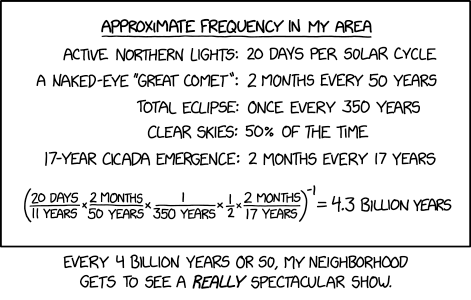
Celestial Event
 ⌘ Read more
Pinellas County - Long Run: 7.58 miles, 00:11:16 average pace, 01:25:22 duration
not as long as i would have liked. got a late start because, well, i was enjoying the sleep! then i saw at 0500 the rain was not scheduled anymore so i slept in. then it rained!
so this run was hot, no cloud cover, 90% RH and about 90F. it was brutal. but overall had to cut it short due to shivers all over the body. i was not going to push it when i may be overheating.
highlight: raced a youg boy in boca ciega park
#running
↳
In-reply-to
»
@lyse As far as I know, they're still visible in the Web UI. Although, in the mobile app and youtube.com, I believe it tells you that the video isn't available without having to click on it. They don't tell you that in the RSS feed, and I agree; it gets annoying.
⤋ Read More
Definitely something going on here. Cloudflare is my main suspect.
Base: 6.21 miles, 00:09:30 average pace, 00:58:59 duration
physically i was worn out and my legs a bit tight, but the run was pretty easy in effort. wanted to go for 8 miles, but was bored to death and cut it off at 10km.
#running #treadmill
↳
In-reply-to
»
@lyse Ahh so it's not just me! 😅
⤋ Read More
@aelaraji@aelaraji.com Ahh it might very well be a Clownflare thing as @lyse@lyse.isobeef.org eluded to 🤣 One of these days I’m going to get off Clownflare myself, when I do I’ll share it with you. My idea is to basically have a cheap VPS like @eldersnake@we.loveprivacy.club has and use Wireguard to tunnel out. The VPS becomes the Reverse Proxy that faces the internet. My home network then has in inbound whatsoever.
OK, I think I am ready to go to sleep. Good night!
↳
In-reply-to
»
@eldersnake how big is that VPS, if you can tell? My 1 vCPU, 2GB, 50GB is maxed out. 😬
⤋ Read More
@bender@twtxt.net Is it so maxed out you couldn’t fit a pretty small program like Headscale on it? Headscale by itself and only personal home type use as far as amount of peers go, it really isn’t noticeable I don’t think resource-wise. The Docker version I guess could be a different story.
↳
In-reply-to
»
I setup and switched to Headscale last night. It was relatively simple, I spent more time installing a web GUI to manage it to be honest, the actual server is simple enough. The native Tailscale Android app even works with it thankfully.
⤋ Read More
@prologic@twtxt.net Yes I suppose that is true. There is an article on Tailscale’s site that explains it all quite a bit: https://tailscale.com/blog/how-nat-traversal-works
To me, with CGNAT, it’s a small miracle that a direct connection can be made between peers (as opposed to going through a relay constantly) but it does indeed work. I guess to host it at home you would need to have it WAN accessible, and if you’ve already gone to the trouble of port forwarding etc… well 😅
Not that I could personally do that, but for those with static IPs etc.
↳
In-reply-to
»
Hack of the day: running
⤋ Read More
watch -n 60 rm -rf /tmp/yarn-avatar-* in a tmux because all of a sudden, without warning, yarnd started throwing hundreds of gigabytes of files with names like yarn-avatar-62582554 into /tmp, which filled up the entire disk and started crashing other services.
@prologic@twtxt.net I’m still getting this crap:
abucci@buc:~/yarnd/yarn$ ls -lh /tmp/yarnd-avatar-*
-rw------- 1 abucci abucci 863M Jul 25 14:19 /tmp/yarnd-avatar-1594499680
-rw------- 1 abucci abucci 7.8G Jul 25 14:19 /tmp/yarnd-avatar-2144295337
-rw------- 1 abucci abucci 9.8G Jul 25 14:19 /tmp/yarnd-avatar-2334738193
-rw------- 1 abucci abucci  10G Jul 25 14:14 /tmp/yarnd-avatar-2494107777
-rw------- 1 abucci abucci 9.5G Jul 25 13:59 /tmp/yarnd-avatar-2619243454
-rw------- 1 abucci abucci  11G Jul 25 14:04 /tmp/yarnd-avatar-2922187513
-rw------- 1 abucci abucci 7.5G Jul 25 14:14 /tmp/yarnd-avatar-349775570
-rw------- 1 abucci abucci  10G Jul 25 14:09 /tmp/yarnd-avatar-3640724243
-rw------- 1 abucci abucci 901M Jul 25 14:19 /tmp/yarnd-avatar-3921595598
-rw------- 1 abucci abucci 9.5G Jul 25 13:59 /tmp/yarnd-avatar-609094539
-rw------- 1 abucci abucci 9.3G Jul 25 14:04 /tmp/yarnd-avatar-755173392
-rw------- 1 abucci abucci 7.9G Jul 25 14:09 /tmp/yarnd-avatar-984061000
Something like 100 Gbytes of this junk has accumulated since I updated and re-started the server. I’m now running the latest version of yarnd, so the update did not fix the problem. Something else is going wrong.
How are temporary files growing to 10 Gbytes in size? The name of the file is “yarn-avatar”, but why would avatars be so large?
What the heck is going on here today, so many messages. 😂
↳
In-reply-to
»
Hack of the day: running
⤋ Read More
watch -n 60 rm -rf /tmp/yarn-avatar-* in a tmux because all of a sudden, without warning, yarnd started throwing hundreds of gigabytes of files with names like yarn-avatar-62582554 into /tmp, which filled up the entire disk and started crashing other services.
abucci@buc:~/yarnd/yarn$ make preflight
Checking Go version ...                 [ ERR ]
Go 1.16+ is required, found go1.22.5
FATAL: 🙁 preflight failed
make: *** [Makefile:33: preflight] Error 1
🤔
↳
In-reply-to
»
@abucci Oh hey! 👋
⤋ Read More
This is completely insane!
abucci@buc:/tmp$ du -sh /tmp/yarnd-avatar-*
564M    /tmp/yarnd-avatar-3024946878
7.2G    /tmp/yarnd-avatar-3122347915
11G     /tmp/yarnd-avatar-3533381443
445M    /tmp/yarnd-avatar-441914658
I’m going to have to shut down my server soon. This looks like some kind of DDoS. Whether intentional or not it’s filling up the disk at an unsustainable rate.
↳
In-reply-to
»
@abucci Oh hey! 👋
⤋ Read More
There are also a bunch of log messages scrolling by. I’ve never seen this much activity in the log:
Jul 25 01:37:39 buc.ci yarnd[829]: [yarnd] 2024/07/25 01:37:39 (149.71.56.69) "GET /external?nick=lovetocode999&uri=https://pagez.co.uk/services/your-own-100-fully-owned-online-vi>
Jul 25 01:37:39 buc.ci yarnd[829]: [yarnd] 2024/07/25 01:37:39 (162.211.155.2) "GET /twt/112135496802692324 HTTP/1.1" 400 12 826.65µs
Jul 25 01:37:40 buc.ci yarnd[829]: [yarnd] 2024/07/25 01:37:40 (51.222.253.14) "GET /conv/muttriq HTTP/1.1" 200 36881 20.448309ms
Jul 25 01:37:40 buc.ci yarnd[829]: [yarnd] 2024/07/25 01:37:40 (162.211.155.2) "GET /twt/112730114943543514 HTTP/1.1" 400 12 663.493µs
Jul 25 01:37:40 buc.ci yarnd[829]: [yarnd] 2024/07/25 01:37:40 (27.75.213.253) "GET /external?nick=lovetocode999&uri=http%3A%2F%2Falfarah.jo%2FHome%2FChangeCulture%3FlangCode%3Den>
Jul 25 01:37:40 buc.ci yarnd[829]: time="2024-07-25T01:37:40Z" level=error msg="http://bynet.com.br/log_envio.asp?cod=335&email=%21%2AEMAIL%2A%21&url=https%3A%2F%2Fwww.almanacar.c>
Jul 25 01:37:40 buc.ci yarnd[829]: [yarnd] 2024/07/25 01:37:40 (162.211.155.2) "GET /twt/111674756400660911 HTTP/1.1" 400 12 545.106µs
Jul 25 01:37:40 buc.ci yarnd[829]: time="2024-07-25T01:37:40Z" level=warning msg="feed FetchFeedRequest: @<lovetocode999 http://alfarah.jo/Home/ChangeCulture?langCode=en&returnUrl>
Jul 25 01:37:41 buc.ci yarnd[829]: [yarnd] 2024/07/25 01:37:41 (162.211.155.2) "GET /twt/112507964696096567 HTTP/1.1" 400 12 838.946µs
Something really weird is going on?
↳
In-reply-to
»
I admit I've always compromised on this way too much myself, always to this day having Facebook Messenger just to communicate in my families group chats. Sure I run it in a Work profile on my GrapheneOS phone that I can switch off at any time, I can completely cut it off from network access any time as well, I can have a lot of rudimentary control over it, I use it as sparingly as possible, but it doesn't change the fact everytime I use it we're funneling private convos through bloody Meta's servers and trackers etc.
⤋ Read More
(I don’t really trust Android, though, and I suspect that apps can still install background services that are always active. Pure speculation and paranoid on my part, but still.)
Which is fair, but I would say the GrapheneOS devs in particular are also quite paranoid about this stuff and go to great pains to make sure this stuff can be controlled by the user.
↳
In-reply-to
»
@xuu I have a theory as to why your pod was misbehaving too. I think because of the way you were building it
⤋ Read More
docker build without any --build-arg VERSION= or --build-arg COMMIT= there was no version information in the built binary and bundled assets. Therefore cache busting would not work as expected. When introducing htmx and hyperscript to create a UI/UX SPA-like experience, this is when things fell apart a bit for you. I think....
@prologic@twtxt.net Yeah that is probably what was happening. I wish that go build could embed the values that go install does.
↳
In-reply-to
»
Microsoft Outage Hits Users Worldwide, Leading To Canceled Flights
Microsoft grappled with a major service outage, leaving users across the world unable to access its cloud computing platforms and causing airlines to cancel flights. From a report: Thousands of users across the world reported problems with Microsoft 365 apps and services to Downdetector.com, a website that tracks service disruptions. "We're inve ... ⌘ Read more
⤋ Read More
@movq@www.uninformativ.de This outage did affect me, though not much, via the university where my wife teaches and where I teach sometimes. They actually sent out an alert in their emergency alert system (the one they use to alert people of extreme weather events and bomb threats, mostly), telling people that all IT systems were down.
A friend of mine elsewhere pointed out that they pushed this change on a Friday, which of course no software developer with any experience would ever, ever, ever do. I have to assume there’s some toxic management at CrowdStrike, but who knows. Even more reasons to sympathize with the poor folks who are probably going to be working nights and weekends to clean up this mess.
CrowdStrike
 ⌘ Read more
Long run: 9.33 miles, 00:10:21 average pace, 01:36:32 duration
easy run on the treadmill today since we have a lot going on and i had to watch the kiddos. split into three 5kms with first and last at about 10:55 pace, and the middle 5km at about a 9:14 pace. nothing crazy, felt good, kept it in the blue and finished it strong.
#running #treadmill
↳
In-reply-to
»
@eldersnake how many browsers are out there, that use a unique “engine”? There seems to be quite a few: https://en.m.wikipedia.org/wiki/Comparisonofbrowser_engines. Sure, another one won’t hurt. Would I use it? Probably not. 😅
⤋ Read More
There is, also, a small controversy going around for something that should have been a small change, but that Kling (SerenityOS, and Ladybird creator) handled quite badly: https://github.com/SerenityOS/serenity/pull/6814.
Seemingly small things like this divide, and have the potential to harm a project.
Pinellas County - Mile time trial: 1.03 miles, 00:06:40 average pace, 00:06:51 duration
after the warm-up the humidity hit me and i realized i was drenched and i could not stop sweating. it was going to be rough, and it was. kept a pretty steady pace which was great… and around 0.70 miles i upchucked in my mouth a bit, which was oh so great, so i eased off the gas towards the end. overall very happy with the effort since normally i do this in the cooler and drier conditions. in addition i have not been doing much speed work so this is great.
76.2F feels like 84.6F with 93% RH and 73.7F dew point
#running
Haven’t been sleeping well lately. Going to bed late. Lots to do.
↳
In-reply-to
»
42km for 42 years: 26.26 miles, 00:11:50 average pace, 05:10:44 duration
crazy run... don't have a lot of time so i'll have to remember to complete the thread that i captured in my journal.
#running
⤋ Read More
@bmallred@staystrong.run overall this was pretty good and the run-walk intervals kept my heart rate low.
at around 0400 a car came racing (90-100 mph) down gulf blvd towards my direction. it turned its headlights off and actually lost traction at point and skidded a bit. okay, kids. then a bit later i hear the car coming back behind me… so i got as far to the right as i could in case the car skids again. as it passed me i looked over my shoulder and saw a police vehicle a bit back w/o lights on yet. then looking in front another cop and then they blocked the lanes to get the driver to stop. driver decided he wasn’t stopping and tried to swerve around the police and ended up ping-ponging between sides of the road. enough of that…
took a wrong turn after going over the first bridge, but luckily it went in a loop. didn’t really know exactly where i was going anyways and was just winging it from the get-go.
the rest of the run was pretty uneventful and just a fun experience. crazy idea accomplished.