↳
In-reply-to
»
@cuaxolotl Ah, thanks for reporting back! Okay, so you’re basically manually “crawling” feeds right now. 🤔 What do you think about the idea of adding something like
⤋ Read More
# follow_notify = gemini://foo/bar to your feed’s metadata, so that clients who follow you can ping that URL every now and then? How would you even notice that, do you regularly read your gemini logs? 🤔
@prologic@twtxt.net Unfortunately it only work if I pull the feed in debug mode jenny -D otherwise, it misses things up if I add that snippet of text to links in my .config/jenny/follow file 😅 Anyway, it was a nice try.
↳
In-reply-to
»
This tool, using age is pretty neat: https://github.com/ndavd/agevault. So simple, yet seemingly powerful!
⤋ Read More
@mckinley@twtxt.net agevault uses age, allegedly very secure (aiming to replace pgp/gpg). Comparing it with gocryptfs, from the user perspective, agevault seems simpler, though CLI exclusive. As the repository states, “Like age, it features no config options, allowing for a straightforward secure flow”. It would also run in all major OS platforms out of the box.
But agevault is also very new. Though age has been around for a while now, I don’t see an “audited” link (neither on agevault, nor age).
↳
In-reply-to
»
@abucci You can also use
⤋ Read More
-R=false on the command line or leave it out entirely. When explicitly stating -R=false, there has to be an equal sign. With a space (-R false) it's somehow parsed as -R which is equivalent to -R=true. O_o Very weird. I'd really like to see an error instead.
Yeah, user error on my end, never mind. The persisted settings.yaml overrides the command line arguments. That’s surprising to me. I expected the command line options to overrule the config file. Oh well.
↳
In-reply-to
»
@abucci Thank you for using Lyse's Unofficial Yarnd Help Desk: https://lyse.isobeef.org/tmp/yarnd-disable-registrations.png
⤋ Read More
@yarn_police@twtxt.net I was just about to remove this feed from my config because it was stale … 😂
i have finished porting my laptop config to nixos in record time. i did the entire rebuild in one day, only a handful of hours total. love it.
I have figured out how to configure my twtxt config so that I can make slightly longer posts.
↳
In-reply-to
»
Well! My 24 hrs without a GUI Web browser was quite of a nice experience.
As a matter of fact, and as long as I'm not doing any 3D work, I kind of don't need gui applications as much as it feels like.
⤋ Read More
@bender@twtxt.net Yeah I’ve been having this problem for quite sometime now. It boils down to Vi/Vim/NeoVim inserting those line breaks automatically when editing an .eml file (if I can remember the file extension correctly) … I think Jenny makes use of those. I had to delete them manually until I was told that the problem was fixed after I added the charset utf-8; to my nginx config file. I’ll try and fix this next…
↳
In-reply-to
»
Yeah, the lack of comments makes regular JSON not a good configuration format in my view. Also, putting all keys in quotes and the use of commas is annoying. The big upside is that's in lots of standard libraries.
⤋ Read More
@lyse@lyse.isobeef.org its a hierarchy key value format. I designed it for the network peering tools i use.. I can grant access to different parts of the tree to other users.. kinda like directory permissions. a basic example of the format is:
@namespace
# multi
# line
# comment
root :value

# example space comment
@namespace.name space-tag

# attribute comments
attribute attr-tag  :value for attribute

# attribute with multiple
# lines of values
foo :bar
      :bin
      :baz

repeated :value1
repeated :value2
each @ starts the definition of a namespace kinda like [name] in ini format. It can have comments that show up before. then each attribute is key :value and can have their own # comment lines.
Values can be multi line.. and also repeated..
the namespaces and values can also have little meta data tags added to them.

the service can define webhooks/mqtt topics to be notified when the configs are updated. That way it can deploy the changes out when they are updated.
↳
In-reply-to
»
Question of the day: What configuration file formats do you all like and use?
⤋ Read More
Yeah, the lack of comments makes regular JSON not a good configuration format in my view. Also, putting all keys in quotes and the use of commas is annoying. The big upside is that’s in lots of standard libraries.
I think the appeal with YAML is that is has comments, is kind of easy to write and read and also provides unlimited nesting levels. But it has all its drawbacks, no question. Forbidding tabs, thousands of different string flavors, having so many boolean options (poor Norwegians) etc. I use it, but I don’t particularly enjoy it.
Among simple key value pairs, I like INI files, but with # for comments, not ;. I never used TOML, read up on it yesteray before writing this question, but it looks a bit weird and has some strange rules. I guess I have to give it a try one day.
And yes, as mentioned by several of you, it always depends on the complexity of the configuration at hand.
I’m developing something for the scouts at the moment with rather simple requirements on the config. Currently, there are just four settings. Even INI would be overkill with its section. I selected JSON for now, because that’s readily available with Go’s std lib. But I do not like it.
Btw. what’s your own config format, @xuu@txt.sour.is?
I’d love to read the original source code of this:
https://ecsoft2.org/t-tiny-editor
This was our standard editor back in the day, not an “emergency tool”. And it’s only 9kB in size … which feels absurd in 2023. 😅 The entire hex dump fits on one of today’s screens.
Being so small meant it had no config file. Instead, it came with TKEY.EXE, a little tool to binary-patch T.EXE to your likings.


↳
In-reply-to
»
A GTK 4 application showing an empty window uses about 160 MB of RAM:
⤋ Read More
@movq@www.uninformativ.de
Doesn’t even compile on my system, which is apparently broken:
> cc -Wall -Wextra -o win win.c $(pkg-config --cflags --libs gtk4)
cc: error: unrecognized argument in option ‘-mfpmath=sse -msse -msse2 -pthread -I/usr/include/gtk-4.0 -I/usr/include/gio-unix-2.0 -I/usr/include/cairo -I/usr/include/pango-1.0 -I/usr/include/harfbuzz -I/usr/include/pango-1.0 -I/usr/include/fribidi -I/usr/include/harfbuzz -I/usr/include/gdk-pixbuf-2.0 -I/usr/include/x86_64-linux-gnu -I/usr/include/cairo -I/usr/include/pixman-1 -I/usr/include/uuid -I/usr/include/freetype2 -I/usr/include/libpng16 -I/usr/include/graphene-1.0 -I/usr/lib/x86_64-linux-gnu/graphene-1.0/include -I/usr/include/libmount -I/usr/include/blkid -I/usr/include/glib-2.0 -I/usr/lib/x86_64-linux-gnu/glib-2.0/include -lgtk-4 -lpangocairo-1.0 -lpango-1.0 -lharfbuzz -lgdk_pixbuf-2.0 -lcairo-gobject -lcairo -lgraphene-1.0 -lgio-2.0 -lgobject-2.0 -lglib-2.0’
cc: note: valid arguments to ‘-mfpmath=’ are: 387 387+sse 387,sse both sse sse+387 sse,387
A GTK 4 application showing an empty window uses about 160 MB of RAM:
$ wget https://movq.de/v/138ab3e622/win.c
$ cc -Wall -Wextra -o win win.c $(pkg-config --cflags --libs gtk4)
$ ./win
It also takes several seconds to start on my machine because it is compiling shaders and initializing DRI (it’s faster on the second run, unless you happen to lose ~/.cache/mesa_shader_cache/). This might be a hint as to why it’s using so much memory: There’s obviously much more going on behind the scenes these days, not just a little bit of internal housekeeping and then creating a window.
I learned how to make gopls syntax highlight go templates in VSCodium.
By adding the following to my config
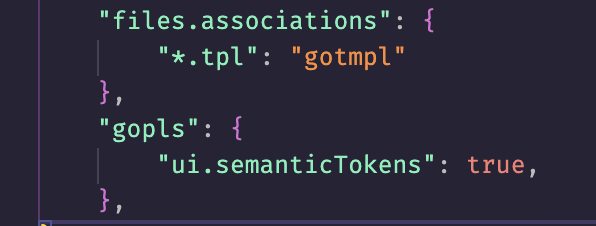
i could go from 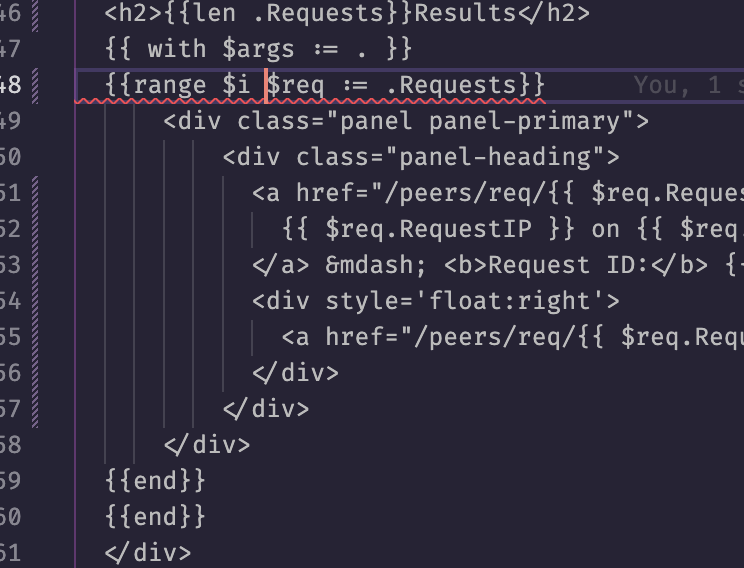 into
into 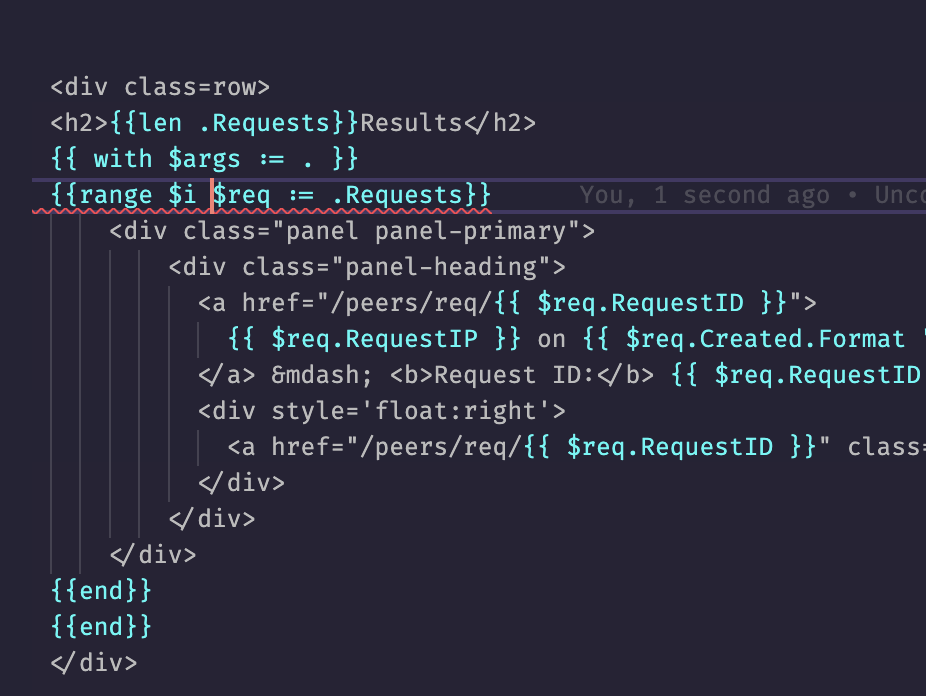
↳
In-reply-to
»
Hmmm, after fixing my feeds to move the
⤋ Read More
<author> from <entry>s to <feed>, Newsboat marked all old affected articles as unread. IDs were untouched, of course. Need to investigate that. Had something similar happen with another feed change I did some time ago. Can't remember what that was, though.
Great, last system update broke something, building from current master I get:
/usr/bin/ld: /lib/x86_64-linux-gnu/libm.so.6: unknown type [0x13] section `.relr.dyn'
What the heck!?
And it also appears that I’m not really able to reproduce this unread bug. It only kind of works a single time. And it has something to do with my config. Not sure what it is yet. I also noticed that the <updated> timestamps in the entries somehow shifted between the old and new feed. Da fuq!?
↳
In-reply-to
»
@prologic what Content-Security-Policy should I have on my web server for salty? the frontend ain't reacting well to my global config lol
⤋ Read More
oh wow.. no clue. maybe a config issue where its loading the webassm from a different domain? https vs http even?
@prologic@twtxt.net what Content-Security-Policy should I have on my web server for salty? the frontend ain’t reacting well to my global config lol
evalerror: refused to create a webassembly object because ‘unsafe-eval’ is not an allowed source of script in the following content security policy directive: “default-src ‘self’”.
<<
#!/bin/sh

# Validate environment
if ! command -v msgbus > /dev/null; then
    printf "missing msgbus command. Use:  go install git.mills.io/prologic/msgbus/cmd/msgbus@latest"
    exit 1
fi

if ! command -v salty > /dev/null; then
    printf "missing salty command. Use:  go install go.mills.io/salty/cmd/salty@latest"
    exit 1
fi

if ! command -v salty-keygen > /dev/null; then
    printf "missing salty-keygen command. Use:  go install go.mills.io/salty/cmd/salty-keygen@latest"
    exit 1
fi

if [ -z "$SALTY_IDENTITY" ]; then
    export SALTY_IDENTITY="$HOME/.config/salty/$USER.key"
fi

get_user () {
    user=$(grep user: "$SALTY_IDENTITY" | awk '{print $3}')
    if [ -z "$user" ]; then
        user="$USER"
    fi
    echo "$user"
}

stream () {
    if [ -z "$SALTY_IDENTITY" ]; then
        echo "SALTY_IDENTITY not set"
        exit 2
    fi

    jq -r '.payload' | base64 -d | salty -i "$SALTY_IDENTITY" -d
}

lookup () {
    if [ $# -lt 1 ]; then
    printf "Usage: %s nick@domain\n" "$(basename "$0")"
    exit 1
    fi

    user="$1"
    nick="$(echo "$user" | awk -F@ '{ print $1 }')"
    domain="$(echo "$user" | awk -F@ '{ print $2 }')"

    curl -qsSL "https://$domain/.well-known/salty/${nick}.json"
}

readmsgs () {
    topic="$1"

    if [ -z "$topic" ]; then
        topic=$(get_user)
    fi

    export SALTY_IDENTITY="$HOME/.config/salty/$topic.key"
    if [ ! -f "$SALTY_IDENTITY" ]; then
        echo "identity file missing for user $topic" >&2
        exit 1
    fi

    msgbus sub "$topic" "$0"
}

sendmsg () {
    if [ $# -lt 2 ]; then
        printf "Usage: %s nick@domain.tld <message>\n" "$(basename "$0")"
        exit 0
    fi

    if [ -z "$SALTY_IDENTITY" ]; then
        echo "SALTY_IDENTITY not set"
        exit 2
    fi

    user="$1"
    message="$2"

    salty_json="$(mktemp /tmp/salty.XXXXXX)"

    lookup "$user" > "$salty_json"

    endpoint="$(jq -r '.endpoint' < "$salty_json")"
    topic="$(jq -r '.topic' < "$salty_json")"
    key="$(jq -r '.key' < "$salty_json")"

    rm "$salty_json"

    message="[$(date +%FT%TZ)] <$(get_user)> $message"

    echo "$message" \
        | salty -i "$SALTY_IDENTITY" -r "$key" \
        | msgbus -u "$endpoint" pub "$topic"
}

make_user () {
    mkdir -p "$HOME/.config/salty"

    if [ $# -lt 1 ]; then
        user=$USER
    else
        user=$1
    fi

    identity_file="$HOME/.config/salty/$user.key"

    if [ -f "$identity_file" ]; then
        printf "user key exists!"
        exit 1
    fi

    # Check for msgbus env.. probably can make it fallback to looking for a config file?
    if [ -z "$MSGBUS_URI" ]; then
        printf "missing MSGBUS_URI in environment"
        exit 1
    fi


    salty-keygen -o "$identity_file"
    echo "# user: $user" >> "$identity_file"

    pubkey=$(grep key: "$identity_file" | awk '{print $4}')

    cat <<- EOF
Create this file in your webserver well-known folder. https://hostname.tld/.well-known/salty/$user.json

{
  "endpoint": "$MSGBUS_URI",
  "topic": "$user",
  "key": "$pubkey"
}

EOF
}

# check if streaming
if [ ! -t 1 ]; then
    stream
    exit 0
fi

# Show Help
if [ $# -lt 1 ]; then
    printf "Commands: send read lookup"
    exit 0
fi


CMD=$1
shift

case $CMD in
    send)
        sendmsg "$@"
    ;;
    read)
        readmsgs "$@"
    ;;
    lookup)
        lookup "$@"
    ;;
    make-user)
        make_user "$@"
    ;;
esac
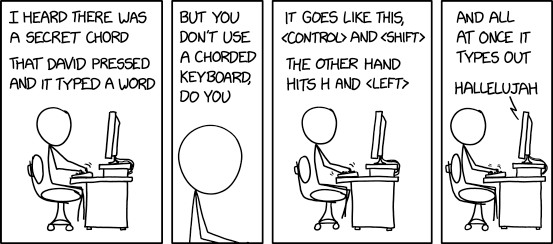
Chorded Keyboard
 ⌘ Read more
More #pixelblog‘ing - today wotking on fixing all the semi-hardcoded paths an moving them to config.php 
@lyse@lyse.isobeef.org Yes, I have LANG=en_US.UTF-8 on my system. So, it is not that it can’t find the config?
@movq@www.uninformativ.de I am getting this when I run it on cron (extra lines in between becuase otherwise jenny will make them a mash):
Traceback (most recent call last):
File “/home/quark/jenny/jenny”, line 565, in
if not retrieve_all(config):
File “/home/quark/jenny/jenny”, line 373, in retrieve_all
refresh_self(config)
File “/home/quark/jenny/jenny”, line 294, in refresh_self
process_feed(config, config[‘self_nick’], config[‘self_url’], content)
File “/home/quark/jenny/jenny”, line 280, in process_feed
fp.write(mail_body)
File “/usr/lib/python3.8/encodings/iso8859_15.py”, line 19, in encode
return codecs.charmap_encode(input,self.errors,encoding_table)[0]
UnicodeEncodeError: ‘charmap’ codec can’t encode character ‘\U0001f4e3’ in position 31: character maps to
↳
In-reply-to
»
The original twt is unavailable. It may have been edited or deleted, or is from an unknown or muted feed.
⤋ Read More
@prologic@twtxt.net Could the config be embeded into the head comment of the twtxt.txt file and parsed out? If it also had an avatar: field that pointed to where the avatar image is located it can be almost all self contained.
$ pico ~/.config/twtxt/config (note to self)
New repository: aquilax/mobius2-config - Mobius2 configuration parser
New repository: aquilax/config_generator - Config files generator