The generative AI con
Everywhere you look, the media is telling you that OpenAI and their ilk are the future, that they’re building “advanced artificial intelligence” that can take “human-like actions,” but when you look at any of this shit for more than two seconds it’s abundantly clear that it absolutely isn’t and absolutely can’t. Despite the hype, the marketing, the tens of thousands of media articles, the trillions of dollars in market capitalization, none of this feels real, or at least real enough to s … ⌘ Read more
Broadcom, TSMC weigh possible Intel deals that would split storied chip maker
Broadcom has been closely examining Intel’s chip-design and marketing business, according to people familiar with the matter. It has informally discussed with its advisers making a bid but would likely only do so if it finds a partner for Intel’s manufacturing business, the people said. Nothing has been submitted to Intel, the people cautioned, and Broadcom could decide not to … ⌘ Read more
Humane is shutting down the AI Pin and selling its remnants to HP
Humane is selling most of its company to HP for $116 million and will stop selling AI Pin, the company announced today. AI Pins that have already been purchased will continue to function normally until 3PM ET on February 28th, Humane says in a support document. After that date, Pins will “no longer connect to Humane’s servers.” As a result, AI Pin features will “no longer include calling, messaging, A … ⌘ Read more
KM3NeT
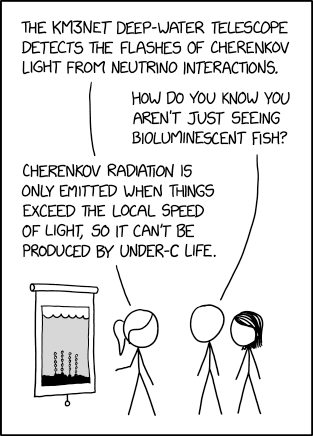 ⌘ Read more
AIDA64 drops support for Windows 95, 98, and ME
AIDA64, the popular benchmarking tool for Windows, released a new version today. I don’t particularly care about benchmarking – even less so benchmarking on Windows – but this new release comes with an interesting line in the release notes. Discontinued support for Windows 95, 98, Me ↫ AIDA64 v7.60 release notes Seeing a widely-used, popular piece of software drop support for Windows 95, 98, and ME only in this, the year of our lord, 2025 … ⌘ Read more
↳
In-reply-to
»
I'm in an article in Quanta Magazine! It's about the bizarre world of algorithms that re-use memory that's already full. https://www.quantamagazine.org/catalytic-computing-taps-the-full-power-of-a-full-hard-drive-20250218/ I'm the one with all the snow in the background.
⤋ Read More
@lyse@lyse.isobeef.org I am a big fan of “obvious” math facts that turn out to be wrong. If you want to understand how reusing space actually works, you are mostly stuck reading complexity theory papers right now. Ian wrote a good survey: https://iuuk.mff.cuni.cz/~iwmertz/papers/m23.reusing_space.pdf . It’s written for complexity theorists, but some of will make sense to programmers comfortable with math. Alternatively, I wrote an essay a few years ago explaining one technique, with (math-loving) programmers as the intended audience: https://www.falsifian.org/blog/2021/06/04/catalytic/ .
↳
In-reply-to
»
I'm in an article in Quanta Magazine! It's about the bizarre world of algorithms that re-use memory that's already full. https://www.quantamagazine.org/catalytic-computing-taps-the-full-power-of-a-full-hard-drive-20250218/ I'm the one with all the snow in the background.
⤋ Read More
@falsifian@www.falsifian.org Oh, that’s neat! Interesting how “obviously” isn’t all that obvious at all, even to the contrary. I reckon I have to read up on that subject on the weekend. :-)
I like how Ian’s and your photo complement each other, winter and summer join forces for something special. :-)
Researchers found gene linked to origins of human speech + 2 more stories
Scientists identify gene responsible for speech development; North Korea rejects US denuclearization pledge as absurd; Japan increases nuclear energy target to meet rising demands ⌘ Read more
ArcaOS 5.1.1 released
It’s been two years since the release of ArcaOS 5.1, which was a hugely important release because it brought UEFI support to this continuation of IBM’s OS/2, ensuring longevity for the project for years to come. Since I don’t think much is known about what, exactly, Arca Noae, and eComStation before it, has access to within the licensing agreement with IBM, it’s difficult to ascertain just how much room they actually have to make changes to the code at the core of the old OS/2. Regardles … ⌘ Read more
UNIX man pages
What might be somewhat more surprising though considering its research origins is that Unix almost since the very beginning had a comprehensive set of online reference documentation for all its commands, system calls, file formats, etc. These are the the manual- or man-pages. On Unix systems used interactively, the man-pages have historically always been installed, space permitting. The way the manual pages have evolved and how they are used has changed over the decades. This set of posts is intended … ⌘ Read more
Did the Windows 95 setup team forget that MS-DOS can do graphics?
One of the reactions to my discussion of why Windows 95 setup used three operating systems (and oh there were many) was my explanation that an MS-DOS based setup program would be text-mode. But c’mon, MS-DOS could do graphics! Are you just a bunch of morons? Yes, MS-DOS could do graphics, in the sense that it didn’t actively prevent you from doing graphics. You were still responsible for everything you … ⌘ Read more
Bloody hell 🤦♂️🤦♂️
$ jq -r --arg host "gopher.mills.io" '. | select(.request.host==$host) | "\(.request.client_ip) \(.request.uri) \(.request.headers["User-Agent"])"' mills.io.log-au | while IFS=$' ' read -r ip uri ua; do asn="$(geoip -a "$ip")"; echo "$asn $ip $uri $ua"; done | grep -E '^45102.*' | sort | head
45102 47.251.70.245 /gopher.floodgap.com/0/feeds/democracynow/2015/Oct/14/0 ["Mozilla/5.0 (Macintosh; Intel Mac OS X 10_15_7) AppleWebKit/537.36 (KHTML, like Gecko) Chrome/119.0.0.0 Safari/537.36"]
45102 47.251.84.25 /gopher.floodgap.com/0/feeds/voaheadlines/2014/Mar/09/voanews.com-content-article-1867433.html ["Mozilla/5.0 (Macintosh; Intel Mac OS X 10_15_7) AppleWebKit/537.36 (KHTML, like Gecko) Chrome/120.0.0.0 Safari/537.36"]
45102 47.82.10.106 /gopher.viste.fr/1/OnlineTools/hangman.cgi%3F0692937396569A52972EB2 ["Mozilla/5.0 (Windows NT 10.0; Win64; x64) AppleWebKit/537.36 (KHTML, like Gecko) Chrome/114.0.0.0 Safari/537.36 Edg/114.0.1823.43"]
45102 47.82.10.106 /gopher.viste.fr/1/OnlineTools/hangman.cgi%3F9657307A96569A52974634 ["Mozilla/5.0 (Windows NT 10.0; Win64; x64) AppleWebKit/537.36 (KHTML, like Gecko) Chrome/114.0.0.0 Safari/537.36 Edg/114.0.1823.43"]
45102 47.82.10.106 /gopher.viste.fr/1/OnlineTools/hangman.cgi%3FB7571C7896569A529E6603 ["Mozilla/5.0 (Windows NT 10.0; Win64; x64) AppleWebKit/537.36 (KHTML, like Gecko) Chrome/114.0.0.0 Safari/537.36 Edg/114.0.1823.43"]
45102 47.82.10.106 /gopher.viste.fr/1/OnlineTools/hangman.cgi%3FB75EF81296569A529E6617 ["Mozilla/5.0 (Windows NT 10.0; Win64; x64) AppleWebKit/537.36 (KHTML, like Gecko) Chrome/114.0.0.0 Safari/537.36 Edg/114.0.1823.43"]
45102 47.82.10.106 /gopher.viste.fr/1/OnlineTools/hangman.cgi%3FC6564ADB96569A5A9E660C ["Mozilla/5.0 (Windows NT 10.0; Win64; x64) AppleWebKit/537.36 (KHTML, like Gecko) Chrome/114.0.0.0 Safari/537.36 Edg/114.0.1823.43"]
Archive Request
 ⌘ Read more
↳
In-reply-to
»
I'm continuing my
⤋ Read More
tt rewrite in Go and quickly implemented a stack widget for tview. The builtin Pages is similar but way too complicated for my use case. I would have to specify a mandatory name and some additional options for each page. Also, it allows me to randomly jump around between pages using names, but only gives me direct access the first, however, not the last page. Weird. I don't wanna remember names. All I really need is a classic stack. You open a new fullscreen dialog and maybe another one on top of that. Closing the upper most brings you back to the previous one and so on.
Thinking about trying tt. If it really usable i will abandon twtxtdon (service to read twtxt feeds from mastodon client), which currently has only authorization implemented
Trump announces new tariffs on major trading partners + 1 more story
Trump announces new global tariffs impacting India, Japan, and the EU; Zelenskyy calls for a unified European army amid rising Russian threats ⌘ Read more
↳
In-reply-to
»
@lyse Where? 🧐
⤋ Read More
@prologic@twtxt.net Of course you don’t notice it when yarnd only shows at most the last n messages of a feed. As an example, check out mckinley’s message from 2023-01-09T22:42:37Z. It has “[Scheduled][Scheduled][Scheduled]“… in it. This text in square brackets is repeated numerous times. If you search his feed for closing square bracket followed by an opening square bracket (][) you will find a bunch more of these. It goes without question he never typed that in his feed. My client saves each twt hash I’ve explicitly marked read. A few days ago, I got plenty of apparently years old, yet suddenly unread messages. Each and every single one of them containing this repeated bracketed text thing. The only conclusion is that something messed up the feed again.
↳
In-reply-to
»
Have you ever had to refactor a project that was not documented? Any suggestions?
⤋ Read More
The project is a POC (Proof of Concept) that went into production and the company has customers who are using it. The developers had been working for several years, without testing, structure, isolation and so on. The company hired me to transform the project into a real product. There are in my hands 422 python files to transform that they beg me a refactore, architecture and testing. Every developer’s bad dream.
My first step is to read and understand the tree because there are apps inside other apps call each other. I am very determined to work on a new repository.
JotaleaOS: a very tiny hobby operating system
JotaleaOS is an open source, minimalistic, experimental operating system made by Jotalea, designed for extreme low-resource environments. It does not support external programs or games, as it lacks a standard application execution environment. The system is entirely self-contained, running only its built-in commands. ↫ JotaleaOS website Exactly what is says on the tin: a tiny operating system created entirely as a learning experience. That’s … ⌘ Read more
Hardwood
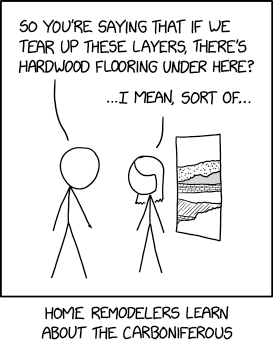 ⌘ Read more
Fedora should not push its users to its own Flatpak repository
Unlike most (all?) other distributions with built-in Flatpak support, Fedora maintains its own repository of Flatpak applications. Everyone else defaults to using Flathub, where developers of applications themselves tend to publish their Flatpaks. Fedora’s ‘shadow Flathub’ sometimes leads to problems, with Fedora-made Flatpaks containing bugs and brokenness, while presenting themselves as official, develope … ⌘ Read more
↳
In-reply-to
»
@eapl.me Read flags are so simple, yet powerful in my opinion. I really don't understand why this is not a thing in most twtxt clients. It's completely natural in e-mail programs and feed readers, but it hasn't made the jump over to this domain.
⤋ Read More
@eapl.me@eapl.me Yeah, you need some kind of storage for that. But chances are that there’s already a cache in place. Ideally, the client remembers etags or last modified timestamps in order to reduce unnecessary network traffic when fetching feeds over HTTP(S).
A newsreader without read flags would be totally useless to me. But I also do not subscribe to fire hose feeds, so maybe that’s a different story with these. I don’t know.
To me, filtering read messages out and only showing new messages is the obvious solution. No need for notifications in my opinion.
There are different approaches with read flags. Personally, I like to explicitly mark messages read or unread. This way, I can think about something and easily come back later to reply. Of course, marking messages read could also happen automatically. All decent mail clients I’ve used in my life offered even more advanced features, like delayed automatic marking.
All I can say is that I’m super happy with that for years. It works absolutely great for me. The only downside is that I see heaps of new, despite years old messages when a bug causes a feed to be incorrectly updated (https://twtxt.net/twt/tnsuifa). ;-)
↳
In-reply-to
»
Linear feeds are a dark pattern - A proposal for Mastodon
https://tilde.town/~dzwdz/blog/feeds.html
⤋ Read More
I think it is not easy to implement, you need a database. Timeline is an elegant solution: read and sort.
↳
In-reply-to
»
@eapl.me Read flags are so simple, yet powerful in my opinion. I really don't understand why this is not a thing in most twtxt clients. It's completely natural in e-mail programs and feed readers, but it hasn't made the jump over to this domain.
⤋ Read More
that’s a fair point.
Perhaps, since Twitter in 2006 never implemented read flags, every derivative microblogging system never saw that as an expected feature. This is curious because Twitter started with SMS, where on our phones we can mark messages as read or unread.
I think it all comes from the difference between reading an email (directed to you) vs. reading public posts (like a blog or a ‘wall,’ where you don’t mark posts as read). It’s not necessary to mark it as ‘read’, you just jump over it.
Reading microblogging posts in an email program is not common, I think, and I haven’t really used it, so I cannot say how it works, and whether it would be better for me or not.
However, I’ve used Thunderbird as a feed reader, and I understand the advantages when reading blog posts.
About read flags being simple, well… we just had a discussion this morning about how tracking read messages would require a lot of rethinking for clients such as timeline where no state is stored. Even considering some kind of ‘notification of unread messages or mentions’ is not expected for those minimalist client, so it’s an interesting compromise to think about.
↳
In-reply-to
»
Linear feeds are a dark pattern - A proposal for Mastodon
https://tilde.town/~dzwdz/blog/feeds.html
⤋ Read More
@eapl.me@eapl.me Read flags are so simple, yet powerful in my opinion. I really don’t understand why this is not a thing in most twtxt clients. It’s completely natural in e-mail programs and feed readers, but it hasn’t made the jump over to this domain.
Israel plans potential attack on Iran’s nuclear sites + 2 more stories
U.S. intelligence warns of potential Israeli attack on Iran; Meta’s AI model decodes brain activity into sentences; Trump shifts Ukraine policy towards negotiations with Putin. ⌘ Read more
Atom
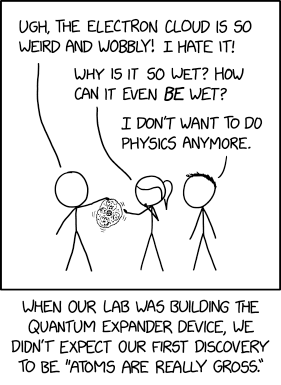 ⌘ Read more
KDE Plasma 6.3 brings drawing tablet improvements
Speaking of KDE, Plasma 6.3 has been released. It brings with it a ton of improvements aimed at digital artists, such as much improved management and configuration of drawing tablets. You can now map an area of the tablet’s surface to a part of the screen, change the functions of stylus buttons, customise the pressure curve and range of a stylus, and much more. The entire settings panel for drawing tablets has also been redesigned t … ⌘ Read more
Moving KDE’s styling into the future
One of the major issues with KDE’s styling system is the fact that over the year, it has accumulated four ways of styling applications – which makes themeing and changing aspects of the default theme far more cumbersome than it should be. In fact, with the current version of KDE, it’s effectively impossible to consistently theme the entire KDE desktop, as several parts of it, like Kirigami applications, only inherit parts of the theme you’re applying. It’s a … ⌘ Read more
Oasis: a small, statically-linked Linux system
You might think the world of Linux distributions is a rather boring, settled affair, but there’s actually a ton of interesting experimentation going on in the Linux world. From things like NixOS with its unique packaging framework, to the various immutable distributions out there like the Fedora Atomic editions, there’s enough uniqueness to go around to find a lid for every pot. Oasis Linux surely falls into this category. One of its main … ⌘ Read more
Redox’ relibc becomes a stable ABI
The Redox project has posted its usual monthly update, and this time, we’ve got a major milestone creeping within reach. Thanks to Anhad Singh for his amazing work on Dynamic Linking! In this southern-hemisphere-Redox-Summer-of-Code project, Anhad has implemented dynamic linking as the default build method for many recipes, and all new porting can use dynamic linking with relatively little effort. This is a huge step forward for Redox, because relibc can now beco … ⌘ Read more
Rediscovering Plan 9 from Bell Labs
During a weekend of tidying up – you know, the kind of chore where you’re knee-deep in old boxes before you realize it. Digging through the dusty cables and old, outdated user manuals, I found something that I had long forgotten: an old Plan 9 distribution. Judging by the faded ink and slight warping of the disk sleeve, it had to be from around 1994 or 1995. I couldn’t help but wonder: why had I kept this? Back then, I was curious about Plan 9. It was a forwar … ⌘ Read more
NASA tests new nuclear rocket fuel + 2 more stories
NASA and General Atomics test nuclear fuel; Ukraine employs more drones for war effort; engineered bacteria shows promise in recycling nylon waste. ⌘ Read more
FreeBSD and hi-fi audio setup: bit-perfect, equalizer, real-time
A complete guide to configuring FreeBSD as an audiophile audio server: setting up system and audio subsystem parameters, real-time operation, bit-perfect signal processing, and the best methods for enabling and parameterising the system graphic equalizer (equalizer) and high-quality audio equalization with FFmpeg filters. Linux users will also find useful information, especially in the context of configuri … ⌘ Read more
Three years of ephemeral NixOS: my experience resetting root on every boot
We had a bit of a bug caused by changes we made to make quotes look better, but we’ve fixed it now, so we’re back on track (you may need to do a force-reload in your browser). Sorry for the disruption – and if you want to stay up-to-date on such issues next time it (inevitably) happens, you should follow the OSNews Fedi account (or just bookmark it without following it, if you’re not … ⌘ Read more
Excellent article where you reflect on why it is important to write in your blog, even knowing that nobody will read it.
https://andysblog.uk/why-blog-if-nobody-reads-it/
At least this article does.
Incoming Asteroid
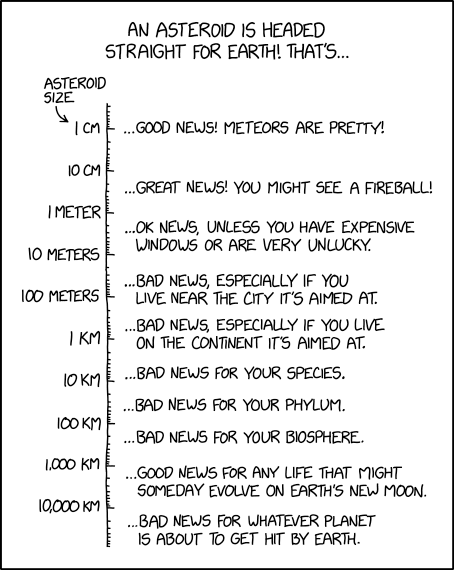 ⌘ Read more
Cassette: a POSIX application framework featuring a retro-futurist GUI toolkit
Cassette is a GUI application framework written in C11, with a UI inspired by the cassette-futurism aesthetic. Built for modern POSIX systems, it’s made out of three libraries: CGUI, CCFG and COBJ. Cassette is free and open-source software, licensed under the LGPL-3.0. ↫ Cassette GitHub page Upon first reading this description, you might wonder what a “cassette-futurism aesthe … ⌘ Read more
2°C warming limit deemed impossible + 2 more stories
A climate expert declares the 2-degree warming goal unattainable; Israel readies for potential Gaza relocation under Trump’s contentious proposal; an innovative vaccine shows promise in preventing kidney cancer recurrence after surgery. ⌘ Read more
Suspension Bridge
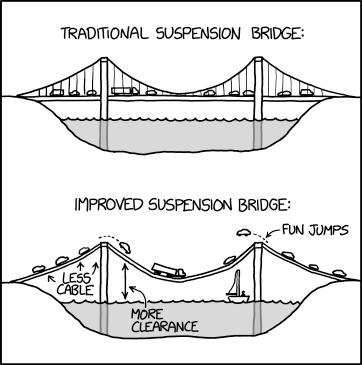 ⌘ Read more
UnixWare in 2025: still actively developed and maintained
It kind of goes by under the radar, but aside from HP-UX, Solaris, and AIX, there’s another traditional classic UNIX still in active development today: UnixWare (and its sibling, OpenServer). Owned and developed by Xinuos, UnixWare and other related code and IP was acquired by them when the much-hated SCO crashed and burned about 15 years ago or so, and they’ve been maintaining it ever since. About a year ago, Xinuos … ⌘ Read more
MaXX Interactive Desktop 2.2.0 released
Late last year, the MaXX Interactive Desktop, the Linux (and BSD) version of the IRIX desktop, sprung back to life with a new release and a detailed roadmap. Thanks to a unique licensing agreement with SGI, MaXX’ developer, Eric Masson, has been able to bring a lot of the SGI user experience over to Linux and BSD, and as promised, we have a new release: the final version of MaXX Interactive Desktop 2.2.0. It’s codenamed Octane, and anyone who knows the … ⌘ Read more
Rotary Tool
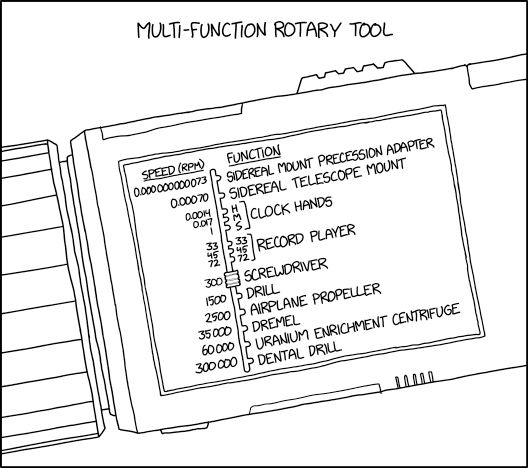 ⌘ Read more
China announces retaliatory tariffs on US + 2 more stories
China reveals tariffs on U.S. goods; Google faces antitrust action; EU establishes new trade zones; astronauts create oxygen in space; technology aids lunar missions. ⌘ Read more
Why Upstart from Ubuntu failed
Upstart was an event-based replacement for the traditional System V init (sysvinit) system on Ubuntu, introduced to bring a modern and more flexible way of handling system startup and service management. It emerged in the mid-2000s, during a period when sysvinit’s age and limitations were becoming more apparent, especially with regard to concurrency and dependency handling. Upstart was developed by Canonical, the company behind Ubuntu, with the aim of reducing boot time … ⌘ Read more
The dumb reason why flag emojis aren’t working on your site in Chrome on Windows
After doing more digging than I feel like I should have needed to, I found my answer: it appears that due to concerns about the fact that acknowledging the existence of certain countries can be perceived as a nominally political stance, Microsoft has opted to just avoid the issue altogether by not including country flag emojis in Windows’ system font. Problem solved! Can y … ⌘ Read more
TuxTape: a kernel livepatching solution
Geico, an American insurance company, is building a live-patching solution for the Linux kernel, called TuxTape. TuxTape is an in-development kernel livepatching ecosystem that aims to aid in the production and distribution of kpatch patches to vendor-independent kernels. This is done by scraping the Linux CNA mailing list, prioritizing CVEs by severity, and determining applicability of the patches to the configured kernel(s). Applicability of patches i … ⌘ Read more
↳
In-reply-to
»
That was a super interesting talk, I can recommend it: https://media.ccc.de/v/38c3-microbes-vs-mars-a-hacker-s-guide-to-finding-alien-life
⤋ Read More
@lyse@lyse.isobeef.org Thanks for sharing. I really enjoyed it. The beginning part about the history of life on Earth was fun to watch having just read Dawkin’s old book The Selfish Geene, and now I want to read more about archaea. The end of the talk about what might be going on on Mars made me a bit hopeful someone will find some good evidence.
GTK announces X11 deprecation, new Android backend, and much more
Since a number of GTK developer came together at FOSDEM, the project figured now was as good a time as any to give an update on what’s coming in GTK. First, GTK is implementing some hard cut-offs for old platforms – Windows 10 and macOS 10.15 are now the oldest supported versions, which will make development quite a bit easier and will simplify several parts of the codebase. Windows 10 was released in 2 … ⌘ Read more
Run Linux inside a PDF file via a RISC-V emulator
You might expect PDF files to only be comprised of static documents, but surprisingly, the PDF file format supports Javascript with its own separate standard library. Modern browsers (Chromium, Firefox) implement this as part of their PDF engines. However, the APIs that are available in the browser are much more limited. The full specfication for the JS in PDFs was only ever implemented by Adobe Acrobat, and it contains some ridicul … ⌘ Read more
The GNU Guix System
GNU Guix is a package manager for GNU/Linux systems. It is designed to give users more control over their general-purpose and specialized computing environments, and make these easier to reproduce over time and deploy to one or many devices. ↫ GNU Guix website Guix is basically GNU’s approach to a reproducible, functional package manager, very similar to Nix because, well, it’s based on Nix. GNU also has a Linux distribution built around Nix, the GNU Guix System, which is fully ‘libre’ as al … ⌘ Read more