New article: show mastodon toot title in #sfeed feed reader. http://si3t.ch/log/2024-02-20-sfeed-mastodon-title.txt
À chaque fois que je bidouille mon site avec les logs en temps réel à côté, je suis effaré de voir tous ces bots tenter encore sur des 404 oO
There’s something really annoying me on #openbsd httpd: to set custom headers, one need to use relayd. Yes, it works, but it is so complex for this task. And it breaks logs for analysis with goaccess or webalizer: the forwarded log format put the original IP at the end, but there is still 127.0.0.1 at the beginning :/. httpd should be able to set headers. ‘hsts’ instruction already does
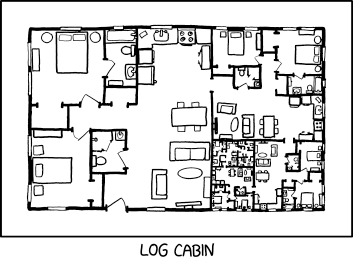
Log Cabin
 ⌘ Read more
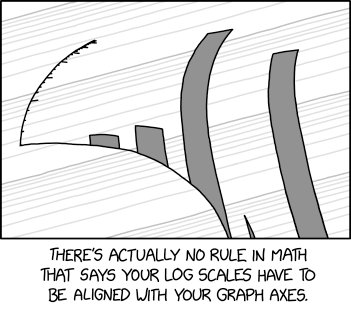
Log Alignment
 ⌘ Read more
Doing this thing where I do one-word status reports and logging them in a file.
↳
In-reply-to
»
I've been thinking of how to notify someone else that you've replied to their twts.
⤋ Read More
@lyse@lyse.isobeef.org I’m also on the e-mail wagon here. On http://darch.dk/timeline/conv/oe3howa I have added a “Comment via email” botten if uses are not logged in. This feature could be extend to other places in the various UIs. Like we already got the “Does not follow your” / “Follow you” on the profile page in yarnd, so this detection could be used to sugget the user to email that person, when mentioning them.
Un peu de dessert en physique chimie https://si3t.ch/log/2023-11-15-un-peu-de-dessert-physique-chimie.txt #education #sciences
My cli work-apps: note, plan, dlog (daily log), status and twt.
Commentaire du code pour un service de lecture over ssh (et je me la pète au passage avec plein de liens #C ) : https://si3t.ch/log/2023-11-13-txtoverssh.c.txt gopher://si3t.ch/0/log/2023-11-13-txtoverssh.c.txt gemini://si3t.ch/log/2023-11-13-txtoverssh.c.txt http://6gvb6fzoxv72mtlpvr2fgj7ytpeggwuerdawspt24njlkwfxir6jncid.onion/log/2023-11-13-txtoverssh.c.txt gopher://of2w2p5f4hsslk63hmo6tid6r7inhlxuxviq4pb5cxg45enswpbrfjad.onion/0/log/2023-11-13-txtoverssh.c.txt gemini://b2khgkvb2wn4avjshjp63kknsjwikgwff5dwwydldia6qwf4kdnueyad.onion/log/2023-11-13-txtoverssh.c.txt ou encore ‘ssh lire@si3t.ch’ numéro 45.
Anyone else keeping personal .log files updated through basic shell commands?
Après avoir trouvé un trésor, un singe me vole ma robe brûlée par un parchemin puis un yéti me’éclate la tête avant qu’un jaguar ne m’achève pendant mon repos: https://si3t.ch/log/2023-10-21-nethack-16.txt #nethack
Mission terroriste réussie #blog : https://si3t.ch/log/2023-10-16-mission-terroriste-reussie.txt
soulcoud, un script pour garder dans un mail les pages à lire + tard: https://si3t.ch/log/2023-10-10-a-lire-+-tard.txt
À quoi peut me servir #openbsd (édition serveur)? https://si3t.ch/log/2023-10-02-octopenbsd-server.txt #octopenbsd
À quoi peut me servir #openbsd ? https://si3t.ch/log/2023-10-02-octopenbsd-desktop.txt #octopenbsd
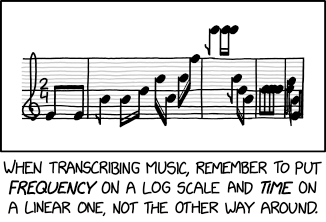
Musical Scales
 ⌘ Read more
↳
In-reply-to
»
an interesting observation in a post twitter reality is how services that are sprouting up to claim some of the refugees are setting themselves up as closed gardens. without the option to federate with other services. like spoutable, counter.social, post, clubhouse and such.
⤋ Read More
@prologic@twtxt.net closed as in you have to be an account on their service to interact with others. And can’t communicate cross service. Some require you to be logged in to view content. Others will pop up annoying overlays after scrolling some content to sign up for more.

From my small experience in writing an event database, I am inclined to agree with this.
Tenía medio olvidado el archivo .txt en español. Tengo el acceso al phpub2txt en el teléfono, aunque no lo uso mucho pues queda como un log sin la interacción que ofrecen otras plataformas.
Me hace mucho pensar en lo curioso del microblogging como plataforma de micro expresión con rápida interacción.
Did something chchange with how the discover feed is generated? My pods logout mode now only shows my twts. It used to be all twts from watcher observation like my logged on discover tab. @prologic@twtxt.net
Great! You added 140 burned calories to your log
Come again soon!
140 calorías hoy. Quiero superar la liga Esmeralda que me ha costado trabajo por falta de constancia. ¡Vamos!
Logged in using new argon2i password hash! 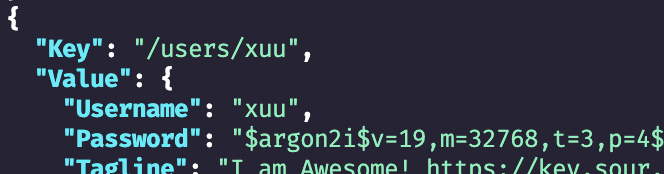
↳
In-reply-to
»
I made a thing. Its a multi password type checker. Using the PHC string format we can identify a password hashing format from the prefix
⤋ Read More
$name$ and then dispatch the hashing or checking to its specific format.
Here is an example of usage:
func Example() {
	pass := "my_pass"
	hash := "my_pass"

	pwd := passwd.New(
		&unix.MD5{}, // first is preferred type.
		&plainPasswd{},
	)

	_, err := pwd.Passwd(pass, hash)
	if err != nil {
		fmt.Println("fail: ", err)
	}

	// Check if we want to update.
	if !pwd.IsPreferred(hash) {
		newHash, err := pwd.Passwd(pass, "")
		if err != nil {
			fmt.Println("fail: ", err)
		}

		fmt.Println("new hash:", newHash)
	}

	// Output:
	//  new hash: $1$81ed91e1131a3a5a50d8a68e8ef85fa0
}
This shows how one would set a preferred hashing type and if the current version of ones password is not the preferred type updates it to enhance the security of the hashed password when someone logs in.
https://github.com/sour-is/go-passwd/blob/main/passwd_test.go#L33-L59
Tenía un rato sin escribir acá en el Log/twtxt
Ha sido una semana un poco extraña aunque empieza a verse que irá todo mejor!
Tenía un rato sin escribir acá en el Log/twtxt
Ha sido una semana un poco extraña aunque empieza a verse que irá todo mejor!
Ahora estoy pensando en hacer una versión como Progressive Web App, aunque ahora este twtxt es más como un log. Me gustaría ver si desde Web podríamos hacer una interfaz más social (en el espíritu de microblogging cómo Twitter)
looking at my crawler’s log scrolling on the screen, randomly copying feeds with an interesting-looking name into my browser. what a nice way to discover new things #twtxt
looking at my crawler’s log scrolling on the screen, randomly copying feeds with an interesting-looking name into my browser. what a nice way to discover new things #twtxt
↳
In-reply-to
»
I did a take home software engineering test for a company recently, unfortunately I was really sick (have finally recovered) at the time 😢 I was also at the same time interviewing for an SRE position (as well as Software Engineering).
⤋ Read More
With respect to logging.. oh man.. it really depends on the environment you are working in.. development? log everything! and use a jeager open trace for the super gnarly places. So you can see whats going on while building. But, for production? metrics are king. I don’t want to sift through thousands of lines but have a measure that can tell me the health of the service.
↳
In-reply-to
»
I did a take home software engineering test for a company recently, unfortunately I was really sick (have finally recovered) at the time 😢 I was also at the same time interviewing for an SRE position (as well as Software Engineering).
⤋ Read More
@prologic@twtxt.net Error handling especially in Go is very tricky I think. Even though the idea is simple, it’s fairly hard to actually implement and use in a meaningful way in my opinion. All this error wrapping or the lack of it and checking whether some specific error occurred is a mess. errors.As(…) just doesn’t feel natural. errors.Is(…) only just. I mainly avoided it. Yesterday evening I actually researched a bit about that and found this article on errors with Go 1.13. It shed a little bit of light, but I still have a long way to go, I reckon.
We tried several things but haven’t found the holy grail. Currently, we have a mix of different styles, but nothing feels really right. And having plenty of different approaches also doesn’t help, that’s right. I agree, error messages often end up getting wrapped way too much with useless information. We haven’t found a solution yet. We just noticed that it kind of depends on the exact circumstances, sometimes the caller should add more information, sometimes it’s better if the callee already includes what it was supposed to do.
To experiment and get a feel for yesterday’s research results I tried myself on the combined log parser and how to signal three different errors. I’m not happy with it. Any feedback is highly appreciated. The idea is to let the caller check (not implemented yet) whether a specific error occurred. That means I have to define some dedicated errors upfront (ErrInvalidFormat, ErrInvalidStatusCode, ErrInvalidSentBytes) that can be used in the err == ErrInvalidFormat or probably more correct errors.Is(err, ErrInvalidFormat) check at the caller.
All three errors define separate error categories and are created using errors.New(…). But for the invalid status code and invalid sent bytes cases I want to include more detail, the actual invalid number that is. Since these errors are already predefined, I cannot add this dynamic information to them. So I would need to wrap them à la fmt.Errorf("invalid sent bytes '%s': %w", sentBytes, ErrInvalidSentBytes"). Yet, the ErrInvalidSentBytes is wrapped and can be asserted later on using errors.Is(err, ErrInvalidSentBytes), but the big problem is that the message is repeated. I don’t want that!
Having a Python and Java background, exception hierarchies are a well understood concept I’m trying to use here. While typing this long message it occurs to me that this is probably the issue here. Anyways, I thought, I just create a ParseError type, that can hold a custom message and some causing error (one of the three ErrInvalid* above). The custom message is then returned at Error() and the wrapped cause will be matched in Is(…). I then just return a ParseError{fmt.Sprintf("invalid sent bytes '%s'", sentBytes), ErrInvalidSentBytes}, but that looks super weird.
I probably need to scrap the “parent error” ParseError and make all three “suberrors” three dedicated error types implementing Error() string methods where I create a useful error messages. Then the caller probably could just errors.Is(err, InvalidSentBytesError{}). But creating an instance of the InvalidSentBytesError type only to check for such an error category just does feel wrong to me. However, it might be the way to do this. I don’t know. To be tried. Opinions, anyone? Implementing a whole new type is some effort, that I want to avoid.
Alternatively just one ParseError containing an error kind enumeration for InvalidFormat and friends could be used. Also seen that pattern before. But that would then require the much more verbose var parseError ParseError; if errors.As(err, &parseError) && parseError.Kind == InvalidSentBytes { … } or something like that. Far from elegant in my eyes.
My Gemini log posts have been getting very long recently.
There are some Gemini feeds that Antenna is failing to connect to, and it looks like it’s clogging up the log pretty badly. I hope it’s not putting too much strain on the server.
“IRS.gov is now using ID.me to log in!” Awesome, the credetials for US taxpayers are passing through a registrar located in Montenegro.
Only 1 day of activity so far, but I’ve started a new project log for whatever the heck I end up doing to this Monroe 425 I got. http://a.9srv.net/monroe425
↳
In-reply-to
»
I fork bombed my computer! With ed(1)!!! Haven't done that in a while.
⤋ Read More
I am not launching it with a specific file right now, but I’ll likely have it default to my daily work log shortly.
@lyse@lyse.isobeef.org Hmm, weird, it loads fine for me. Not logged in, “anonymous” upload, no cookies.
Test to generate more logging.
Based on spam logs, I am (again) considering banning a bunch of TLDs at the server level. Has anyone ever gotten legitimate email from a .work, .casa, or .today domain, for example?
↳
In-reply-to
»
I wrote a 'banner'-like program for Plan 9 (and p9p) that uses the Unicode box drawing characters: http://txtpunk.com/banner/index.html
⤋ Read More
Cleaned up a bit, with installation instructions for Plan 9 and p9p, tiny character tweaks, and a change log.
Sadly I believe the world managed to make us feel guilty when we’re not doing something that makes someone else rich I logged my activities at 15-minute intervals for the whole year | Hacker News
I’m posting this from ~ an old 3G iPhone and have logged it into my tilde club shell a/c.
I re-read my script that updates my gemini log automatically
Making a bash gemlog script to maintain my gemini log
Added double log to the diary maybe that would be easier to maintain than creating daily files
Logging off. Good night
Proud of myself for achieving a 10 day streak of writing a daily journal log entry.
Discovered some new twtxt followers by glancing at my web server logs.. Feeling so l33t now.