/https://baldo.cat/media/photos/photo_20223-07-2024_22-04-55.jpg)
/https://baldo.cat/media/photos/photo_20123-07-2024_22-04-54.jpg)
Aprendiendo de los mayores
/https://baldo.cat/media/photos/photo_20023-07-2024_21-51-06.jpg) #catsoftwtxt
#catsoftwtxt
↳
In-reply-to
»
I admit I've always compromised on this way too much myself, always to this day having Facebook Messenger just to communicate in my families group chats. Sure I run it in a Work profile on my GrapheneOS phone that I can switch off at any time, I can completely cut it off from network access any time as well, I can have a lot of rudimentary control over it, I use it as sparingly as possible, but it doesn't change the fact everytime I use it we're funneling private convos through bloody Meta's servers and trackers etc.
⤋ Read More
(I don’t really trust Android, though, and I suspect that apps can still install background services that are always active. Pure speculation and paranoid on my part, but still.)
Which is fair, but I would say the GrapheneOS devs in particular are also quite paranoid about this stuff and go to great pains to make sure this stuff can be controlled by the user.
/https://baldo.cat/media/photos/photo_19917-07-2024_07-47-36.jpg)
España!!
/https://baldo.cat/media/photos/photo_19815-07-2024_17-59-58.jpg) #catsoftwtxt
#catsoftwtxt
Gato enmarcado
/https://baldo.cat/media/photos/photo_19714-07-2024_10-58-12.jpg) #catsoftwtxt
#catsoftwtxt
/https://baldo.cat/media/photos/photo_19613-07-2024_11-49-12.jpg)
/https://baldo.cat/media/photos/photo_19311-07-2024_18-28-17.jpg)
Crece por horas
/https://baldo.cat/media/photos/photo_19211-07-2024_10-18-57.jpg) #catsoftwtxt
#catsoftwtxt
/https://baldo.cat/media/photos/photo_19107-07-2024_13-19-37.jpg)
- ¡FUERA DE MI CASTILLO! -
/https://baldo.cat/media/photos/photo_18907-07-2024_10-14-58.jpg) #catsoftwtxt
#catsoftwtxt
/https://baldo.cat/media/photos/IMG_1338.jpg)
↳
In-reply-to
»
There is, also, a small controversy going around for something that should have been a small change, but that Kling (SerenityOS, and Ladybird creator) handled quite badly: https://github.com/SerenityOS/serenity/pull/6814.
⤋ Read More
Yeah, though sometimes the most clever devs aren’t always the best to deal with on a personal level. I seem to remember the (former?) lead dev on GrapheneOS (IIRC) was an ass hat and threw tantrums at the smallest things and would get stalkery and weird if someone criticised him, but he’s undeniably a brilliant coder and problem solver. Some people need to be more self aware of how their efforts might be harmed with their behaviour though.
/https://baldo.cat/media/photos/photo_18704-07-2024_21-43-28.jpg)
Gato en su funda
/https://baldo.cat/media/photos/photo_18329-06-2024_15-42-45.jpg) #catsoftwtxt
#catsoftwtxt
/https://baldo.cat/media/photos/photo_17929-06-2024_15-40-00.jpg)
/https://baldo.cat/media/photos/photo_17829-06-2024_15-39-26.jpg)
/https://baldo.cat/media/photos/photo_17320-06-2024_22-44-58.jpg)
/https://baldo.cat/media/photos/photo_17220-06-2024_22-43-51.jpg)
Some of the dev teams I work with use kanban. I like using cumulative flow diagrams to monitor throughput. Pawel Brodzinski has a terrific write-up on using CFDs here: http://brodzinski.com/2013/07/cumulative-flow-diagram.html
/https://baldo.cat/media/photos/photo_17116-06-2024_09-12-07.jpg)
↳
In-reply-to
»
👋 If y'all notice any weird quirks or UI/UX bugs of late on my pod, please let me know! 🙏 For those that have a Javascript enabled web browser will notice (hopefully) a SPA (single page app) like experience, even in Mobile! No more full page refreshes! All this without writing a single line of Javascript (let alone React or whatever) 😅 -- HTMX is pretty damn cooL! 😎 #htmx
⤋ Read More
@prologic@twtxt.net on the the timeline with mentions filter I missing the latest mention that comes up in the mentions page.
Oh.. And you are mentioning my dev instance here 😄
/https://baldo.cat/media/photos/photo_16712-06-2024_14-44-13.jpg)
/https://baldo.cat/media/photos/photo_16612-06-2024_14-44-13.jpg)
/https://baldo.cat/media/photos/photo_16812-06-2024_14-44-13.jpg)
/https://baldo.cat/media/photos/photo_16511-06-2024_07-50-53.jpg)
/https://baldo.cat/media/photos/photo_16410-06-2024_08-23-49.jpg)
/https://baldo.cat/media/photos/photo_16310-06-2024_08-23-08.jpg)
/https://baldo.cat/media/photos/photo_15428-05-2024_13-33-44.jpg)
/https://baldo.cat/media/photos/photo_15328-05-2024_13-30-51.jpg)
/https://baldo.cat/media/photos/photo_15028-05-2024_13-27-32.jpg)
/https://baldo.cat/media/photos/photo_14724-05-2024_06-29-12.jpg)
/https://baldo.cat/media/photos/photo_14824-05-2024_06-29-12.jpg)
Now I’m about to do something that May…be… stupid, I’m no dev but
I’ll try and replace the U+201 in the script with a space and see what
happens …
Hey @sorenpeter@darch.dk, I’m sorry to tell you, but the prev field in your feed’s headers is invalid. 😅
First, it doesn’t include the hash of the last twt in the archive. Second, and that’s probably more important, it forms an infinite loop: The prev field of your main feed specifies http://darch.dk/twtxt-archive.txt and that file then again specifies http://darch.dk/twtxt-archive.txt. Some clients might choke on this, mine for example. 😂 I’ll push a fix soon, though.
For reference, the prev field is described here: https://dev.twtxt.net/doc/archivefeedsextension.html
Me invitaron al Mastodon de Super Happy Dev House CUU, por allá me pueden ver también. Intentaré publicar en ambos lados!
https://superhappy.social/@emas
↳
In-reply-to
»
Linus Torvalds Has 'Robust Exchanges' Over Filesystem Suggestion on Linux Kernel Mailing List
Linus Torvalds had "some robust exchanges" on the Linux kernel mailing list with a contributor from Google. The subject was inodes, notes the Register, "which as Red Hat puts it are each 'a unique identifier for a specific piece of metadata on a given filesystem.'"
⤋ Read More
@prologic@twtxt.net pretty nothing berger. The “blowout” was pretty tame coming from Linus kill yourself now. The world will be a better place” Torvold.
The issue was a dev making a “fix” that didn’t have a documented problem. They reused some specific low level functions they did not understand the reason they were made.
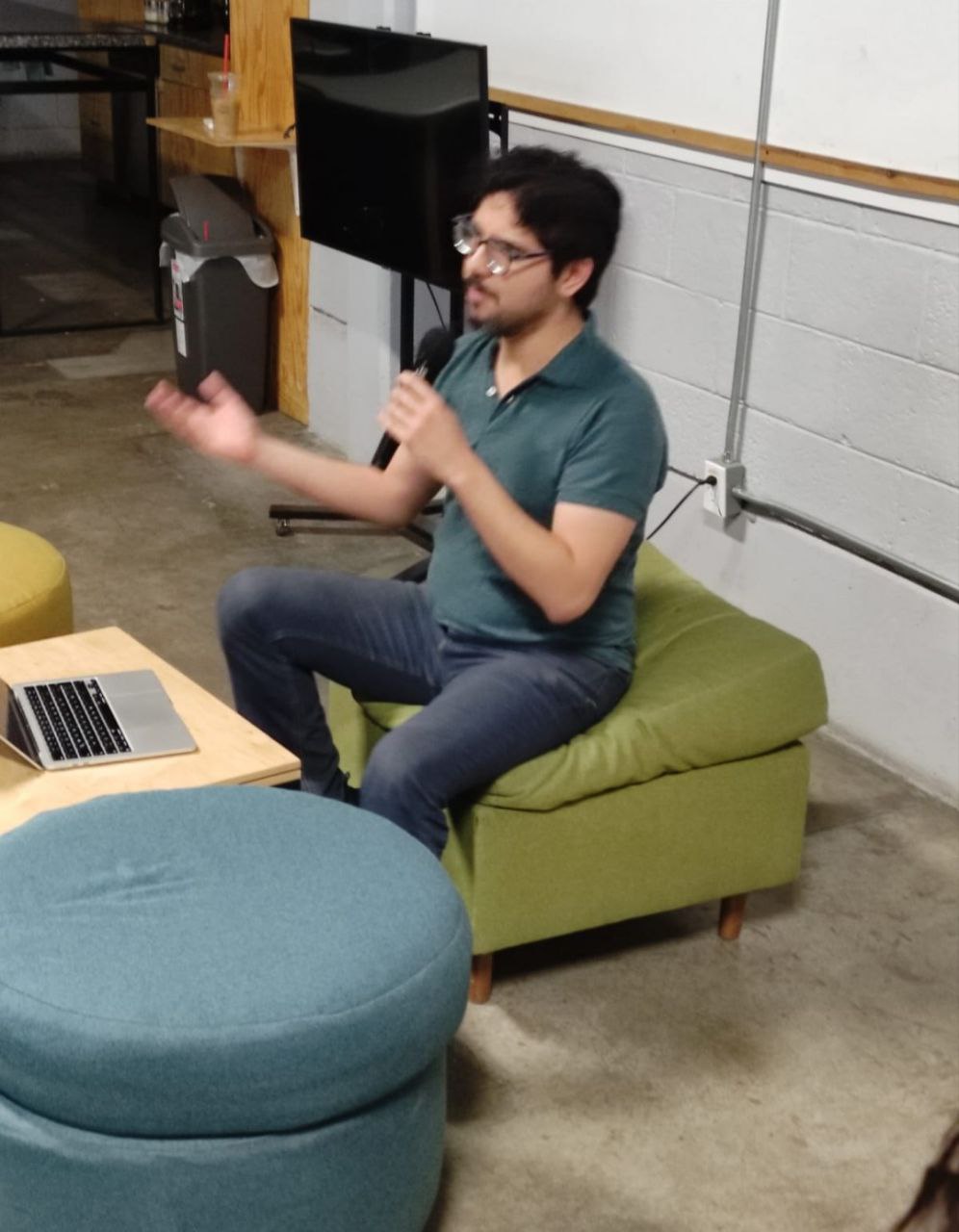
Talking in the local dev group about twtxt. Let’s see if new hackers join the conversation.
📄 Nouvel article : Utiliser Keyoxide avec une clé OpenPGP via WKD 🔗 https://dev.yom.li/blog/utiliser-keyoxide-avec-une-cl%C3%A9-openpgp-via-wkd
📄 Mise à jour du plugin pour oText J’ai mis à jour mon plugin […] 🔗 https://yom.li/notes/20231107172532 🔖 https://dev.yom.li/blog/mise-%C3%A0-jour-du-plugin-pour-otext
↳
In-reply-to
»
@prologic I don't understand what you're saying.
⤋ Read More
podman works with TLS. It does not have the "--docker" siwtch so you have to remove that and use the exact replacement commands that were in that github comment.
@prologic@twtxt.net Change your script to this:
#!/bin/sh

set -e

alias docker=podman

if [ ! command -v docker > /dev/null 2>&1 ]; then
  echo "docker not found"
  exit 1
fi

mkdir -p $HOME/.docker/certs.d/cas

## key stuff omitted

# DO NOT DO THIS docker context create cas --docker "host=tcp://cas.run:2376,ca=$HOME/.docker/certs.d/cas/ca.pem,key=$HOME/.docker/certs.d/cas/key.pem,cert=$HOME/.docker/certs.d/cas/cert.pem"
# DO THIS:
podman system connection add "host=tcp://cas.run:2376,ca=$HOME/.docker/certs.d/cas/ca.pem,key=$HOME/.docker/certs.d/cas/key.pem,cert=$HOME/.docker/certs.d/cas/cert.pem"
# DO NOT DO THIS docker context use cas
# DO THIS:
podman system connection default cas
📄 Patch BIOS sur ThinkPad T540p 🔗 https://dev.yom.li/blog/patch-bios-sur-thinkpad-t540p
📄 Nouvel article : « Alors comme ça tu as entendu parler de RSS » 🔗 https://dev.yom.li/blog/alors-comme-%C3%A7a-tu-as-entendu-parler-de-rss
📄 Nouvel article 🔗 https://dev.yom.li/blog/migration-de-gandi-vers-ouvaton
Quite predictably, the introduction of Chat GPT, has led to even more browser bloat. 🎉
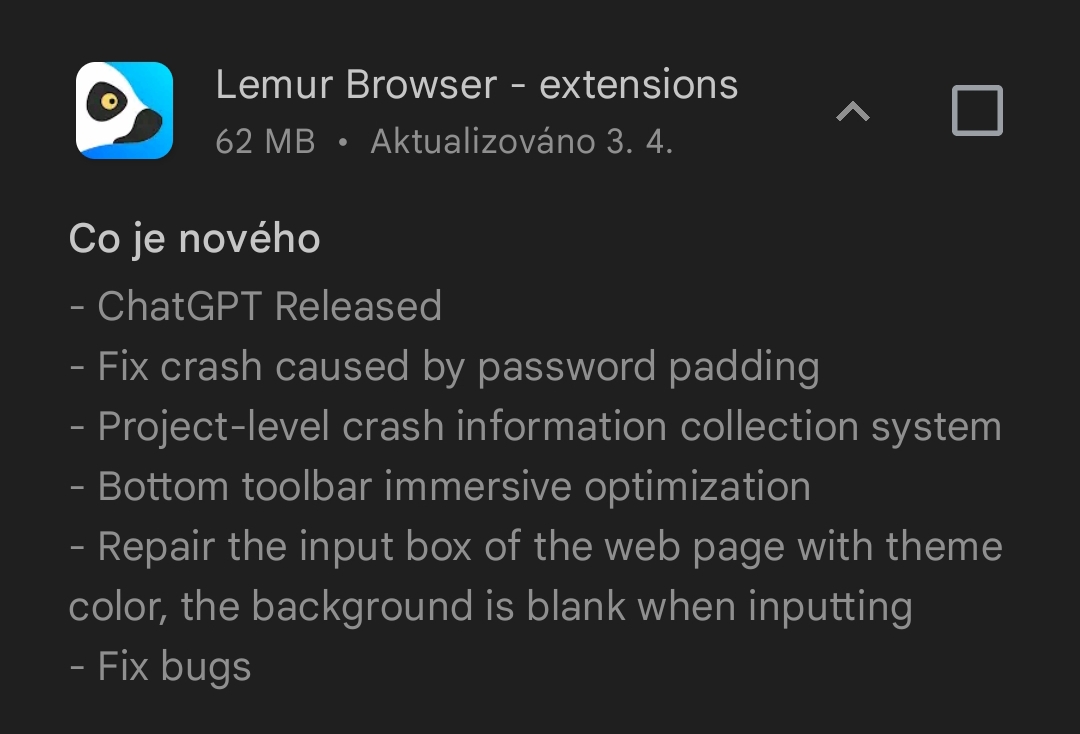

Also since I’m already bringing up opera - I have genuinely no idea, what their dev team is smoking, as all their additions this year, have been this desperate:
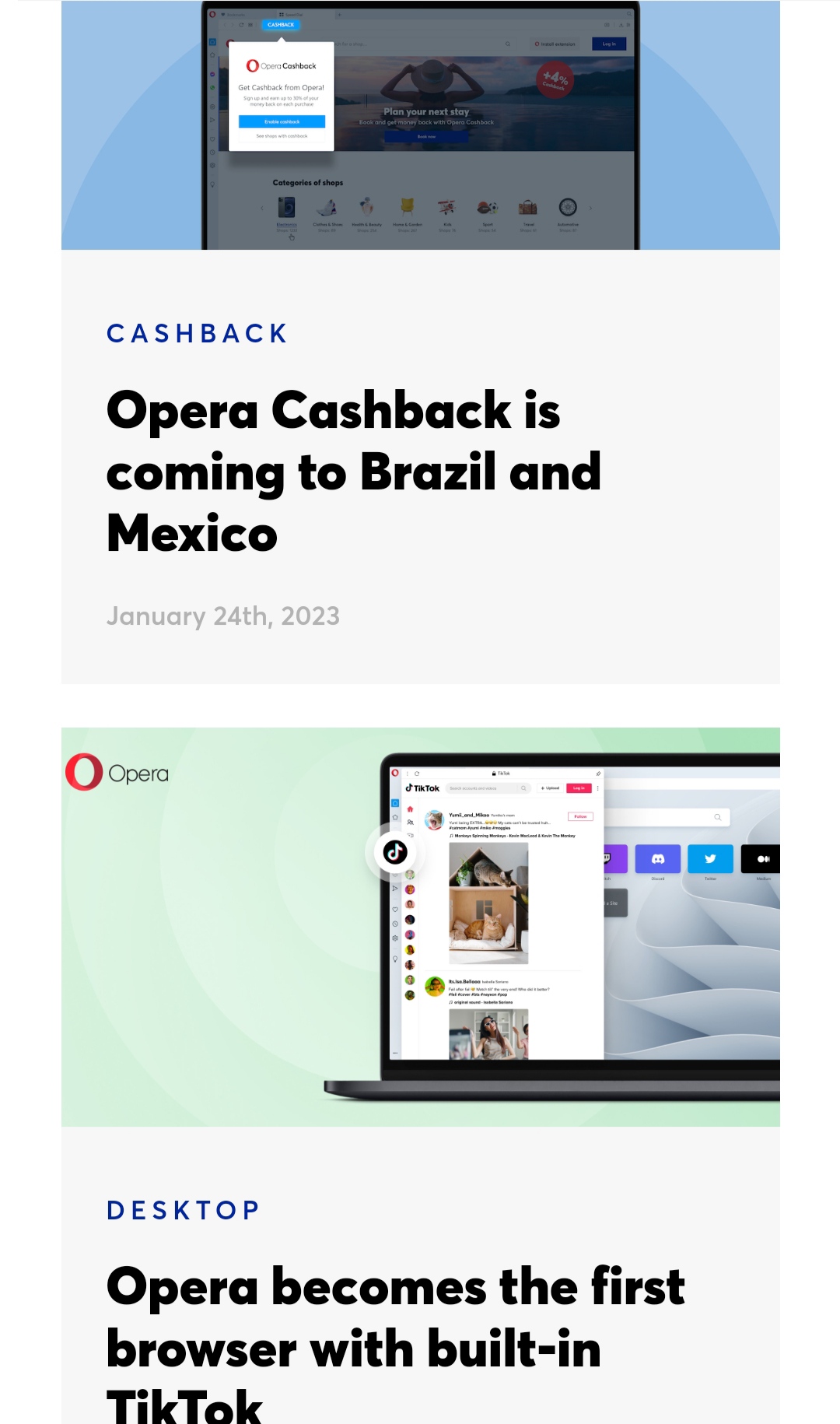
From some cashback scam and TikTok integration…
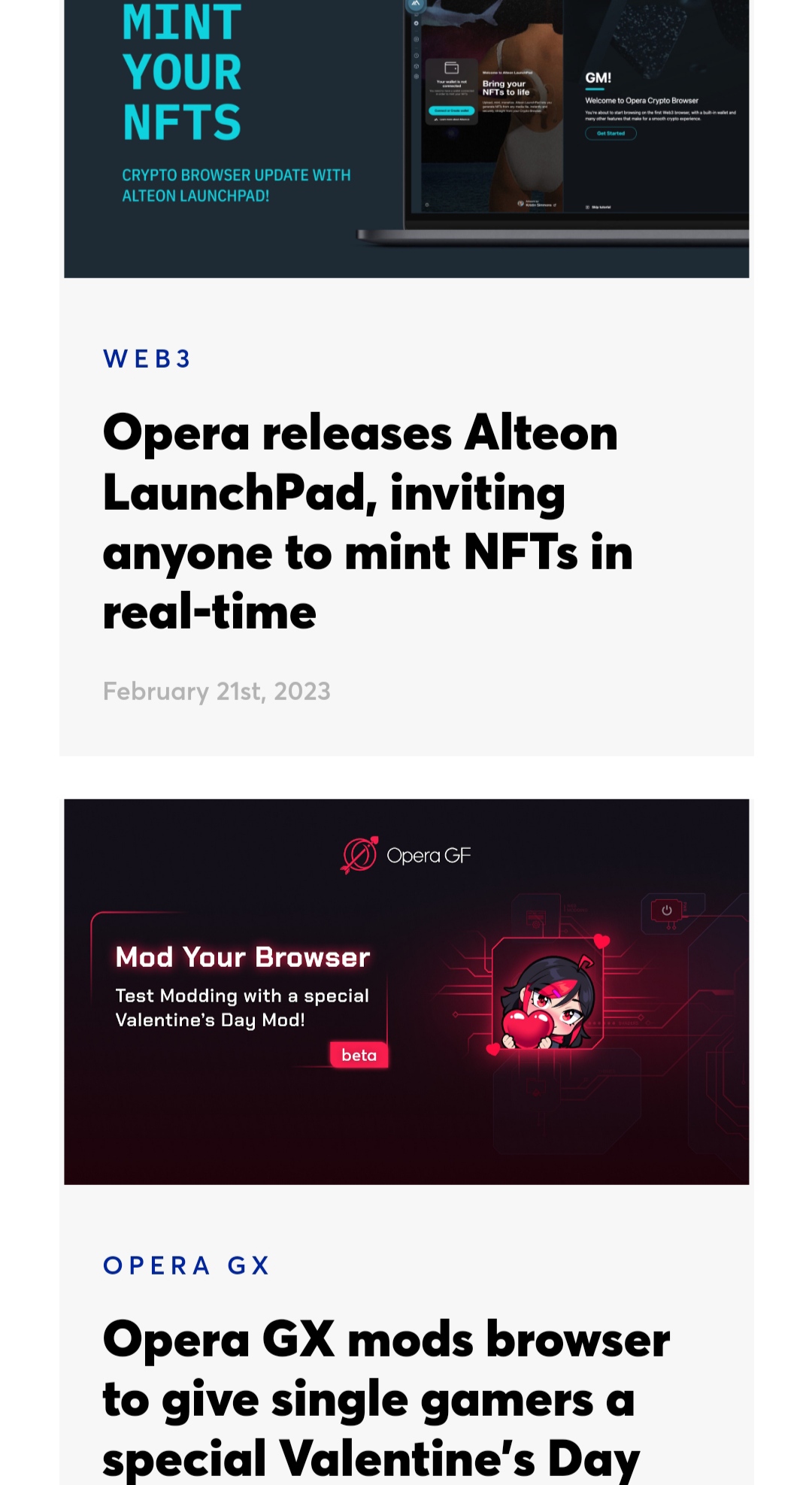
…all the way to some “lonely men bait” and adding NFTs - a full year, after everyone stopped caring.
Lo que hace el soporte técnico de Microsoft: irm https://massgrave.dev/get
Lo que hace el soporte técnico de Microsoft: irm https://massgrave.dev/get