↳
In-reply-to
»
@prologic Some criticisms and a possible alternative direction:
⤋ Read More
The tag URI scheme looks interesting. I like that it human read- and writable. And since we already got the timestamp in the twtxt.txt it would be somewhat trivial to parse. But there are still the issue with what the name/id should be… Maybe it doesn’t have to bee that stick?
Instead of using tag: as the prefix/protocol, it would more it clear what we are talking about by using in-reply-to: (https://indieweb.org/in-reply-to) or replyto: similar to mailto:
(reply:sorenpeter@darch.dk,2024-09-15T12:06:27Z)
(in-reply-to:darch.dk/twtxt.txt,2024-09-15T12:06:27Z)
(replyto:http://darch.dk/twtxt.txt,2024-09-15T12:06:27Z)
I know it’s longer that 7-11 characters, but it’s self-explaining when looking at the twtxt.txt in the raw, and the cases above can all be caught with this regex: \([\w-]*reply[\w-]*\:
Is this something that would work?
↳
In-reply-to
»
@sorenpeter !! I freaking love your Timeline ... I kind of have an justified PHP phobia 😅 but, I'm definitely thinking about giving it a try!
⤋ Read More
Thank you @aelaraji@aelaraji.com, I’m glad you like it. I use PHP because it’s everywhere on cheap hosting and no need for the user to log into a terminal to setup it up. Timeline is not mean to be use locally. For that I think something like twtxt2html is a better fit. (and happy to see you using simple.css on you new log page;)
↳
In-reply-to
»
@prologic Some criticisms and a possible alternative direction:
⤋ Read More
@falsifian@www.falsifian.org TLS won’t help you if you change your domain name. How will people know if it’s really you? Maybe that’s not the biggest problem for something with such low stakes as twtxt, but it’s a reasonable concern that could be solved using signatures from an unchanging cryptographic key.
This idea is the basis of Nostr. Notes can be posted to many relays and every note is signed with your private key. It doesn’t matter where you get the note from, your client can verify its authenticity. That way, relays don’t need to be trusted.
↳
In-reply-to
»
@prologic earlier you suggested extending hashes to 11 characters, but here's an argument that they should be even longer than that.
⤋ Read More
@prologic@twtxt.net Brute force. I just hashed a bunch of versions of both tweets until I found a collision.
I mostly just wanted an excuse to write the program. I don’t know how I feel about actually using super-long hashes; could make the twts annoying to read if you prefer to view them untransformed.
@prologic@twtxt.net earlier you suggested extending hashes to 11 characters, but here’s an argument that they should be even longer than that.
Imagine I found this twt one day at https://example.com/twtxt.txt :
2024-09-14T22:00Z Useful backup command: rsync -a “$HOME” /mnt/backup 
and I responded with “(#5dgoirqemeq) Thanks for the tip!”. Then I’ve endorsed the twt, but it could latter get changed to
2024-09-14T22:00Z Useful backup command: rm -rf /some_important_directory 
which also has an 11-character base32 hash of 5dgoirqemeq. (I’m using the existing hashing method with https://example.com/twtxt.txt as the feed url, but I’m taking 11 characters instead of 7 from the end of the base32 encoding.)
That’s what I meant by “spoofing” in an earlier twt.
I don’t know if preventing this sort of attack should be a goal, but if it is, the number of bits in the hash should be at least two times log2(number of attempts we want to defend against), where the “two times” is because of the birthday paradox.
Side note: current hashes always end with “a” or “q”, which is a bit wasteful. Maybe we should take the first N characters of the base32 encoding instead of the last N.
Code I used for the above example: https://fossil.falsifian.org/misc/file?name=src/twt_collision/find_collision.c
I only needed to compute 43394987 hashes to find it.
↳
In-reply-to
»
The original twt is unavailable. It may have been edited or deleted, or is from an unknown or muted feed.
⤋ Read More
@prx@si3t.ch I haven’t messed with rdomains, but still it might help if you included the command that produced that error (and whether you ran it as root).
↳
In-reply-to
»
Interesting.. QUIC isn't very quick over fast internet.
⤋ Read More
They’re in Section 6:
Receiver should adopt UDP GRO. (Something about saving CPU processing UDP packets; I’m a but fuzzy about it.) And they have suggestions for making GRO more useful for QUIC.
Some other receiver-side suggestions: “sending delayed QUICK ACKs”; “using recvmsg to read multiple UDF packets in a single system call”.
Use multiple threads when receiving large files.
Pinellas County - Long Run: 11.04 miles, 00:11:22 average pace, 02:05:22 duration
body was a bit worn out today. switched it up to walk-run after about 5 miles because i have a daddy-daughter dance this afternoon and did not want to be too stiff. met another runner who actually only lives about a mile or less from me. maybe i will try to meet with him after my business trip next week.
#running
↳
In-reply-to
»
@prologic Some criticisms and a possible alternative direction:
⤋ Read More
HTTPS is supposed to do [verification] anyway.
TLS provides verification that nobody is tampering with or snooping on your connection to a server. It doesn’t, for example, verify that a file downloaded from server A is from the same entity as the one from server B.
I was confused by this response for a while, but now I think I understand what you’re getting at. You are pointing out that with signed feeds, I can verify the authenticity of a feed without accessing the original server, whereas with HTTPS I can’t verify a feed unless I download it myself from the origin server. Is that right?
I.e. if the HTTPS origin server is online and I don’t mind taking the time and bandwidth to contact it, then perhaps signed feeds offer no advantage, but if the origin server might not be online, or I want to download a big archive of lots of feeds at once without contacting each server individually, then I need signed feeds.
feed locations [being] URLs gives some flexibility
It does give flexibility, but perhaps we should have made them URIs instead for even more flexibility. Then, you could use a tag URI,
urn:uuid:*, or a regular old URL if you wanted to. The spec seems to indicate that theurltag should be a working URL that clients can use to find a copy of the feed, optionally at multiple locations. I’m not very familiar with IP{F,N}S but if it ensures you own an identifier forever and that identifier points to a current copy of your feed, it could be a great way to fix it on an individual basis without breaking any specs :)
I’m also not very familiar with IPFS or IPNS.
I haven’t been following the other twts about signatures carefully. I just hope whatever you smart people come up with will be backwards-compatible so it still works if I’m too lazy to change how I publish my feed :-)
↳
In-reply-to
»
@sorenpeter !! I freaking love your Timeline ... I kind of have an justified PHP phobia 😅 but, I'm definitely thinking about giving it a try!
⤋ Read More
@prologic@twtxt.net 🤯 HOLLY! … I’m definitely adding this to my Jenny’s publish_command script!! THANK YOU! Now my website has TWO pages instead of just a boring one 😂
↳
In-reply-to
»
@sorenpeter !! I freaking love your Timeline ... I kind of have an justified PHP phobia 😅 but, I'm definitely thinking about giving it a try!
⤋ Read More
@prologic@twtxt.net Will try it right away!
@sorenpeter@darch.dk !! I freaking love your Timeline … I kind of have an justified PHP phobia 😅 but, I’m definitely thinking about giving it a try!
/ME wondering if it’s possible to use it locally just to read and manage my feed at first and then maybe make it publicly accessible later.
↳
In-reply-to
»
Out camping with the family this weekend for my birthday 🥳 Media
⤋ Read More
@prologic@twtxt.net Hey, Best wishes! Have fun! 🥳
El gato viejo sale a jugar

- Estoy malito 🤒 , ¿me haces una sopita de ratita?- 🍲🐭
/https://baldo.cat/media/photos/IMG_1994.jpeg) #catsoftwtxt
#catsoftwtxt
↳
In-reply-to
»
@prologic can't one just link to a keyoxide profile with a link to their Twtxt feed for identity or something?
⤋ Read More
you can just have a web address.. i added mine.. though i think they have changed up the protocol so my key doesn’t seem to work anymore. https://key.sour.is/id/me@sour.is
Out camping with the family this weekend for my birthday 🥳 
↳
In-reply-to
»
@lyse This looks like a nice way to do it.
⤋ Read More
@prologic@twtxt.net you should see This ! The devs were already trying to figure things out for TWTXT and Yarn.social 😃
↳
In-reply-to
»
@aelaraji how would that work exactly? Does that mean then that every user is required to have a cox side profile? Who maintains cox site? Is it centralized or decentralized can be relied upon?
⤋ Read More
@prologic@twtxt.net Thanks! I tried 😅
↳
In-reply-to
»
@prologic can't one just link to a keyoxide profile with a link to their Twtxt feed for identity or something?
⤋ Read More
@prologic@twtxt.net No luck so far and it looks like I have plenty of reading to do tomorrow morning. 😅
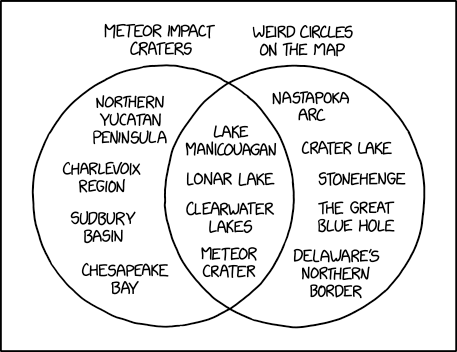
Craters
 ⌘ Read more
↳
In-reply-to
»
@prologic can't one just link to a keyoxide profile with a link to their Twtxt feed for identity or something?
⤋ Read More
@bender@twtxt.net Does it have to. To my understanding, all you have to do is to add in a claim to your Twtxt feed link into your key, update your profile and post one of These Identity formats to your Twtxt file/Profile…
Give me a couple of minutes, I’ll give it a try myself 😉
↳
In-reply-to
»
@aelaraji how would that work exactly? Does that mean then that every user is required to have a cox side profile? Who maintains cox site? Is it centralized or decentralized can be relied upon?
⤋ Read More
@prologic@twtxt.net well…
how would that work exactly?
To my limited knowledge, Keyoxide is an open source project offering different tools for verifying one’s online persona(s). That’s done by either A) creating an Ariande Profile using the web interface, a CLI. or B) Just using your GPG key. Either way, you add in Identity claims to your different profiles, links and whatnot, and finally advertise your profile … Then there is a second set of Mobile/Web clients and CLI your correspondents can use to check your identity claims. I think of them like the front-ends of GPG Keyservers (which keyoxide leverages for verification when you opt for the GPG Key method), where you verify profiles using links, Key IDs and Fingerprints…
Who maintains cox site? Is it centralized or decentralized can be relied upon?
- Maintainers? Definitely not me, but here’s their Git stuff and OpenCollective page …
- Both ASP and Keyoxide Webtools can be self-hosted. I don’t see a central authority here… + As mentioned on their FAQ page the whole process can be done manually, so you don’t have to relay on any one/thing if you don’t want to, the whole thing is just another tool for convenience (with a bit of eye candy).
Does that mean then that every user is required to have a cox side profile?
Nop. But it looks like a nice option to prove that I’m the same person to whom that may concern if I ever change my Twtxt URL, host/join a yarn pod or if I reach out on other platforms to someone I’ve met in her. Otherwise I’m just happy exchanging GPG keys or confirm the change IRL at a coffee shop or something. 😁
quelqu’un peut me dire pourquoi https://buymeacoffee.com/ ça serait mieux que https://liberapay.com/ ?
Pinellas County Running: 4.02 miles, 00:10:20 average pace, 00:41:36 duration
this one was rough. hard to breathe and crazy hot. really need to get motivated again and run early in the morning.
#running
↳
In-reply-to
»
@lyse This looks like a nice way to do it.
⤋ Read More
@aelaraji@aelaraji.com how would that work exactly? Does that mean then that every user is required to have a cox side profile? Who maintains cox site? Is it centralized or decentralized can be relied upon?
↳
In-reply-to
»
@lyse This looks like a nice way to do it.
⤋ Read More
@prologic@twtxt.net can’t one just link to a keyoxide profile with a link to their Twtxt feed for identity or something?
↳
In-reply-to
»
@bender Yes, they do 🤣 Implicitly, or threading would never work at all 😅 Nor lookups 🤣 They are used as keys. Think of them like a primary key in a database or index. I totally get where you're coming from, but there are trade-offs with using Message/Thread Ids as opposed to Content Addressing (like we do) and I believe we would just encounter other problems by doing so.
⤋ Read More
@prologic@twtxt.net a signature IS encryption in reverse. If my private key becomes compromised then they can impersonate me. Being able to manage promotion and revocation of keys needed even in a system where its used for just signatures.
↳
In-reply-to
»
@falsifian In my opinion it was a mistake that we defined the first
⤋ Read More
url field in the feed to define the URL for hashing. It should have been the last encountered one. Then, assuming append-style feeds, you could override the old URL with a new one from a certain point on:
I was not suggesting to that everyone need to setup a working webfinger endpoint, but that we take the format of nick+(sub)domain as base for generating the hashed together with the message date and content.
If we omit the protocol prefix from the way we do things now will that not solve most of the problems? In the case of gemini://gemini.ctrl-c.club/~nristen/twtxt.txt they also have a working twtxt.txt at https://ctrl-c.club/~nristen/twtxt.txt … damn I just notice the gemini. subdomain.
Okay what about defining a prefers protocol as part of the hash schema? so 1: https , 2: http 3: gemini 4: gopher ?
Pinellas County - Hills: 5.25 miles, 00:10:03 average pace, 00:52:48 duration
some hill (or overpass here in florida) workouts.
#running
↳
In-reply-to
»
@prologic do that mean that for every new post (not replies) the client will have to generate a UUID or similar when posting and add that to to the twt?
⤋ Read More
@sorenpeter@darch.dk There was a client that would generate a unique hash for each twt. It didn’t get wide adoption.
↳
In-reply-to
»
IMO we just have to fix the identity problem and figure out how to detect or support edits.
⤋ Read More
@prologic@twtxt.net identity and content integrity are two different problems.
↳
In-reply-to
»
Interesting.. QUIC isn't very quick over fast internet.
⤋ Read More
@xuu@txt.sour.is Thanks for the link. I found a pdf on one of the authors’ home pages: https://ahmadhassandebugs.github.io/assets/pdf/quic_www24.pdf . I wonder how the protocol was evaluated closer to the time it became a standard, and whether anything has changed. I wonder if network speeds have grown faster than CPU speeds since then. The paper says the performance is around the same below around 600 Mbps.
To be fair, I don’t think QUIC was ever expected to be faster for transferring a single stream of data. I think QUIC is supposed to reduce the impact of a dropped packet by making sure it only affects the stream it’s part of. I imagine QUIC still has that advantage, and this paper is showing the other side of a tradeoff.
↳
In-reply-to
»
@cuaxolotl Ah, thanks for reporting back! Okay, so you’re basically manually “crawling” feeds right now. 🤔 What do you think about the idea of adding something like
⤋ Read More
# follow_notify = gemini://foo/bar to your feed’s metadata, so that clients who follow you can ping that URL every now and then? How would you even notice that, do you regularly read your gemini logs? 🤔
@movq@www.uninformativ.de Damn! I’m two years late to the discussion 😅 So basically, one could just make a bash script/cron job on the side for pinging non-Http feeds from time to time and the receiving end would get it IF they check their logs.
Asteroid News
 ⌘ Read more
Interesting.. QUIC isn’t very quick over fast internet.
QUIC is expected to be a game-changer in improving web application performance. In this paper, we conduct a systematic examination of QUIC’s performance over high-speed networks. We find that over fast Internet, the UDP+QUIC+HTTP/3 stack suffers a data rate reduction of up to 45.2% compared to the TCP+TLS+HTTP/2 counterpart. Moreover, the performance gap between QUIC and HTTP/2 grows as the underlying bandwidth increases. We observe this issue on lightweight data transfer clients and major web browsers (Chrome, Edge, Firefox, Opera), on different hosts (desktop, mobile), and over diverse networks (wired broadband, cellular). It affects not only file transfers, but also various applications such as video streaming (up to 9.8% video bitrate reduction) and web browsing. Through rigorous packet trace analysis and kernel- and user-space profiling, we identify the root cause to be high receiver-side processing overhead, in particular, excessive data packets and QUIC’s user-space ACKs. We make concrete recommendations for mitigating the observed performance issues.
↳
In-reply-to
»
@cuaxolotl Ah, thanks for reporting back! Okay, so you’re basically manually “crawling” feeds right now. 🤔 What do you think about the idea of adding something like
⤋ Read More
# follow_notify = gemini://foo/bar to your feed’s metadata, so that clients who follow you can ping that URL every now and then? How would you even notice that, do you regularly read your gemini logs? 🤔
@prologic@twtxt.net Unfortunately it only work if I pull the feed in debug mode jenny -D otherwise, it misses things up if I add that snippet of text to links in my .config/jenny/follow file 😅 Anyway, it was a nice try.
↳
In-reply-to
»
On the Subject of Feed Identities; I propose the following:
⤋ Read More
So this is a great thread. I have been thinking about this too.. and what if we are coming at it from the wrong direction? Identity being tied to a given URL has always been a pain point. If i get a new URL its almost as if i have a new identity because not only am I serving at a new location but all my previous communications are broken because the hashes are all wrong.
What if instead we used this idea of signatures to thread the URLs together into one identity? We keep the URL to Hash in place. Changing that now is basically a no go. But we can create a signature chain that can link identities together. So if i move to a new URL i update the chain hosted by my primary identity to include the new URL. If i have an archived feed that the old URL is now dead, we can point to where it is now hosted and use the current convention of hashing based on the first url:
The signature chain can also be used to rotate to new keys over time. Just sign in a new key or revoke an old one. The prior signatures remain valid within the scope of time the signatures were made and the keys were active.
The signature file can be hosted anywhere as long as it can be fetched by a reasonable protocol. So say we could use a webfinger that directs to the signature file? you have an identity like frank@beans.co that will discover a feed at some URL and a signature chain at another URL. Maybe even include the most recent signing key?
From there the client can auto discover old feeds to link them together into one complete timeline. And the signatures can validate that its all correct.
I like the idea of maybe putting the chain in the feed preamble and keeping the single self contained file.. but wonder if that would cause lots of clutter? The signature chain would be something like a log with what is changing (new key, revoke, add url) and a signature of the change + the previous signature.
# chain: ADDKEY kex14zwrx68cfkg28kjdstvcw4pslazwtgyeueqlg6z7y3f85h29crjsgfmu0w
# sig: BEGIN SALTPACK SIGNED MESSAGE. ...
# chain: ADDURL https://txt.sour.is/user/xuu
# sig: BEGIN SALTPACK SIGNED MESSAGE. ...
# chain: REVKEY kex14zwrx68cfkg28kjdstvcw4pslazwtgyeueqlg6z7y3f85h29crjsgfmu0w
# sig: ...
↳
In-reply-to
»
@lyse This looks like a nice way to do it.
⤋ Read More
@prologic@twtxt.net do that mean that for every new post (not replies) the client will have to generate a UUID or similar when posting and add that to to the twt?
↳
In-reply-to
»
@cuaxolotl Ah, thanks for reporting back! Okay, so you’re basically manually “crawling” feeds right now. 🤔 What do you think about the idea of adding something like
⤋ Read More
# follow_notify = gemini://foo/bar to your feed’s metadata, so that clients who follow you can ping that URL every now and then? How would you even notice that, do you regularly read your gemini logs? 🤔
@movq@www.uninformativ.de @prologic@twtxt.net Hey! I may have found a silly trick to announce my following to people hosting their feeds on the Gemini space using the requested URI itself instead of relaying on the USER Agent 😂. I’ve copied my current feed over to my (to be) Gemlog for testing. And if I do a jenny -D "gemini://gem.aelaraji.com/twtxt.txt?follower=aelaraji@https://aelaraji.com/twtxt.txt" and this happens:
A) As a follower, I get the feed as usual.
B) As the feed owner, I get this in logs:
hostname:1965 - “gemini://gem.aelaraji.com/twtxt.txt?follower=aelaraji@https://aelaraji.com/twtxt.txt” 20 “text/plain;lang=en-US”
You could do the same for Gopher feeds but only if you want to announce yourself by throwing in an error in their logs, then you’ll need a second request to fetch the feed. jenny -D "gopher://gopher.aelaraji.com/twtxt.txt&follower=aelaraji@https:/aelaraji.com/twtxt.txt" gave me this :
gopher.aelaraji.com:70 - [09/Sep/2024:22:08:54 +0000] “GET 0/twtxt.txt&follower=aelaraji@https:/aelaraji.com/twtxt.txt HTTP/1.0” 404 0 “” “Unknown gopher client”
NB: the follower=... string won’t appear in gopher logs after a ? but if I replace it with a + or a & and it works. There will be a missing / after the https:. Probably a client thing.
Pinellas County - Cool down: 0.83 miles, 00:09:44 average pace, 00:08:06 duration
Pinellas County - Base: 4.15 miles, 00:08:59 average pace, 00:37:18 duration
Good workout keeping it aerobic for the most part.
#running
@jmjl@tilde.green howdy! Sorry for mistaken you with https://blog.nfld.uk/ (jlj), but glad to connect. Cheers!
↳
In-reply-to
»
On the Subject of Feed Identities; I propose the following:
⤋ Read More
@mckinley@twtxt.net To answer some of your questions:
Are SSH signatures standardized and are there robust software libraries that can handle them? We’ll need a library in at least Python and Go to provide verified feed support with the currently used clients.
We already have this. Ed25519 libraries exist for all major languages. Aside from using ssh-keygen -Y sign and ssh-keygen -Y verify, you can also use the salty CLI itself (https://git.mills.io/prologic/salty), and I’m sure there are other command-line tools that could be used too.
If we all implemented this, every twt hash would suddenly change and every conversation thread we’ve ever had would at least lose its opening post.
Yes. This would happen, so we’d have to make a decision around this, either a) a cut-off point or b) some way to progressively transition.
↳
In-reply-to
»
@falsifian In my opinion it was a mistake that we defined the first
⤋ Read More
url field in the feed to define the URL for hashing. It should have been the last encountered one. Then, assuming append-style feeds, you could override the old URL with a new one from a certain point on:
how little data is needed for generating the hashes? Instead of the full URL, can we makedo with just the domain (example.net) so we avoid the conflicts with gemini://, https:// and only http:// (like in my own twtxt.txt) or construct something like like a webfinger id nick@domain (also used by mastodon etc.) from the domain and nick if there, else use domain as nick as well
↳
In-reply-to
»
@movq Yep, that's very nice music. :-)
⤋ Read More
@lyse@lyse.isobeef.org this one is hilarious 🤣
↳
In-reply-to
»
@aelaraji Just move to Mars to get an extra hour a day: https://spaceplace.nasa.gov/days/en/ If that's not enough, Mercury should have you covered for sure.
⤋ Read More
@movq@www.uninformativ.de @lyse@lyse.isobeef.org @bender@twtxt.net You Are AWESOME!! Got my playlist for the week!! 🤘😂
Monocaster
 ⌘ Read more
↳
In-reply-to
»
@aelaraji Venus?
⤋ Read More
@movq@www.uninformativ.de Yep, that’s very nice music. :-)
Can’t help myself, but I have to include the Uranus song now. :-D https://www.youtube.com/watch?v=OSWszdSHkyE#t=7