Je teste gmid pour remplacer vger+inetd+relayd. Reste à configurer le cgi, il faut que je prépare un slowcgi en parallèle de celui pour httpd :/. https://gmid.omarpolo.com #openbsd #gemini
Somewhere I read that changing location, like entering a room, can rejigger neural pathways so that some thoughts and memories are somehow associated with the space. It’s the same for me when picking up a laptop. My purpose feels clear until I open a blank web browser window and my mind goes blank, too. In all the moments where I’m drawing a total blank, and then suddenly the thoughts come easily again: maybe that’s my brain looking for the room it was in before.
↳
In-reply-to
»
yarn should define its own federation protocol that extends the basic twtxt in ways that twtxt doesn't allow. it's time. and i've got ideas!
⤋ Read More
@shreyan@twtxt.net What do you mean when you say federation protocol?
Either use webfinger for identity like mastodon etc. or use ATproto from Bluesky (or both?)
We can use webmentions or create our own twt-mentions for notifying someones feed (WIP code at: https://github.com/sorenpeter/timeline/tree/webmention/views)
I’m not sure we need much else. I would not even bother with encryption since other platforms does that better, and for me twtxt/yarn/timeline is for making things public
Fallait que ça sorte : Dune partie 2, le garçon pas content qui voulait se venger. https://si3t.ch/log/2024-03-01-dune-partie-2.txt #dune
Geographic Qualifiers
!['Thank you for the loveliest evening I've ever had...' [normal] '...east of the Mississippi.' [instant intrigue!]](https://imgs.xkcd.com/comics/geographic_qualifiers.png) ⌘ Read more
⌘ Read more
Moderate: 3.02 miles, 00:09:02 average pace, 00:27:18 duration
testing out the left knee again, but in the real world. it was fine. took it easy but not super easy so it was a good test.
#running
↳
In-reply-to
»
Yeah, the lack of comments makes regular JSON not a good configuration format in my view. Also, putting all keys in quotes and the use of commas is annoying. The big upside is that's in lots of standard libraries.
⤋ Read More
and then i have a compact version that makes things more grep’able in scripts.

You can’t catch the kill signal. Should this be syscall.SIGTERM instead of os.Kill, xuu? https://git.sour.is/sour-is/go-paste/src/branch/main/main.go#L21
You are totally right.. i think i was going for SIGTERM and SIGQUIT
↳
In-reply-to
»
Yeah, the lack of comments makes regular JSON not a good configuration format in my view. Also, putting all keys in quotes and the use of commas is annoying. The big upside is that's in lots of standard libraries.
⤋ Read More
@lyse@lyse.isobeef.org its a hierarchy key value format. I designed it for the network peering tools i use.. I can grant access to different parts of the tree to other users.. kinda like directory permissions. a basic example of the format is:
@namespace
# multi
# line
# comment
root :value

# example space comment
@namespace.name space-tag

# attribute comments
attribute attr-tag  :value for attribute

# attribute with multiple
# lines of values
foo :bar
      :bin
      :baz

repeated :value1
repeated :value2
each @ starts the definition of a namespace kinda like [name] in ini format. It can have comments that show up before. then each attribute is key :value and can have their own # comment lines.
Values can be multi line.. and also repeated..
the namespaces and values can also have little meta data tags added to them.

the service can define webhooks/mqtt topics to be notified when the configs are updated. That way it can deploy the changes out when they are updated.
↳
In-reply-to
»
@lyse Lack of comments are definitely a shortcoming of JSON. I don't like TOML because it lets you have nested categories (
⤋ Read More
[foo] [foo.bar] [foo.baz]) and it just feels confusing to me, even with indentation. Simple INI files are okay.
@mckinley@twtxt.net Don’t forget the syntax for arrays of sets [[foo.bars]] [[foo.bars]] [[foo.bars]]
↳
In-reply-to
»
Question of the day: What configuration file formats do you all like and use?
⤋ Read More
@lyse@lyse.isobeef.org Lack of comments are definitely a shortcoming of JSON. I don’t like TOML because it lets you have nested categories ([foo] [foo.bar] [foo.baz]) and it just feels confusing to me, even with indentation. Simple INI files are okay.
The Prosody XMPP server’s configuration file is just a Lua script because Prosody is written in Lua, and that’s excellent.
↳
In-reply-to
»
Question of the day: What configuration file formats do you all like and use?
⤋ Read More
Yeah, the lack of comments makes regular JSON not a good configuration format in my view. Also, putting all keys in quotes and the use of commas is annoying. The big upside is that’s in lots of standard libraries.
I think the appeal with YAML is that is has comments, is kind of easy to write and read and also provides unlimited nesting levels. But it has all its drawbacks, no question. Forbidding tabs, thousands of different string flavors, having so many boolean options (poor Norwegians) etc. I use it, but I don’t particularly enjoy it.
Among simple key value pairs, I like INI files, but with # for comments, not ;. I never used TOML, read up on it yesteray before writing this question, but it looks a bit weird and has some strange rules. I guess I have to give it a try one day.
And yes, as mentioned by several of you, it always depends on the complexity of the configuration at hand.
I’m developing something for the scouts at the moment with rather simple requirements on the config. Currently, there are just four settings. Even INI would be overkill with its section. I selected JSON for now, because that’s readily available with Go’s std lib. But I do not like it.
Btw. what’s your own config format, @xuu@txt.sour.is?
Easy: 3.00 miles, 00:10:01 average pace, 00:30:02 duration
just an easy run after a few days resting the knee. had a few pings the first half mile and then it went away until about 2.75 miles in. called it soon after.
#running #treadmill
↳
In-reply-to
»
Question of the day: What configuration file formats do you all like and use?
⤋ Read More
@lyse@lyse.isobeef.org i made my own :D
I do prefer toml for the old school ini style with added support for object lists.
my second would be hjson or any other json with comments style.
Call My Cell
 ⌘ Read more
I came across Google Summer of Code
This one looks interesting, I’ll apply soon, and perhaps is interesting for you as well
https://kiwix.org/en/google-summer-of-code/
Would ‘twtxt’ be a good project for the next one? 🤔
A lot of quotes I should read one day: http://quotes.cat-v.org/
Goodhart’s Law
![[later] I'm pleased to report we're now identifying and replacing hundreds of outdated metrics per hour.](https://imgs.xkcd.com/comics/goodharts_law.png) ⌘ Read more
⌘ Read more
Pinellas County - Long Run: 7.01 miles, 00:08:51 average pace, 01:02:06 duration
my heart rate really got up there and i could not slow my pace down reliably. it was a fun run but it also aggravated my left knee from last weeks long run.
#running
A quick and dirty charting library for your computer or phone: https://akkartik.itch.io/carousel/devlog/686788/lots-of-charts
Easy: 4.26 miles, 00:09:32 average pace, 00:40:38 duration
test run on the treadmill with simulation of skyway bridge (grade of 4%) over and back at a comfortable pace.
#running #treadmill
Nouvel article : J’aimerais plus ou moins que tu ailles te faire cuire le cul. https://si3t.ch/log/2024-02-23-j-aimerais-que-tu-ailles-te-faire-cuire-le-cul.txt
Orbital Argument
 ⌘ Read more
↳
In-reply-to
»
So I had three espressos before 11:00 - today's going swell.
⤋ Read More
@johanbove@johanbove.info dear lord! Can you still sleep at night?!
Les Indiens : *font des vidéos très techniques avec des titres en anglais* Also les Indiens : […] 🔗 https://yom.li/notes/20240222193544
↳
In-reply-to
»
@prologic High five, I’m “generation Java” as well! 😂 There were some leftovers of C++, we used that in the computer graphics courses in Uni a lot. But pretty much anything else that involved programming was Java.
⤋ Read More
@movq@www.uninformativ.de Haha! yeah sounds about like my HS CS program. A math teacher taught visual basic and pascal. and over on the other end of the school we had “electronics” which was a room next to the auto body class where they had a bunch of random computer parts scavenged from the district decommissioned surplus storage.
The advanced class would piece together training kits for the basic class to put together.
↳
In-reply-to
»
I finally found the NASM assembler.
⤋ Read More
@prologic@twtxt.net High five, I’m “generation Java” as well! 😂 There were some leftovers of C++, we used that in the computer graphics courses in Uni a lot. But pretty much anything else that involved programming was Java.
(There was nothing even remotely resembling CS in our “high school”. That school neither had the required teachers nor the equipment / PCs.)
Pinellas County - Tempo: 6.26 miles, 00:08:33 average pace, 00:53:29 duration
whew, it was a tough one. very little sleep from working late last night and an early morning for my son’s coding club. it was a pleasant run, but it really took the energy out of me.
#running
‘The only thing necessary for the triumph of evil is for good people to do nothing.’ RIP Alexei Navalny (1976-2024). https://youtu.be/AHDueubF0QY
A paper computer inside a silicon computer: https://akkartik.itch.io/carousel/devlog/685707/a-little-programming-game
↳
In-reply-to
»
I keep muting accounts here (twtxt.net), and they keep popping back on after some time. It is nuts. :-(
⤋ Read More
Light Leap Years
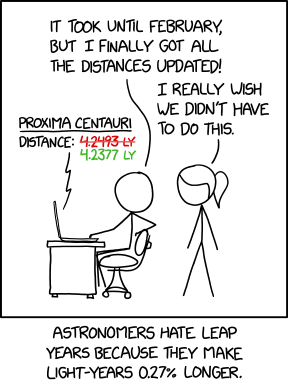 ⌘ Read more
Cool news from: https://signal.org/blog/phone-number-privacy-usernames/
↳
In-reply-to
»
@movq before this century. Back when colleges taught C++ instead of Java for CS degrees.
⤋ Read More
@quark@ferengi.one pascal was high school for me 10th grade. I remember making an over the top Yahtzee game with text windows and everything. My instructor got mad at me because it was a ton of pages printed out to review.
↳
In-reply-to
»
@movq before this century. Back when colleges taught C++ instead of Java for CS degrees.
⤋ Read More
@xuu@txt.sour.is wow, I can tell I am older than you (I already knew this, but still). It was nothing but Pascal for me.
New article: show mastodon toot title in #sfeed feed reader. http://si3t.ch/log/2024-02-20-sfeed-mastodon-title.txt
Actually, I never used it yet on this computer, I wanted to dig into it. So, for me, it never worked. <@https://im-in.space/@solene@bsd.network/111958723478360924>
J’ai refait ma page 404 avec #inkscape. J’aurais bien besoin de conseils pour que ça soit + joli. @noroanka@noroanka ;) https://si3t.ch/pub/err/dune.svg

↳
In-reply-to
»
I finally found the NASM assembler.
⤋ Read More
@movq@www.uninformativ.de before this century. Back when colleges taught C++ instead of Java for CS degrees.
↳
In-reply-to
»
@xuu These are indeed iterators. Very weird syntax, though.
⤋ Read More
@lyse@lyse.isobeef.org Yeah the func in func threw me off.. The generic type iter.Seq[V] does make things a bit more clear though.
↳
In-reply-to
»
Go 1.22.0 introduces a new experiment for range functions. Have you tried them out? What do you think it can make easier to accomplish?
⤋ Read More
Things can get very interesting when we add the iter.Pull function in the mix. It works like pythons yield from.
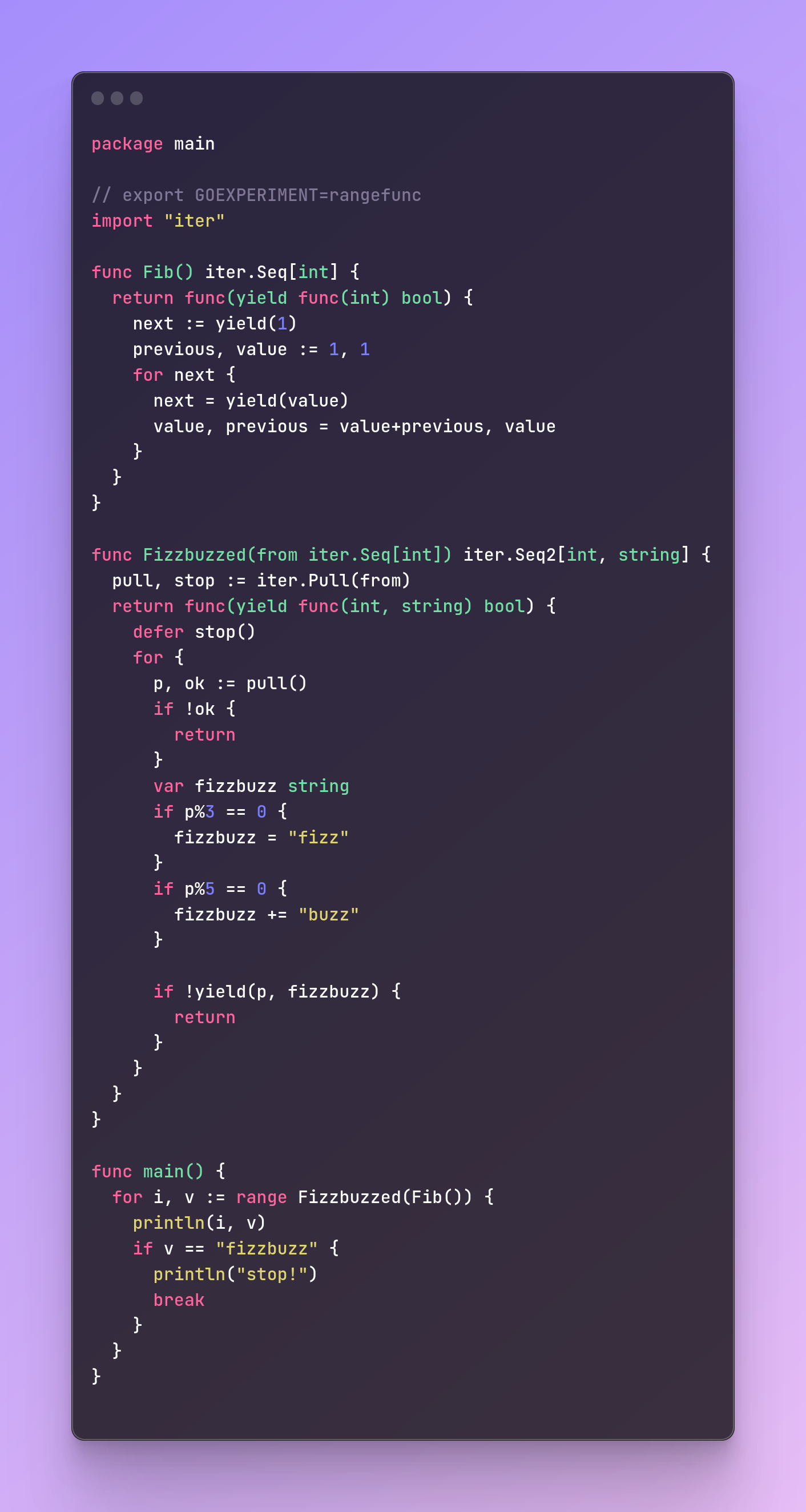
↳
In-reply-to
»
Go 1.22.0 introduces a new experiment for range functions. Have you tried them out? What do you think it can make easier to accomplish?
⤋ Read More
@xuu@txt.sour.is These are indeed iterators. Very weird syntax, though.
↳
In-reply-to
»
I would love to see a world where ones twtxt feed is defined by webfinger. So
⤋ Read More
@xuu@txt.sour.is => https://text.sour.is/user/xuu/twtxt.txt
It already works: https://webfinger.net/lookup/?resource=xuu%40txt.sour.is
but it not very well described afak
I would love to see a world where ones twtxt feed is defined by webfinger. So @xuu@txt.sour.is => https://text.sour.is/user/xuu/twtxt.txt
Then my identity can exist independent of the feed location. And I can host multiple protocol types for my feed. Ie. http/gopher/Gemini/irc DCC/etc
Crossword Constructors
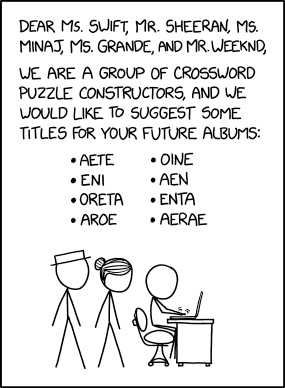 ⌘ Read more
↳
In-reply-to
»
Go 1.22.0 introduces a new experiment for range functions. Have you tried them out? What do you think it can make easier to accomplish?
⤋ Read More
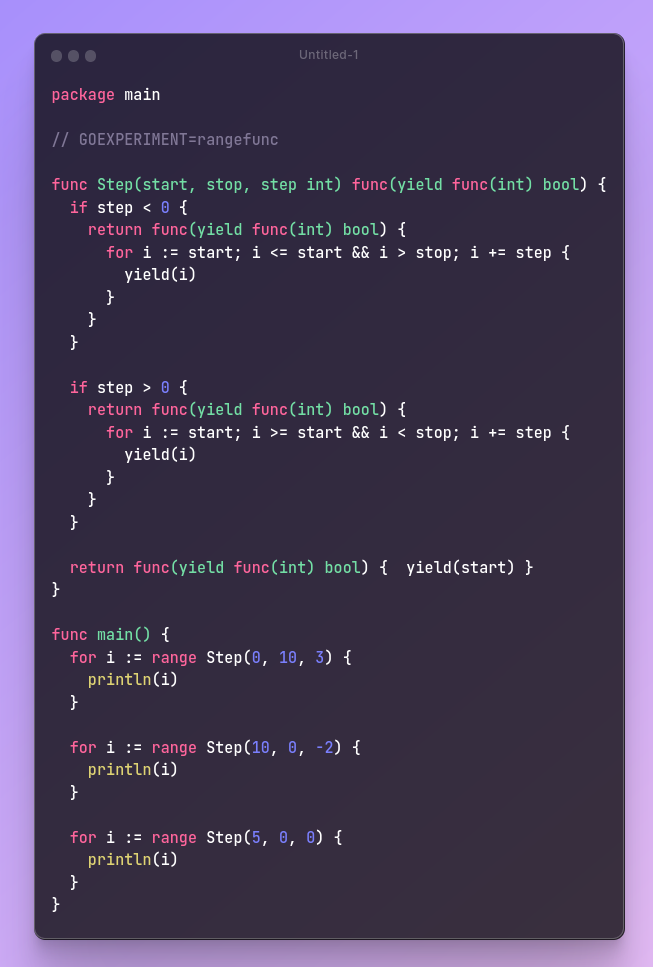
the function can yield two values to include an index.
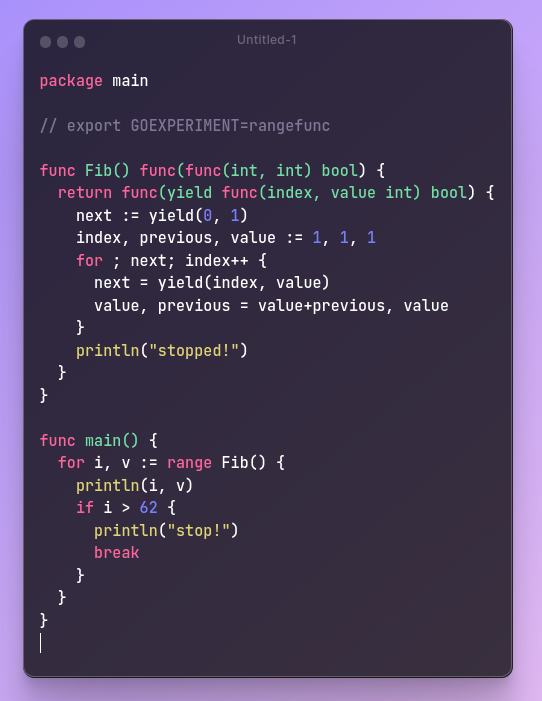
↳
In-reply-to
»
Go 1.22.0 introduces a new experiment for range functions. Have you tried them out? What do you think it can make easier to accomplish?
⤋ Read More
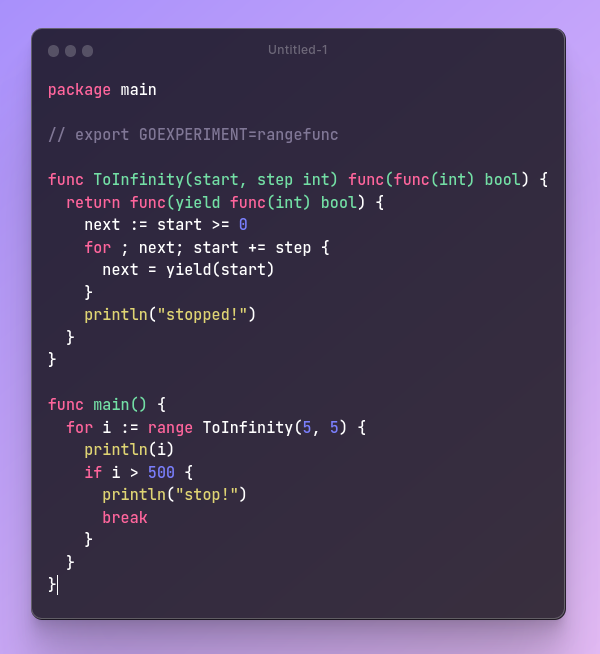
The range function can signal when to stop running by returning false from the yield function.
Just a reminder featherwiki exists, and is amazing: https://feather.wiki/ @FeatherWiki@FeatherWiki
Go 1.22.0 introduces a new experiment for range functions. Have you tried them out? What do you think it can make easier to accomplish?
↳
In-reply-to
»
I finally found the NASM assembler.
⤋ Read More
@movq@www.uninformativ.de NASM is great. I remember playing with it back in my HS days. It has lots of little helps to make assembly more approachable.