Data Point
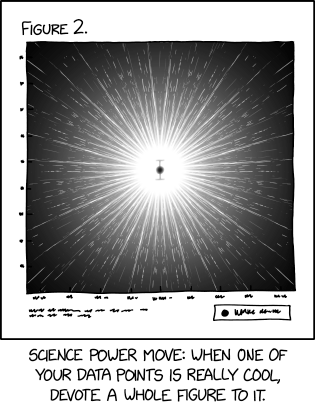 ⌘ Read more
↳
In-reply-to
»
Twitter has a new "social platforms" policy... is it maddening? Hilarious? Ridiculous? All of the above? I laughed, but to be clear, I don't think 'funny' is a good way to describe it.
⤋ Read More
I’ll let the head of the bird site comment on that:

Twitter has a new “social platforms” policy… is it maddening? Hilarious? Ridiculous? All of the above? I laughed, but to be clear, I don’t think ‘funny’ is a good way to describe it.
Que ganas de aprender OSINT, https://intelx.io y https://www.shodan.io son geniales.
Que ganas de aprender OSINT, https://intelx.io y https://www.shodan.io son geniales.
Pinellas County - Long run: 12.04 miles, 00:10:24 average pace, 02:05:11 duration
Tutorial: Getting started with generics - The Go Programming Language – Okay @xuu@txt.sour.is I quite like Go’s generics now 🤣 After going through this myself I like the semantics and the syntax. I’m glad they did a lot of work on this to keep it simple to both understand and use (just like the rest of Go) 👌  #GoLang #Generics
Gravity
 ⌘ Read more
↳
In-reply-to
»
ChatGPT is good, but it's not that good 🤣 I asked it to write a program in Go that performs double ratcheting and well the code is total garbage 😅 -- Its only as good as the inputs it was trained on 🤣 #OpenAI #GPT3
⤋ Read More
@prologic@twtxt.net its only a Pre-JR dev level.
ChatGPT is good, but it’s not that good 🤣 I asked it to write a program in Go that performs double ratcheting and well the code is total garbage 😅 – Its only as good as the inputs it was trained on 🤣 #OpenAI #GPT3
↳
In-reply-to
»
A little late night visitor. Media
⤋ Read More
@prologic@twtxt.net @justamoment@twtxt.net Yep, my back yard security cam. And my poor weather station buried in the snow.
user/bmallred/data/2022-12-15-09-00-02.fit: 5.21 miles, 00:11:16 average pace, 00:58:37 duration
A little late night visitor.
↳
In-reply-to
»
Interview with an NFT enthusiast - YouTube -- Bahahahahahahaha 🤣 #NFT
⤋ Read More
Dos buenos recursos para crear infografías gratis, https://draw.io y https://ease.ly
Dos buenos recursos para crear infografías gratis, https://draw.io y https://ease.ly
user/bmallred/data/2022-12-14-08-54-58.fit: 5.19 miles, 00:10:22 average pace, 00:53:49 duration
Interview with an NFT enthusiast - YouTube
– Bahahahahahahaha 🤣 #NFT
Optimal Bowling
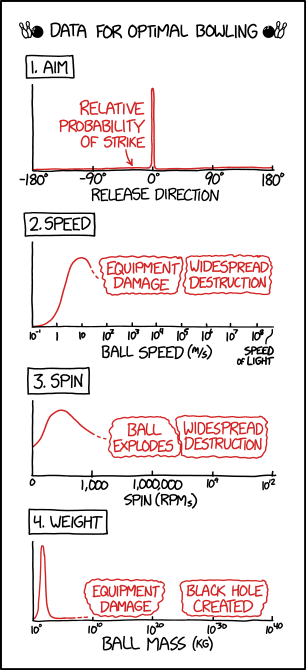 ⌘ Read more
user/bmallred/data/2022-12-13-13-42-36.fit: 5.04 miles, 00:08:56 average pace, 00:45:00 duration
updated kalk, a minimal CLI RPN calculator with some extra quirky fuctionality. Pretty happy with its current status https://git.sr.ht/~noizhardware/kalk
updated kalk, a minimal CLI RPN calculator with some extra quirky fuctionality. Pretty happy with its current status https://git.sr.ht/~noizhardware/kalk
Hydropower Breakthrough
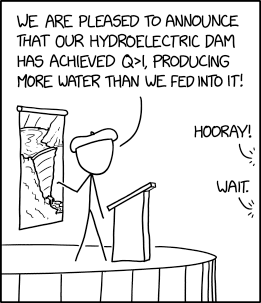 ⌘ Read more
user/bmallred/data/2022-12-11-10-07-26.fit: 7.02 miles, 00:09:27 average pace, 01:06:23 duration
↳
In-reply-to
»
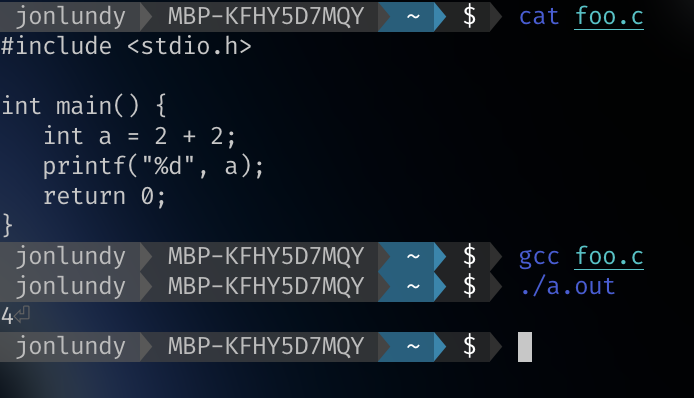
I started reading the proposal to introduce operator overloading in Go version 2 that I like to see: https://github.com/golang/go/issues/27605 Now a few hours later I ended up at this gem. Write a program that makes 2+2=5: https://codegolf.stackexchange.com/questions/28786/write-a-program-that-makes-2-2-5 There are some awesone solutions. :-)
⤋ Read More
@prologic@twtxt.net same.
user/bmallred/data/2022-12-09-13-11-37.fit: 5.04 miles, 00:09:45 average pace, 00:49:06 duration
↳
In-reply-to
»
I made a thing. Its a multi password type checker. Using the PHC string format we can identify a password hashing format from the prefix
⤋ Read More
$name$ and then dispatch the hashing or checking to its specific format.
I have submitted this to be used as the hash tooling for Yarn. See it as a good example on using this in a production environment!
↳
In-reply-to
»
@xuu Really sweet! Why did you pick MD5 as the example?
⤋ Read More
@lyse@lyse.isobeef.org anyone willing to copy/paste security related things without understanding are gonna have a bad time.
Solar System Model
 ⌘ Read more
I started reading the proposal to introduce operator overloading in Go version 2 that I like to see: https://github.com/golang/go/issues/27605 Now a few hours later I ended up at this gem. Write a program that makes 2+2=5: https://codegolf.stackexchange.com/questions/28786/write-a-program-that-makes-2-2-5 There are some awesone solutions. :-)
Logged in using new argon2i password hash! 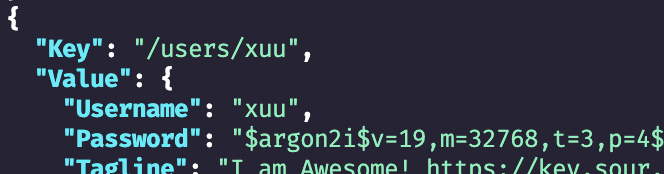
↳
In-reply-to
»
@xuu Really sweet! Why did you pick MD5 as the example?
⤋ Read More
@lyse@lyse.isobeef.org Its just dead simple.. and others will salt which makes repeatability in examples a pain.
↳
In-reply-to
»
Desafortunadamente este año he reflexionado mucho sobre el papel de consumismo en la sociedad. Vivimos para tener dinero para poder comprar las cosas, aunque ya no hay propósitos más profundos.
⤋ Read More
@me@eapl.mx you are lucky you can get off easy with just “give me $10”! In the US $10 does nothing. You need to give, at least, $50. 😂
↳
In-reply-to
»
I made a thing. Its a multi password type checker. Using the PHC string format we can identify a password hashing format from the prefix
⤋ Read More
$name$ and then dispatch the hashing or checking to its specific format.
@xuu@txt.sour.is Really sweet! Why did you pick MD5 as the example?
↳
In-reply-to
»
I made a thing. Its a multi password type checker. Using the PHC string format we can identify a password hashing format from the prefix
⤋ Read More
$name$ and then dispatch the hashing or checking to its specific format.
Circling back to the IsPreferred method. A hasher can define its own IsPreferred method that will be called to check if the current hash meets the complexity requirements. This is good for updating the password hashes to be more secure over time.
func (p *Passwd) IsPreferred(hash string) bool {
	_, algo := p.getAlgo(hash)
	if algo != nil && algo == p.d {

		// if the algorithm defines its own check for preference.
		if ck, ok := algo.(interface{ IsPreferred(string) bool }); ok {
			return ck.IsPreferred(hash)
		}

		return true
	}
	return false
}
https://github.com/sour-is/go-passwd/blob/main/passwd.go#L62-L74
example: https://github.com/sour-is/go-passwd/blob/main/pkg/argon2/argon2.go#L104-L133
↳
In-reply-to
»
I made a thing. Its a multi password type checker. Using the PHC string format we can identify a password hashing format from the prefix
⤋ Read More
$name$ and then dispatch the hashing or checking to its specific format.
Hold up now, that example hash doesn’t have a
$prefix!
Well for this there is the option for a hash type to set itself as a fall through if a matching hash doesn’t exist. This is good for legacy password types that don’t follow the convention.
func (p *plainPasswd) ApplyPasswd(passwd *passwd.Passwd) {
	passwd.Register("plain", p)
	passwd.SetFallthrough(p)
}
https://github.com/sour-is/go-passwd/blob/main/passwd_test.go#L28-L31
↳
In-reply-to
»
I made a thing. Its a multi password type checker. Using the PHC string format we can identify a password hashing format from the prefix
⤋ Read More
$name$ and then dispatch the hashing or checking to its specific format.
Here is an example of usage:
func Example() {
	pass := "my_pass"
	hash := "my_pass"

	pwd := passwd.New(
		&unix.MD5{}, // first is preferred type.
		&plainPasswd{},
	)

	_, err := pwd.Passwd(pass, hash)
	if err != nil {
		fmt.Println("fail: ", err)
	}

	// Check if we want to update.
	if !pwd.IsPreferred(hash) {
		newHash, err := pwd.Passwd(pass, "")
		if err != nil {
			fmt.Println("fail: ", err)
		}

		fmt.Println("new hash:", newHash)
	}

	// Output:
	//  new hash: $1$81ed91e1131a3a5a50d8a68e8ef85fa0
}
This shows how one would set a preferred hashing type and if the current version of ones password is not the preferred type updates it to enhance the security of the hashed password when someone logs in.
https://github.com/sour-is/go-passwd/blob/main/passwd_test.go#L33-L59
I made a thing. Its a multi password type checker. Using the PHC string format we can identify a password hashing format from the prefix $name$ and then dispatch the hashing or checking to its specific format.
user/bmallred/data/2022-12-07-04-02-26.fit: 7.02 miles, 00:10:32 average pace, 01:13:52 duration
Mystery Asterisk Destination
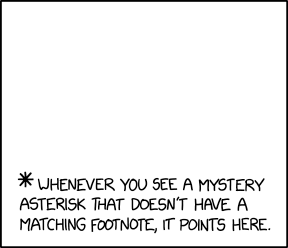 ⌘ Read more
performed qiudanz tag on the Hybrid Live Coding Interfaces Workshop 2022 | https://compudanzas.net/qiudanz_tag.html
user/bmallred/data/2022-12-06-09-13-49.fit: 5.03 miles, 00:11:37 average pace, 00:58:30 duration
@maya@maya.land should twt again
Astronomy Numbers
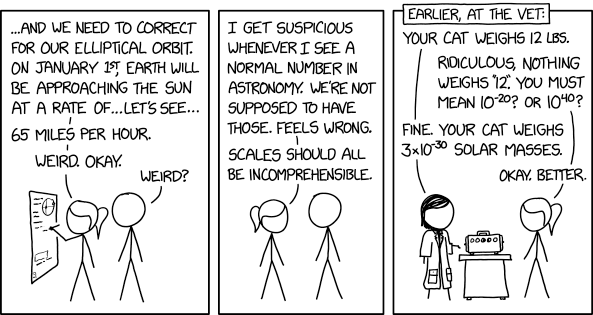 ⌘ Read more
Intento aprender a crear un [cerebro digital] con la Obsidiana https://obsidian.md 🧠
Intento aprender a crear un [cerebro digital] con la Obsidiana https://obsidian.md 🧠
Pinellas County - Long run: 11.52 miles, 00:10:11 average pace, 01:57:23 duration