Anyone run a Mastodon serve rI can have an account on to help test the Twtxt <-> Activity Pub bridge? 🙏
Testing 1 2 3 @manton@twtxt.net
Test @-mentioning@twtxt.net an AP actor via the Bridge. Hey @manton@twtxt.net 👋
↳
In-reply-to
»
WOW LOL
⤋ Read More
I need some test Activity Pub / Mastodon users to test with 🤔
WOW LOL
fetch https://weaknotes.com/users/david: status 500 Internal Server Error
First real test failed trying to lookup / follow @david@weaknotes.com
For those curious, the new Twtxt <-> ActivityPub bridge I’m building (bidirectional) simply requires three things:
- You register your Twtxt feed to the bridge: https://bridge.twtxt.net
- You verify that you in fact own/control the feed by putting the verification code somewhere on/in your feed (doesn’t matter where or how)
- You proxy/forward requests for
/.well-known/webfingerto the Bridgebridge.twtxt.net.
I’m still testing through and ironing out bugs 🐛 Please be patient! 🙏
Testing new design, architecture and implementation of a Twtxt bridge I’m working on…
verification-token: ee9bc4da3356f4990671
Please ignore.
↳
In-reply-to
»
Hmmm all these
⤋ Read More
tilde.club feeds have no # nick and is messing with yarnd's behavior 😅
@bender@twtxt.net Just wrote better code with tests 🤣
Thank you for the encouragement and love and kind words, @lyse@lyse.isobeef.org @movq@www.uninformativ.de @bender@twtxt.net @doesnm@doesnm.p.psf.lt and others along the way I’m not sure of their feed uris 💕 I’ll keep at it, but for the time being I will keep my distance, mostly off IRC, because I don’t have the energy to spare in that kind of engagement (what//if the worst happens, it’s so draining). I need to remember what I ever did any of this for, it was back in ~2020 and I wanted really to build small interconnected communities that any non “tech savvy” person (more or less) could also benefit from ane enjoy. Even if there are aspects of the specs we’ve built/extended over time that aren’t “perfect”™, they’re “good enough”™ that they’ve last 5+ years (I believe this is 6 years running now). I want to spend a bit of time going back to why I did any of this in the the first place, and get a little micro-SaaS offering going (barely covering running costs) so encourage more folks to run pods, and thus twtxt feeds and grow the community ever so slightly. Other than that, I plan to get the specs “in order” to a point (with @movq@www.uninformativ.de and @lyse@lyse.isobeef.org’s help) where I hope they’ll stand the test of time – like SMTP.
Thank you all ! 🙏
↳
In-reply-to
»
I am sorry folks 😞
⤋ Read More
@prologic@twtxt.net a good DR plan must be tested at least once a year. ☺️
Just testing out twtxt!
↳
In-reply-to
»
Wow! 🤩 Are folks actually using Gatherly already? 🤔 Media
⤋ Read More
I had a looksie (just to be sure) at the database, and they were thankfully legit test events. But this did spark/trigger me to make sure I have some form of anti-spam measures in place. So I added some per-event / per-rsvp rate-limiting and honeypot(s).
Laut “Glücksatlas” ist in Mecklenburg-Vorpommern die Lebenszufriedenheit bundesweit am geringsten. Aber mich hat gar keiner gefragt. 🤔
Wie damals beim PISA-Test, als sie bei uns im Jahrgang fast ausschließlich die Doofen beprobt haben und sich dann wunderten.
Alle Bevölkerungsgruppen sind betroffen, besonders ältere alleinlebende Männer.
Die sollten sich mal fragen, warum sie alleinlebend sind, die ollen Borche! Dann löst sich der Rest von selbst. 😘
Recived a non-twtxt webmention from https://brid.gy/like/mastodon/@sorenpeter@norrebro.space/115298639056870144/114150575899436374
mentioning http://darch.dk/testing-syndication-via-rss-to-social-media-via-bufffer
(IP: 34.96.47.28)
Recived a non-twtxt webmention from https://brid.gy/like/mastodon/@sorenpeter@norrebro.space/115298639056870144/109396780231570936
mentioning http://darch.dk/testing-syndication-via-rss-to-social-media-via-bufffer
(IP: 34.96.45.23)
Recived a non-twtxt webmention from https://brid.gy/like/mastodon/@sorenpeter@norrebro.space/115298639056870144/108271170472562001
mentioning http://darch.dk/testing-syndication-via-rss-to-social-media-via-bufffer
(IP: 34.96.45.23)
↳
In-reply-to
»
Hi everyone, here's a little introduction of my twtxt client (still WIP).
⤋ Read More
@zvava@twtxt.net CORS is our worst enemy. 🥷
I too had the same issue being a browser-based request, so the only solution is using a proxy.
For testing (and real personal use) I rely on this one https://corsproxy.io/.
In my client, I first check if the source allows me to fetch it without issues first and fallback to prefixing with a proxy if it gives an error.
For security reasons the client don’t give you a readable error for CORS, so you must use a catch-all for that, if it fails again with the proxy you can deal with any other errors it throws as you normally would (preferably outside of the fetch function).
After the fetching responded, I store the response.url value to fetch it again for updates without having to do extra calls (you can store it verbatim or as a flag to be able to change the proxy later).
Here an extract of my code:
export async function fetchWithProxy(url, proxy=null) {
    return await fetch(url).catch(err => {
        if (!proxy) throw err;
        return fetch(`${proxy}${encodeURIComponent(url)}`);
    });
}

// Using it with
const res = await fetchWithProxy('https://twtxt.net/user/zvava/twtxt.txt', 'https://corsproxy.io/?');

// Get the working url (direct or through proxy)
const fetchingURL = res.url;

// Get the twtxt feed content (or handle errors)
const text = await res.text();
I also plan to allow the user to define a custom proxy field, I like the solution used by Delta.chat in their android app, where you can define the URL format with a variable https://my-proxy?$TWTXT_URL since it allows you to define with more freedom any proxy without a prefix format.
If the idea of using a third-party proxy is not to the user liking they can use a self-hosted solution like cors-anywhere or build their own (with twtxt it should just be a GET).
↳
In-reply-to
»
Hi everyone, here's a little introduction of my twtxt client (still WIP).
⤋ Read More
@alexonit@twtxt.alessandrocutolo.it i tried making a webapp initially but i didn’t even get into the initial stages of testing because no one sets the Access-Control-Allow-Origin header, so i just jumped into building a backend instead. did you find away around this limitation? :o
↳
In-reply-to
»
@movq I'm glad it make sense for you 😅 I will never understand it. All I know is that I'm a conservative socialist and there's a lot of "stupid shit"™ happening in the world (including my own country). I still blame extreme Capitalism.
⤋ Read More
@bender@twtxt.net Well see that’s just what the freak’n tests say about me haha 🤣
immigration and multiculturalism
What about it? I grew up in a multicultural country.
Test.

↳
In-reply-to
»
@bender Really? 🤔
⤋ Read More
And I need to make something absolutely clear as well here. Twtxt was completely and utterly dead back in {Aug 2020](https://yarn.social/about.html) when I came across the spec and its simplicity and realised the lost opportunity. Since then we’ve continued to grow a small but thriving community. The extensions we’ve built over time have stood and lasted the test of time for the past ~5 years. We need not break things too badly, because what we have today and was designed years ago actually works quite well™ (despite some flaws).
↳
In-reply-to
»
The driver’s license documents in Germany now have an expiration date. You have to renew them every 15 years. (Not the license itself, just the documents.)
⤋ Read More
@bender@twtxt.net A renewed vision test might be a good idea for some people. 😅 I mean, it is kind of curious that you get this license as a young person and then it lasts a lifetime, without any further tests. As long as you don’t screw up really bad, it remains valid …
↳
In-reply-to
»
@itsericwoodward any news about this? I am, at the very least, curious!
⤋ Read More
@bender@twtxt.net Thanks for asking!
So, I’ve been working on 2 main twtxt-related projects.
The first is small Node / express application that serves up a twtxt file while allowing its owner to add twts to it (or edit it outright), and I’ve been testing it on my site since the night I made that post. It’s still very much an MVP, and I’ve been intermittently adding features, improving security, and streamlining the code, with an eye to release it after I get an MVP done of project #2 (the reader).
But that’s where I’ve been struggling. The idea seems simple enough - another Node / express app (this one with a Vite-powered front-end) that reads a public twtxt file, parses the “follow” list, grabs (and parses) those twtxt files, and then creates a river of twts out of the result. The pieces work fine in seclusion (and with dummy data), but I keep running into weird issues when reading real-live twtxt files, so some twts come through, while others get lost in the ether. I’ll figure it out eventually, but for now, I’ve been spending far more time than I anticipated just trying to get it to work end-to-end.
On top of it, the 2 projects wound up turning into 4 (so far), as I’ve been spinning out little libraries to use across both apps (like https://jsr.io/@itsericwoodward/fluent-dom-esm, and a forthcoming twtxt helper library).
In the end, I’m hoping to have project 1 (the editor) into beta by the end of October, and project 2 (the reader) into beta sometime after that, but we’ll see.
I hope this has satisfied your curiosity, but if you’d like to know more, please reach out!
↳
In-reply-to
»
@itsericwoodward any news about this? I am, at the very least, curious!
⤋ Read More
@bender@twtxt.net Thanks for asking!
So, I’ve been working on 2 main twtxt-related projects.
The first is small Node / express application that serves up a twtxt file while allowing its owner to add twts to it (or edit it outright), and I’ve been testing it on my site since the night I made that post. It’s still very much an MVP, and I’ve been intermittently adding features, improving security, and streamlining the code, with an eye to release it after I get an MVP done of project #2 (the reader).
But that’s where I’ve been struggling. The idea seems simple enough - another Node / express app (this one with a Vite-powered front-end) that reads a public twtxt file, parses the “follow” list, grabs (and parses) those twtxt files, and then creates a river of twts out of the result. The pieces work fine in seclusion (and with dummy data), but I keep running into weird issues when reading real-live twtxt files, so some twts come through, while others get lost in the ether. I’ll figure it out eventually, but for now, I’ve been spending far more time than I anticipated just trying to get it to work end-to-end.
On top of it, the 2 projects wound up turning into 4 (so far), as I’ve been spinning out little libraries to use across both apps (like https://jsr.io/@itsericwoodward/fluent-dom-esm, and a forthcoming twtxt helper library).
In the end, I’m hoping to have project 1 (the editor) into beta by the end of October, and project 2 (the reader) into beta sometime after that, but we’ll see.
I hope this has satisfied your curiosity, but if you’d like to know more, please reach out!
↳
In-reply-to
»
The driver’s license documents in Germany now have an expiration date. You have to renew them every 15 years. (Not the license itself, just the documents.)
⤋ Read More
@movq@www.uninformativ.de better than in the US. Our lasts only 10 years, and you need to go through the vision test, and, of course, pay). Recently they added a little gold star denoting “real ID” compliance, and we had to pay $10 to get the old one replaced—out of the regular renew “schedule”.
In here it is all about control, and money.
I am back to my bash scripting! This is in fact a test.
Yesterday i tried to test carddav but i gave up.
Hello everyone! 👋
After a long while away, I’m back on twtxt with this new feed.
Some of you might remember me as justamoment@twtxt.net, that was a test account I made for trying things out, but I ended up keeping it more than planned.
I also tried other social platforms in search of a place that felt right for me.
In the end twtxt was the one that ticked all of my boxes:
- Slow social: it act more like a feed reader and I really appreciate that there’s no flood of content that I can’t keep up with.
- No server needed: I absolutely love to have total control over my content, I tend to avoid having moving parts that might break, plus you can put your feed under version control and it’s all backed up.
- Ownership: I can put my feed anywhere I want and nobody can decide if I can access it or not.
- For hackers: a single .txt file allows me to join a community, how cool is that!
This is why I decided to build my own twtxt client, one that allows you to decide how the feed is presented on your “instance”.
It’s still in the making but I’ll try to share a bit of it once I defined how things should work.
Coincidentally, I discovered that @itsericwoodward@itsericwoodward.com and @zvava@twtxt.net were also building a twtxt client, seems like twtxt is set to grow!
testing testing
testing testing
↳
In-reply-to
»
is there consensus on what characters should(n't) be allowed in
⤋ Read More
nicks? i remember reading somewhere whitespace should not be allowed, but i don't see it in the spec on twtxt.dev — in fact, are there any other resources on twtxt extensions outside of twtxt.dev?
@zvava@twtxt.net @movq@www.uninformativ.de I’m not entirely sure about the spaces, but maybe they were omitted to simplify parsing of mentions in the form of @<nick url>. If the next token after the @<nick does not look like a URL, it’s not a mention but regular text. This is just wild guessing, though.
Looking at the regex and tests in the original twtxt reference implementation seems to confirm that theory in the sense as it relies on whitespace as the delimiter:

Another thing about nicks is that the original twtxt reference implementation converts nicks to all lowercase:

You probably know this already, the original twtxt file format specification can be found here: https://twtxt.readthedocs.io/en/latest/user/twtxtfile.html
As for extensions, I don’t know of anything outside of twtxt.dev that has actually been (partially) implemented. However, there is also the issue tracker of the official reference implementation. You might wanna dig through that. For example, there is an alternative suggestions of multiline messages: https://github.com/buckket/twtxt/issues/157
I corrupted my SQLite test database with sed -i s/… $(find …). Clearly, I found too many files. That’s the signal to go to bed.
remote.json | 3.4MiB
i hope testing this doesn’t get me ip banned from Everything
↳
In-reply-to
»
@zvava I am getting
⤋ Read More
[2025/09/11 12:56:01.816] ⇒ please set config.host when trying to run "bbycll". How to bypass that tiny hurdle?
@bender@twtxt.net ty for attempting to test, though, it means a lot! lmk if u find any more silly things i need to clarify or fix :> be prepared for everything breaking during beta :p
↳
In-reply-to
»
@zvava I am getting
⤋ Read More
[2025/09/11 12:56:01.816] ⇒ please set config.host when trying to run "bbycll". How to bypass that tiny hurdle?
@bender@twtxt.net as the host (eg twtxt.net) determines the canonical url of the instance in generated feed url metadata as well as every hash of every post made on the instance internally, i added this error message to make sure people don’t accidentally set up their instance on localhost :p for testing i set it to localhost:31212 and protocols to ["http"], it’s a recent addition that could definitely do with documenting in the getting started section
↳
In-reply-to
»
search page, bookmarks page, improved thread view (that i will probably improve further), as well as a logo and a whole ui redesign. it is truly all coming together...were i to mark any items off the roadmap :p
⤋ Read More
@zvava@twtxt.net wow, this is a full change, and looking very, very, very good! I am ready to test it. 🙈
test post
↳
In-reply-to
»
test edit please ignore
⤋ Read More
test reply please ignore
test edit please ignore
test post please ignore
↳
In-reply-to
»
Hahaha, how funny is that!? The Dunning-Kruger effect research was sparked off by two bank robbers who rubbed lemon juice in their faces as this makes them invisible, just like invisible ink. :'-D https://en.wikipedia.org/wiki/1995GreaterPittsburghbankrobberies
⤋ Read More
@lyse@lyse.isobeef.org Didn’t know that, either. 😂 The one guy even tried to test this theory with a Polaroid? And “confirmed” it? What the heck. 🥴
I’ve got a prototype of my hardcopy simulator going. I’m typing on the keyboard and the “display” goes to the printer:

https://movq.de/v/235c1eabac/MVI_8810.MOV.mp4
The biiiiiiiiiig problem is that the print head and plastic cover make it impossible to see what’s currently being printed, because this is not a typewriter. This means: In order to see what I just entered, I have to feed the paper back and forth and back and forth … it’s not ideal.
I got that idea of moving back/forth from Drew DeVault, who – as it turned out – did something similar a few years back. (I tried hard to read as little as possible of his blog post, because figuring things out myself is more fun. But that could mean I missed a great idea here or there.)
But hey, at least this is running on my Pentium 133 on SuSE Linux 6.4, printer connected with a parallel cable. 😍
(Also, yes, you can see the printouts of earlier tests and, yes, I used ed(1) wrong at one point. 🤪 And ls insisted on using colors …)
Back to Win16 8-) New arrivals of fixed programs for Win31. A big collection of tested network software for Win31. gopher://shibboleths.org/1/win31
test
↳
In-reply-to
»
QR codes, already posted about them in the last two posts, but I want to hear your hot takes: Should they only be black and white, are they even worth doing in 2025, incorporating them into things,..?
Also, finally getting full screen view for avatars in XMPP - a better integrated one, after 25 years. Y@ay!
Media
⤋ Read More
@bender@twtxt.net I think it’s actually a new XEP proposal ( https://xmpp.org/extensions/xep-0084.html#proto-info ), but it’s still a bit unclear. Sorry for the late and vague response, I’m still trying to test it and see what it’s even about, didn’t yet find a server, that supports it.
They’re waiting for you Gordon… in the test chamberrrrr
↳
In-reply-to
»
Just discovered how easy it is to recall my last arg in shell and my brain went 🤯 How come I've never learned about this before!? I wonder how many other QOL shortcuts I'm missing on 🥲
⤋ Read More
@aelaraji@aelaraji.com I use Alt+. all the time, it’s great. 👌
FWIW, another thing I often use is !! to recall the entire previous command line:
$ find -iname '*foo*'
./This is a foo file.txt

$ cat "$(!!)"
cat "$(find -iname '*foo*')"
This is just a test.

Yep!
Or:
$ ls -al subdir
ls: cannot open directory 'subdir': Permission denied

$ sudo !!
sudo ls -al subdir
total 0
drwx------ 2 root root  60 Jun 20 19:39 .
drwx------ 7 jess jess 360 Jun 20 19:39 ..
-rw-r--r-- 1 root root   0 Jun 20 19:39 nothing-to-see
testing with a new meme 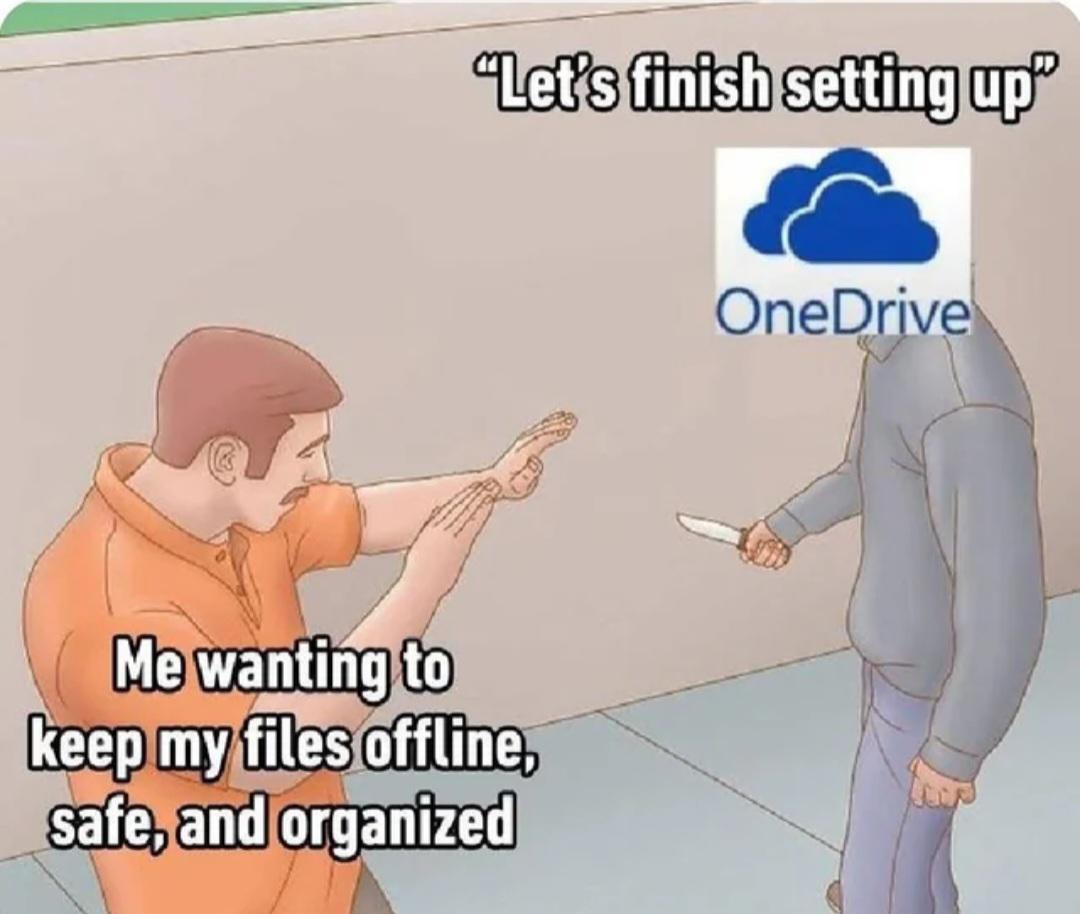
yo let’s test this shit, looks promising
↳
In-reply-to
»
My website is compatible with many old browsers, but Internet Explorer 3, uhm, not so much.
⤋ Read More
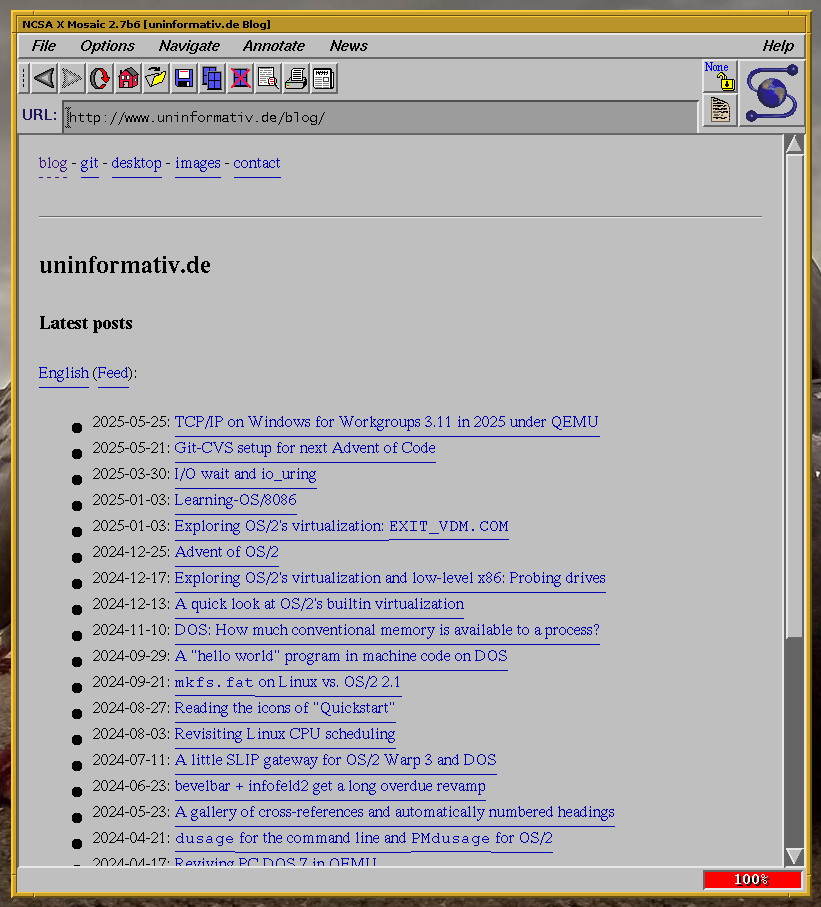
@prologic@twtxt.net Mosaic (2.7) works fine, I maintain that package in the AUR and test my website regularly. 😅