I love the history view in Jira, but changes to long descriptions are hard to find via stare-and-compare. I’ve been using git diff --word-diff to find the actual changes.
Base: 5.00 miles, 00:10:04 average pace, 00:50:19 duration
had to step off after two miles to use the faculties. getting back on the last miles were a slug-fest and i feel like i should have just pushed through it.
#running #treadmill
↳
In-reply-to
»
htmx is cool 😎
⤋ Read More
@prologic@twtxt.net i’ve used it on some small side projects and it was great. my 8-5 gig isn’t too keen on it yet which wasn’t surprising.
↳
In-reply-to
»
Lol, somebody reverse-engineered the secret API to tell Windows that some snake oil is installed: https://github.com/es3n1n/no-defender
⤋ Read More
@movq@www.uninformativ.de it is an interesting thing to do. I mean, he found a way to fool Defender, but why? A disabled Defender is worthless, and that’s what he is doing. If I were to use Microsoft Windows, I would want the Defender to be bonafide active.
↳
In-reply-to
»
QOTD: Which web search engine do you use? 😂
⤋ Read More
@movq@www.uninformativ.de I’ve been using Qwant for a while but it was down earlier today (as well 😆) so I switched back to my trusty Searx Redirector
… This utility forwards your search query to one of 11 random volunteer-run public servers to thwart mass surveillance.
QOTD: Which web search engine do you use? 😂
↳
In-reply-to
»
This was interesting: I didn't expect so much variation in reported times. If you happen to have #plan9 running on some other VPS, I'd love to hear your results. https://pdx.social/@a/112481970480703254
⤋ Read More
There’s other potential uses for the tool (compare syscall latency between OSes, stat latency between file systems), but not what i’m after.
↳
In-reply-to
»
This was interesting: I didn't expect so much variation in reported times. If you happen to have #plan9 running on some other VPS, I'd love to hear your results. https://pdx.social/@a/112481970480703254
⤋ Read More
For my purposes, the comparison would only be useful to systems running Plan 9; if you happen to have that, yes please!
I_use_lagrange_its_fun_and_has_gemini_and_spartan_too
↳
In-reply-to
»
@prologic Thank you. I'm using Pixel Station. I can't recommend it enough for this kind of pixelart, but it's only available for Android.
⤋ Read More
@prologic@twtxt.net I normally use gimp, but this project is pretty intense: https://orama-interactive.itch.io/pixelorama
for simple and quick drawings my kids use https://pixelart.com
↳
In-reply-to
»
The first and hopefully not last thing I drew this year (drawn yesterday). Kinda minimalistic and Scribble Kibble inspired.
Media
⤋ Read More
@prologic@twtxt.net Thank you. I’m using Pixel Station. I can’t recommend it enough for this kind of pixelart, but it’s only available for Android.
↳
In-reply-to
»
The original twt is unavailable. It may have been edited or deleted, or is from an unknown or muted feed.
⤋ Read More
@prx@si3t.ch there is this ImageGoNord thing I’d found reading an Eww Bar article a couple of months ago… It lets you convert a wallpaper/image to conform to a color pallet, hope you fine it useful.
↳
In-reply-to
»
Another thing that doesn’t work anymore after blocking network traffic from my Android phone: Some push notifications.
⤋ Read More
@movq@www.uninformativ.de I’m personally using the android app as is. Didn’t set up my own notifications server, the default one works just fine I guess.
Another thing that doesn’t work anymore after blocking network traffic from my Android phone: Some push notifications.
I run a Matrix server for our family. I use “FluffyChat” on my phone. Traffic from the phone to my Matrix server is allowed and chatting in FluffyChat works.
But I don’t get any notifications anymore on new messages.
So, what’s going on here? Does FluffyChat, which only really needs to talk to my own server, rely on some cloud service for notifications? Seriously? 🤔 How does that work, does this cloud service see all my notifications or what?
Anyone around who did app development on Android? Can you shed some light on this?
↳
In-reply-to
»
Alright what's up everyone?
⤋ Read More
@aelaraji@aelaraji.com I think you’ll find it simpler to use zs
↳
In-reply-to
»
Alright what's up everyone?
⤋ Read More
@shreyan@twtxt.net Nothing much, still trying to figure out a proper way to manage a gemlog and a phlog using Hugo.
Otherwise, I’m just exploring new tty stuff … Anything I should try?
I’m starting to embrace containers on my PC for software I want to use once without littering my home folder with junk files. It’s nice.
↳
In-reply-to
»
Well! My 24 hrs without a GUI Web browser was quite of a nice experience.
As a matter of fact, and as long as I'm not doing any 3D work, I kind of don't need gui applications as much as it feels like.
⤋ Read More
@bender@twtxt.net Yeah I’ve been having this problem for quite sometime now. It boils down to Vi/Vim/NeoVim inserting those line breaks automatically when editing an .eml file (if I can remember the file extension correctly) … I think Jenny makes use of those. I had to delete them manually until I was told that the problem was fixed after I added the charset utf-8; to my nginx config file. I’ll try and fix this next…
↳
In-reply-to
»
Do you believe one can survive surfing the web using a text-based web browser? (i.e: Lynx or W3m) no CSS no Bling for at least 24 hours 😲
⤋ Read More
Well! My 24 hrs without a GUI Web browser was quite of a nice experience.
As a matter of fact, and as long as I’m not doing any 3D work, I kind of don’t need gui applications as much as it feels like.
Even though, a couple of websites asked me to eff off because they need
JavaScript to work. Some others handed me a cold “402 Upgrade Required” client
error response… (LOL let’s not even talk about how Github repos looked
and felt like). I have managed to fix a couple of things I’ve been meaning to
for quite some time but never got, mainly to because of my browsing
habits. I tend to open a lot of tabs, read some, get distracted then
open some more and down the rabbit hole (or shall I say tabs) I go.
All in all, it was quite a nice experience.
How nice? It was an “I’m dropping into a full TTY experience for another
24 hrs” kind of nice!
Although, I miss using a mouse already, but hey, I would have never
heard about gpm(8) otherwise.
↳
In-reply-to
»
@aelaraji I'm definitely putting that in the list. I like tmux but I just can't wrap my head around the controls. This looks more like a tiling window manager.
⤋ Read More
@mckinley@twtxt.net I have a custom .tmux.conf that makes it very easy to use the multiplexer, but I agree, Zellij seems pretty robust, and intuitive. I like it! Tried compiling it, as with everything Rust, it failed miserably. Good thing there is a binary release I could download to try!
↳
In-reply-to
»
I guess I'm not missing my GUI Web Browser yet. In fact, I think I'm enjoying this. 😆
Media
⤋ Read More
@mckinley@twtxt.net yes it is!
I’m using Zellij. I love how it works out of the box.
@bender@twtxt.net Seems to be working! I’m using mdom’s txtnish and I’m figuring out replies.
Do you believe one can survive surfing the web using a text-based web browser? (i.e: Lynx or W3m) no CSS no Bling for at least 24 hours 😲
I use Pocket Gopher. Its in fDroid app store.
↳
In-reply-to
»
@bender well there is "supercalifragilisticexpialidocious"!
I usualy hear people ask Harry Mack (a freestyle rapper) to include it in his freestyles. 😆
⤋ Read More
@bender@twtxt.net There are a couple more
I went and looked them up but I can’t imagine myself using any except for “honorificabilitudinitatibus” … It kinda sounds good and has a nice meaning I guess.
Started writing something from scratch yesterday using thread(3) and wow do I miss writing in Limbo instead. :-/ #plan9
↳
In-reply-to
»
I think @abucci and @stigatle are running snac? I didn’t have a closer look at snac (no intention of running it), but if that is a relatively small daemon (maybe comparable to Yarn?) that gives you access to the whole world of ActivityPub, then, well, yeah … That’s tough to beat.
⤋ Read More
@bender@twtxt.net I have nothing against GoToSocial, but:
GoToSocial stores statuses, accounts, etc, in a database. This can be either SQLite or Postgres.
snac is simpler. Some JSON files and that’s it. I can read them with jq and less. I can use tar to back them up. I can hand edit them in a text editor.
It’s remarkable how much proprietary software one can avoid using if one simply eschews GUIs as much as possible.
↳
In-reply-to
»
Is Yarn.social dead or just too niche? (uyrrria) 🧐
⤋ Read More
I think @abucci@anthony.buc.ci and @stigatle@yarn.stigatle.no are running snac? I didn’t have a closer look at snac (no intention of running it), but if that is a relatively small daemon (maybe comparable to Yarn?) that gives you access to the whole world of ActivityPub, then, well, yeah … That’s tough to beat.
Yes, I am running snac on the same VPS where I run my yarn pod. I heard of it from @stigatle@yarn.stigatle.no, so blame him 😏 snac is written in C and is one simple executable, uses very little resources on the server, and stores everything in JSON files (no databases or other integrations; easy to save and migrate your data) . It’s definitely like yarn in that respect.
I haven’t been around yarn much lately. Part of that is that I’ve been very busy at work and home and only have a limited time to spend goofing off on a social network. Part of it is that I’m finding snac very useful: I’ve connected with friends I’d previously lost touch with, I’ve found useful work-related information, I’ve found colleagues to follow, and even found interesting conferences to attend. There’s a lot more going on over there.
I guess if I had to put it simply, I’d say I have limited time to play and there are more kids in the ActivityPub sandbox than this one. That’s not a ding on yarn–I like yarn and twtxt–I’m just time constrained.
↳
In-reply-to
»
It's kinda quiet in here today!
⤋ Read More
@bender@twtxt.net Oh, That sounds delicious! B’Saha![1]
I’m Glad you’ve had quite the productive! All I remember of mine is three chapters of an old novel at the coffee shop aaand … Now I’m here, in front of a computer. Everything in between is just Blank 😅
[1] B’saha: Moroccan word for “With health!” (a literal translation) usually used as an equivalent for the French expression “Bon Appétit!” but also used as “Congratulation!”
If you’re using jenny on Python 3.12, it will spit out a deprecation warning regarding datetime.utcnow(). This will be fixed in the next release.
↳
In-reply-to
»
Bitwarden is truly excellent. Highly recommend
⤋ Read More
@mckinley@twtxt.net I can’t say for sure. I didn’t even know how three-way merges work till I looked it up. I guess it’s more of git thing that would prove useful in the case of using passwordstore/pass.
As for Keepass, all I do is syncing it’s database file across devices using syncting. Never felt the need to try anything else.
I guess it is safe enough for my use case, with Backup database before saving on and custom Backup Path Placeholders as Backup plan in case of an Eff up.
↳
In-reply-to
»
OK time to put this to the test, I ended up setting my $VISUAL env
{-here-} variable, so that jenny can launch neovim instead of plain old vi like
{-here-} it is instructed in the code. But as you can see, I still get these
{-here-} wired new lines every ~70th character (marked them with {-here-})
⤋ Read More
I might have found the actual source of my problem.
Jenny uses an .eml file when composing a twt …
and vim kinda auto formats it and inserts in those line breaks every ~70 character.
Then, I stumbled upon this link where Where someone reports that saving a .eml into a .txt might… corrupt the data?
↳
In-reply-to
»
@prologic well, I think OP mother tongue isn’t English, so certainly not an encoding I might be familiar with.
⤋ Read More
@prologic@twtxt.net sure! Give me a couple of minutes to set things up.
Also, you can check the charset again, I did set it up even tho I do observe the problem in my twtxt.txt file on my local machine way before doing scp to the remote one. They show up when I use bat but not when I cat the file nor on neomut.
↳
In-reply-to
»
@prologic well, I think OP mother tongue isn’t English, so certainly not an encoding I might be familiar with.
⤋ Read More
@bender@twtxt.net I’m using both machines in English.
Checked my locale and it spits out:
LANG=en_US.UTF-8
LC_CTYPE=“en_US.UTF-8”
LC_NUMERIC=“en_US.UTF-8”
LC_TIME=“en_US.UTF-8”
LC_COLLATE=“en_US.UTF-8”
LC_MONETARY=“en_US.UTF-8”
LC_MESSAGES=“en_US.UTF-8”
LC_PAPER=“en_US.UTF-8”
LC_NAME=“en_US.UTF-8”
LC_ADDRESS=“en_US.UTF-8”
LC_TELEPHONE=“en_US.UTF-8”
LC_MEASUREMENT=“en_US.UTF-8”
LC_IDENTIFICATION=“en_US.UTF-8”
LC_ALL=
🤷🏽 … and that only happens when vi, vim or nvim are launched by Jenny to compose a twt.
↳
In-reply-to
»
Bitwarden is truly excellent. Highly recommend
⤋ Read More
@shreyan@twtxt.net ever tried KeepassXC or Pass/Password Store ? They are worth giving a try … Then you can keep your KeepassXD database in synch across your devices with (NOT /R/s/y/n/c) I meant Syncthing or git in the case Pass (using a git repo in within your local network of course) 👍🏼(edited)
</> htmx - high power tools for html really liking the idea of htmx 🤔 If I don’t have to learn all this complicated TypeScript/React/NPM garbage, I can just write regular SSA (Server-Side-Apps) and then progressively upgrade to SPA (Single-Page-App) using htmx hmmm 🧐
↳
In-reply-to
»
@johanbove Is there any reason to use this program? I can’t remember when I last had it installed, must have been early 2000’s.
⤋ Read More
@movq@www.uninformativ.de Yeah, normally I just use s browser to open PDF, but we had actually create one and it needed some special Acrobat features. Afterwards I immediately uninstalled it again.
↳
In-reply-to
»
Thanks again @movq !! I have figured things out and set up Jenny and Vim completion following your blog post! Cheers!
⤋ Read More
@movq@www.uninformativ.de yeah, it seems like it. But I don’t mind using neomutt to go through my feed, it feel like a huge upgrade compared to the usual pager 😄
↳
In-reply-to
»
Not having a great experience with Acrobat Reader. What the heck is Adobe trying to achieve with all of these popups and annoyances?
⤋ Read More
@johanbove@johanbove.info Is there any reason to use this program? I can’t remember when I last had it installed, must have been early 2000’s.
I’m still figuring out interactions mechanics on Twtxt, for example the at symbol is sufficient to mention someone you follow I guess, like @twtxt@buckket.org when using the twtwt cli. is that implemented in the twtxt cli as well? it wouldn’t heart to try
Today is US tax. Pay your high taxes today or go to jail. Your choice.
↳
In-reply-to
»
Just over here writing my Senator's office to see if we can get a new Federally Funded R&D Center created. 😳🤞
⤋ Read More
@adi@twtxt.net No, thinking much bigger than that at the moment: http://a.9srv.net/b/us-osqi
This is how I play music. Find what I want on YT, download it to my dektop as an mp3 then I transfer it to a small mp3 player then I can plug that into a small speaker or a big one using a short audio lead
↳
In-reply-to
»
you need to send an email @quark if you want an account. I know that might be very profitable. Maybe Odo can disclose it if I give him a new bucket.
⤋ Read More
@sorenpeter@darch.dk a poem about me giving Odo a free bucket:
A glint in his eye, a sly, Ferengi grin,
Quark crossed the promenade, a curious thing within.
No jeweled trinket, no weapon so grand,
But a simple pail held tight in his hand.Odo, the Constable, with a brow raised high,
“A bucket, Quark? What trickery do you try?”
The Ferengi huckster, with a salesman’s flair,
“A gift, my friend, a constable’s rare!”“For those late-night spills, a morphing mishap,
This bucket, dear Odo, will catch every scrap.
And should a suspect turn to goop and flee,
This pail’s the answer, a guarantor, you see!”Odo’s lips twitched, a hint of a smile,
At Quark’s twisted logic, his mercantile style.
“Perhaps,” he conceded, the bucket held tight,
“A useful addition, in the pursuit of right.”So Quark made his sale, with a wink and a nod,
A bucket for Odo, a Ferengi oddity, odd.
But on Deep Space Nine, where chaos takes hold,
Even a pail can be worth more than gold.
About the account, thanks, but I already have way too many. :-D
↳
In-reply-to
»
So what do we think of the Reddit IPO? 🤔
⤋ Read More
in the matter of political voice in the US money is speech and therefore companies use their “free speech” to donate and gain access to politicians. Therefore companies are people. Thanks a lot “citizens united”
Moon Landing Mission Profiles
 ⌘ Read more
↳
In-reply-to
»
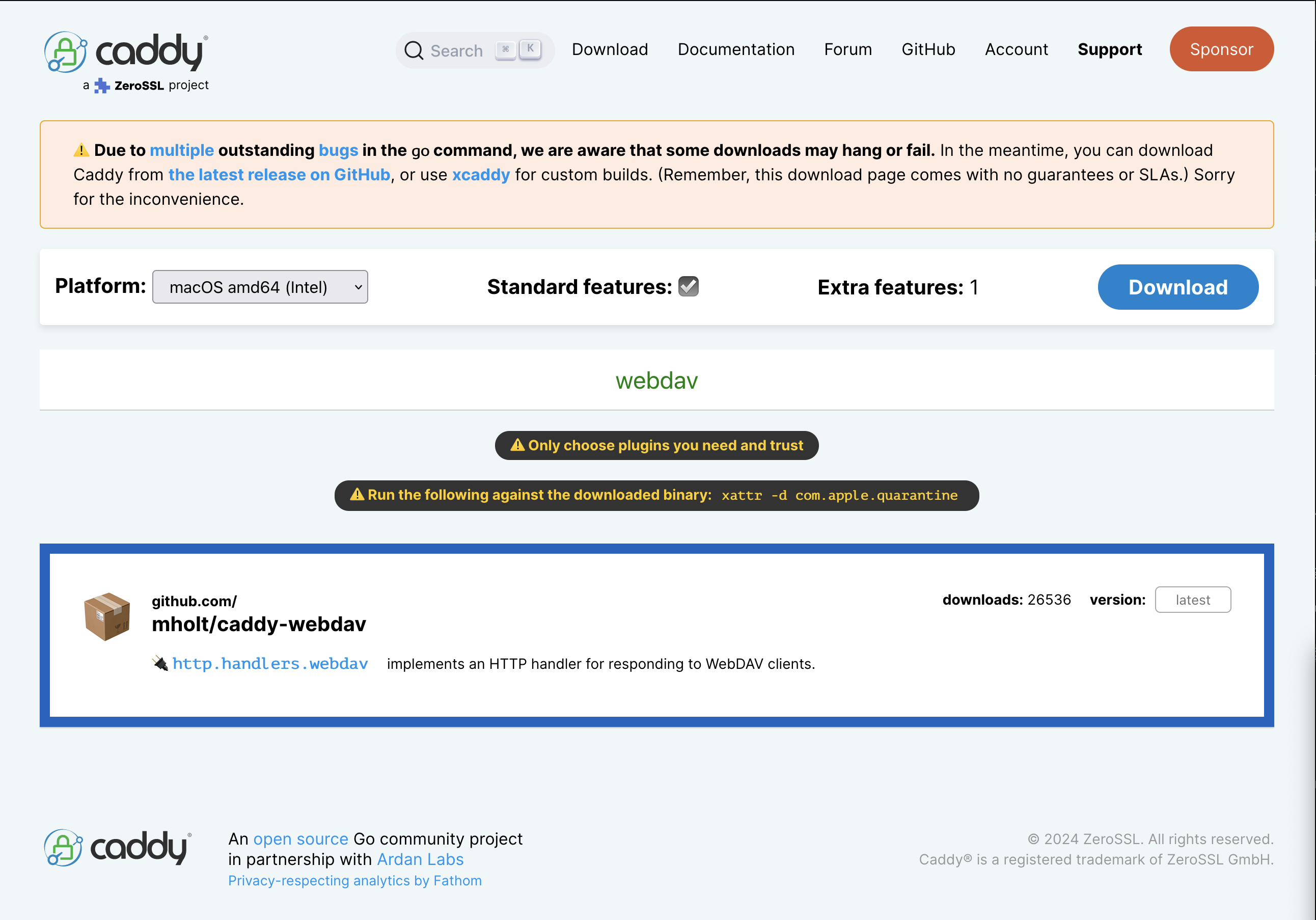
Joplin + Caddy WebDAV over here.
⤋ Read More
it is an addon in the download tool. Or you can use xcaddy to build it in.
published: use old programmes https://yctct.com/old