Wondering how that person in Nebraska is doing keeping that cornerstone open-source package going.
Game-playing DeepMind AI can beat top humans at chess, Go and poker
An artificial intelligence capable of beating humans at a variety of games is an important step towards a more general intelligence, says Google DeepMind ⌘ Read more
SPRF Half Marathon: 13.20 miles, 00:09:29 average pace, 02:05:12 duration
still host and humid (no surprise) but more cloud cover today. no kids but beth came and was able to cheer me on in a couple of places which was fun. the last bit she yelled “five to go!” which kind of got in my head a bit, albeit i think the heat started to get to me as well. had to take a couple of brief walks just to recollect and focus again. pretty good training run. keeping it in the green for the most part and around marathon pace. can’t wait to see how cooler weather and more training will pay off!
#running #race
↳
In-reply-to
»
Diving into vintage games, roms, emulators and raspberry/retropie's mode.
Now waiting to enjoy Family computer, last acquisition 😍😍
⤋ Read More
[lang=en] hey! What are you playing now?
I’ve been into Pokémon Black, although it’s going slowly and switched to a more recent game, Inscryption, which has a 90s-2000s vibes.
So Youtube rea really cracking down on Ad-blockers. The new popup is a warning saying you can watch 3 videos before you can watch no more. Not sure for how long. I guess my options are a) wait for the ad-blockers to catch-up b) pay for Youtube c) Stop using Youtube.
I think I’m going with c) Stop using Youtube.
Doctor’s Office
 ⌘ Read more
Pinellas County - Recovery: 3.13 miles, 00:12:31 average pace, 00:39:09 duration
i was suppose to do this yesterday but beth mentioned going out today so i just moved it.
#running
GO NOLES! 38-20 over #16 Duke!
The Golden Gophers win 12-10 against Iowa! Go Gophers! What a game!
Come on! how do I keep my pet next to me in #nethack? They always go wandering without me and I loose them or my time trying to find them
This is some cool development for the go 1.22 standard http mux. Its adding the ability to have path vars and define methods for handlers. Also the errors are quite helpful if you have conflicting paths!
https://eli.thegreenplace.net/2023/better-http-server-routing-in-go-122/
↳
In-reply-to
»
Pinellas County - Long run: 11.14 miles, 00:10:15 average pace, 01:54:07 duration
did loops around the block since we had to leave early this morning. going to be a busy day (and night) so moved this run to today instead of tomorrow. pretty nice out, but it was beyond boring.
#running
⤋ Read More
@bmallred@staystrong.run good thing i moved my run because no way i was going to be able to finish one after getting home around 0400. it was a fun night out with glenn and ash, but it may take a day or two to recover!
Pinellas County - Long run: 11.14 miles, 00:10:15 average pace, 01:54:07 duration
did loops around the block since we had to leave early this morning. going to be a busy day (and night) so moved this run to today instead of tomorrow. pretty nice out, but it was beyond boring.
#running
Pinellas County - Long Run: 11.14 miles, 00:10:15 average pace, 01:54:07 duration
did loops around the block since we had to leave early this morning. going to be a busy day (and night) so moved this run to today instead of tomorrow. pretty nice out, but it was beyond boring.
good thing i moved my run because no way i was going to be able to finish one after getting home around 0400. it was a fun night out with glen and ash, but it may take a day or two to recover!
#running
Urban Planning Opinion Progression
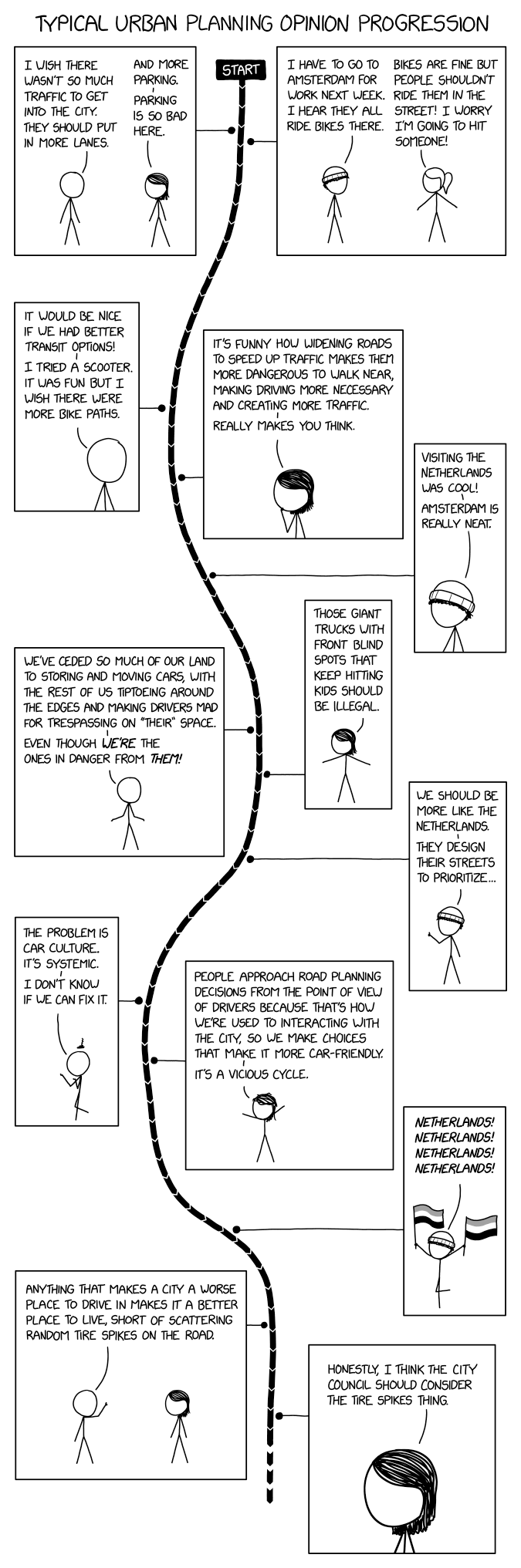 ⌘ Read more
going thru my own old drawings, exploring those distant worlds, like an archaeologist. tracing origins and evolutions #draw #art #trip #mind
going thru my own old drawings, exploring those distant worlds, like an archaeologist. tracing origins and evolutions #draw #art #trip #mind
Pinellas County - Long run: 10.63 miles, 00:09:59 average pace, 01:46:03 duration
woke up a bit groggy, but definitely excited to go run. the temps were b/w 70F-73F with a dew point to match which is fabulous. such a great run and kept a conservative pace for it leaving me feeling strong at the end. wanted to keep going but i know i should ease back in to the longer distances
#running
↳
In-reply-to
»
@adi @prologic It's worth bearing in mind that
⤋ Read More
@adi@twtxt.net I think it is, and one benefit they have is that you can add third-party repositories to the F-Droid app as you discover them. So, for instance, if you know of a developer who pushes builds to an F-Droid compatible repository, you can add that to your F-Droid app and start tracking updates like you would for any other app in there. Can’t do that with Google Play!
F-Droid tends to focus on open source applications that can be built in a reproducible way, which limits the inventory (though of course tends to mean the apps are safer and don’t spy on you). There are non-free apps in there as well but they come with warnings so you’re informed about what you might be sacrificing by using them.
That said if you have a favorite app you get through Google Play, there’s a decent chance it won’t be in F-Droid. Many “big corporate” apps aren’t, and vendor-specific apps tend not to be either. But for most of the major functions you might want, like email clients, calendar apps, weather apps, etc etc, there are very good substitutes now in F-Droid. You’re definitely making a trade-off though.
What I did was go through the apps I had installed on my last phone, found as many substitutes in F-Droid as I could, started using those instead to see how they worked, and bit by bit replaced as much as I could from Google Play with a comparable app from F-Droid. I still have a few apps (mostly vendor-specific things that don’t have substitutes) that come from Google Play but I’m aiming to be rid of those before I need to replace this phone.
How about those Golden Gophers? Great win tonight over Nebraska with 10 points in the last few minutes. Go Gophers!
↳
In-reply-to
»
@mckinley Yes, I'm still with jmp.chat, and still very happy with them overall. Their beta period ended and their pricing increased a bit, so that's worth a bit of consideration. I also managed to get one of their eSIMs. I'm slightly less happy with that aspect of their service, though they seem to be actively working on improving it and I knew in advance this was an early beta kind of thing and likely to have issues.
⤋ Read More
@jmjl@tilde.green I’m sorry that I’m not super knowledgeable about alternatives to jmp.chat but I’ll tell you what I know.
You’re probably right about jmp.chat not working for you, at least as it is now. You can only get US and Canadian phone numbers through it last time I checked, so if you’re not in either of those countries you’d be making international calls all the time and people who wanted to call you would be making international calls too.
I’ve seen people talk about using SIP as an intermediary: you can bridge SIP-to-XMPP, and bridge SIP-to-PSTN (PSTN = “packet switched telephone network”, meaning normal telephone). You can skip the SIP-to-XMPP side if you’re comfortable using a SIP client. I don’t know very much about SIP or PSTN so I am not sure what to recommend, but perhaps this helps your search queries.
There are a fair number of services like TextNow that let you sign up for a real telephone number that you can then use via their app (I wouldn’t use TextNow–they had tons of spyware in their app). I don’t know if that kind of service works for you but if it does perhaps you’d be able to find one of them that isn’t horrible. This page (https://alternativeto.net/software/jmp-chat/) has a bunch of alternatives; I can’t vouch for any of them but maybe it’s a starting point if you want to go this route.
Good luck!
tilde club going to bed now, good night from tilde club.
New repository: aquilax/goligo - Goligo go with lisp syntax experiment
I think I’m like a battery and I have maybe a hundred units of energy every day and every time I go up and down the stairs here one unit is drained from me.
Think I might not go into town centre again til the winter.
↳
In-reply-to
»
My proof-of-concept Container as a Service (CAS or CaaS) is now up and running. If anyone wants to have a play? 🤔 There's still heaps to do, lots of "features" missing, but you can run stuff at least 😅
⤋ Read More
@prologic@twtxt.net I had a feeling my container was not running remotely. It was too crisp.
podman is definitely capable of it. I’ve never used those features though so I’d have to play around with it awhile to understand how it works and then maybe I’d have a better idea of whether it’s possible to get it to work with cas.run.
There’s a podman-specific way of allowing remote container execution that wouldn’t be too hard to support alongside docker if you wanted to go that route. Personally I don’t use docker–too fat, too corporate. podman is lightweight and does virtually everything I’d want to use docker to do.
Pinellas County - Long run: 10.70 miles, 00:11:36 average pace, 02:04:13 duration
had a lot going against me today (all self inflicted). got about 4h30m of sleep with too much to drink late in the evening. no hangover or anything, but probably didn’t help my rest nor hydration. also it was supposedly 80F with a feels like of 93F when i started and 89F with feels like of 111F when i finished. the legs felt heavy and didn’t have the energy to up the cadence and sustain it. it was definitely nice to get out but just one of those days.
#running
The hottest 21 days ever recorded on Earth were the last 21 days.
There are climate scientists saying that this summer will be the coolest summer of the rest of our lives. It won’t get cooler.
They can say that with confidence because Earth’s energy imbalance–the difference between how much energy comes in versus how much is radiated back to space–has been positive since around 2010. Prior to that, the balance would shift negative sometimes, so Earth would radiate a bunch of energy back into space. Not anymore. Earth is an energy sponge now. And net positive incoming energy means temperatures go up.
Climate disaster has been here for awhile, but it’s kicking into high gear now. This will not change until we take drastic action.
I’ve only been using snac/the fediverse for a few days and already I’ve had to mute somebody. I know I come on strongly with my opinions sometimes and some people don’t like that, but this person had already started going ad hominem (in my reading of it), and was using what felt to me like sketchy tactics to distract from the point I was trying to make and to shut down conversation. They were doing similar things to other people in the thread so rather than wait for it to get bad for me I just muted them. People get so weirdly defensive so fast when you disagree with something they said online. Not sure I fully understand that.
↳
In-reply-to
»
ASCIIFlow This is kind of cool 😅
⤋ Read More
@prologic@twtxt.net wow! The place to go for whiteboard tech is mills.io.
That stinks about Excalidraw. they’ve been saying that (working on adding collab/self hosting) for over a year.
I’m playing around with snac2, which I think @stigatle@yarn.stigatle.no mentioned on here, and I have to say it’s extremely easy to set up and it’s been pretty straightforward so far. I wanted to experiment with having a presence on the Fediverse without going through the process of picking Mastodon vs. Gnu Social vs. Friendica vs. …, and I wanted to self-host instead of picking an instance of one of those. For now I’m abucci@buc.ci, but no guarantees that will remain stable; I’m just testing for the time being.
So in the wave of all things AI and this roller coaster we’re all on, apparently actors, writers and so on are all on strike. I don’t recall seeing anything in my feeds about this, so I had to ask a few folk in real life wtf was going on there…
Turns out they’re all on strike because they fear that AI/ML models will take over their jobs. There are numerous cases where “tech” has already replaced an actor, now it will just get much easier to do.
↳
In-reply-to
»
Li-Fi, light-based networking standard released
Today, the Institute of Electrical and Electronics Engineers (IEEE) has added 802.11bb as a standard for light-based wireless communications. The publishing of the standard has been welcomed by global Li-Fi businesses, as it will help speed the rollout and adoption of the data-transmission technology standard. Where Li-Fi shines (pun intended) is not just in its purported speeds as fast as 224 GB/s. Fraunhofer’s Dominic Schulz points ou ... ⌘ Read more
⤋ Read More
- 2.4 GHz Wi-Fi: long range, can go through walls, fast but not very fast
- 5.0 GHz Wi-Fi: much shorter range, cannot go very far through walls, quite fast
- Li-Fi: long range (?), cannot go through any walls, very very fast
↳
In-reply-to
»
@eapl que problema tuviste con las sesiones y pk decidiste implementarlo con php??
⤋ Read More
Quiero mantener una sesión por largo plazo (para no tener que estar poniendo el Password todo el tiempo).
Debido a que esta herramienta de twtxt tiene la intención de que cualquier persona pueda auto-hospedar su propio twtxt.txt, ví que lo más ‘fácil’ y universal es tener un servidor con PHP 7.3+, como un Shared Hosting.
Despliegues con Python, Go, etc. podrían requerir más configuración.
↳
In-reply-to
»
@eapl que problema tuviste con las sesiones y pk decidiste implementarlo con php??
⤋ Read More
Quiero mantener una sesión por largo plazo (para no tener que estar poniendo el Password todo el tiempo).
Debido a que esta herramienta de twtxt tiene la intención de que cualquier persona pueda auto-hospedar su propio twtxt.txt, ví que lo más ‘fácil’ y universal es tener un servidor con PHP 7.3+, como un Shared Hosting.
Despliegues con Python, Go, etc. podrían requerir más configuración.
↳
In-reply-to
»
So given's Google™'s recent policy changes where they now outright and blatantly just admit they'll crawl, index and feed your (yes your fuckind) writings, thoughts, conversations, etc into their AI models; Should we as a small niche community (still growing) think about perhaps finally building Yarn.social v2 where we have encrypted feeds? 😅
⤋ Read More
@prologic@twtxt.net hmm, I’d be up for thinking about that. At least at the protocol and design level–I’m afraid I can’t help much with Go programming.
↳
In-reply-to
»
En un ejercicio de diseño, ¿que pasaría si hacemos el inicio de sesión solo con un código dinámico TOTP?
⤋ Read More
bueno, me he entretenido un montón creando un CLI en Python para los OTP pues el que usaba hecho en Go, se ha quedado muy corto.
Con ayuda de ChatGPT para encender una chispa, y unas búsquedas para corregir cosas, ha quedado en una hora. 🤔
↳
In-reply-to
»
En un ejercicio de diseño, ¿que pasaría si hacemos el inicio de sesión solo con un código dinámico TOTP?
⤋ Read More
bueno, me he entretenido un montón creando un CLI en Python para los OTP pues el que usaba hecho en Go, se ha quedado muy corto.
Con ayuda de ChatGPT para encender una chispa, y unas búsquedas para corregir cosas, ha quedado en una hora. 🤔
↳
In-reply-to
»
been using the iphone for some days now, and I must say im impressed. I really like it. I will not buy android phone ever again.
⤋ Read More
If you are going to compare iPhone with android you can’t just throw out bargan bin android phones.. Should compare within the same price points like the Pixel, Galaxy, Pine, or OnePlus models.
New repository: aquilax/do - Tiny Go library for lexical scope wrapping
This is going to be two days in a row.
I’m not sure what I’m going to do with this account, but I think its pretty neat
What a way to go.
Man, I was hoping for good weather this weekend so I could go fishing at a local beach Sunday. We’ll see how it goes but I’m not all that optimistic now.
Heat Pump
 ⌘ Read more

Let’s be clear here. Daniel Penny allegedly choked a black man, Jordan Neely, to death on a subway car. Neely was being loud, but he was not physically threatening anybody and did not have a weapon. In any other context, this would be called “murder”, at the very least, “manslaughter” if one were being gracious. Because of the US’s history, a white man murdering a black man in sight of the public is oftentimes, and rightfully, called a “lynching”. It has a public, political purpose amounting to terrorism.
Daniel Penny was allowed to go free for awhile after this event. He is only now facing accountability, having been recently indicted (arrested and charged with a crime) as he should have been day of. And here is racist right-wing toadie Ben Shapiro saying that Daniel Penny–the white alleged killer–is the one being lynched. Not the black man who was allegedly murdered by Penny in view of the public, and who is now dead. Penny himself, who is still very much alive.
@prologic@twtxt.net, I don’t know how you go on defending Ben Shapiro, but in the context of US society, what Shapiro is saying is reprehensible and unacceptable. He’s a right-wing troll with disgusting, not to mention flat out stupid, opinions.
A GTK 4 application showing an empty window uses about 160 MB of RAM:
$ wget https://movq.de/v/138ab3e622/win.c
$ cc -Wall -Wextra -o win win.c $(pkg-config --cflags --libs gtk4)
$ ./win
It also takes several seconds to start on my machine because it is compiling shaders and initializing DRI (it’s faster on the second run, unless you happen to lose ~/.cache/mesa_shader_cache/). This might be a hint as to why it’s using so much memory: There’s obviously much more going on behind the scenes these days, not just a little bit of internal housekeeping and then creating a window.
↳
In-reply-to
»
Dear Stack Overflow, Inc.
⤋ Read More
Seems to me you could write a script that:
- Parses a StackOverflow question
- Runs it through an AI text generator
- Posts the output as a post on StackOverflow
and basically pollute the entire information ecosystem there in a matter of a few months? How long before some malicious actor does this? Maybe it’s being done already 🤷
What an asinine, short-sighted decision. An astonishing number of companies are actively reducing headcount because their executives believe they can use this newfangled AI stuff to replace people. But, like the dot com boom and subsequent bust, many of the companies going this direction are going to face serious problems when the hypefest dies down and the reality of what this tech can and can’t do sinks in.
We really, really need to stop trusting important stuff to corporations. They are not tooled to last.
Stack Overflow is being inundated with AI-generated garbage. A group of 480+ human moderators is going on strike, because:
Specifically, moderators are no longer allowed to remove AI-generated answers on the basis of being AI-generated, outside of exceedingly narrow circumstances. This results in effectively permitting nearly all AI-generated answers to be freely posted, regardless of established community consensus on such content.
In turn, this allows incorrect information (colloquially referred to as “hallucinations”) and plagiarism to proliferate unchecked on the platform. This destroys trust in the platform, as Stack Overflow, Inc. has previously noted.
It looks like StackOverflow Inc. is saying one thing to the public, and a very different thing to its moderators.
We are going to bed now. Good night. 🥱