Got a great idea for an web app: a flashlight app which uses media-queries to detect if the light, aka the body of the page, should be on (white) or off.
There is a lot of Black Friday promotion happening in Germany these days - I wonder however how many Germans really know where it comes from? Happy Thanksgiving to whoever is celebrating today - as it is one of the few US / Canadian festive days where families - really - try to enjoy their time together.
First time ever I made something that uses Redis
The first cold days of Winter are upon us.
↳
In-reply-to
»
wtf is going on with Microsoft and OpenAI of late?! LIke Microsoft bought into OpenAI for some shocking $10bn USD, then Sam Altman gor fired, now he's been hired by Microsoft to run up a new "AI" division. wtf/! seriously?! 🤔 #Microsoft #OpenAI #Scandal
⤋ Read More
@prologic@twtxt.net the new product was GPTs. A way to create tailored bots for specific use cases. https://openai.com/blog/introducing-gpts (fun fact: I did an internal hackathon where we made something like this for $work onboarding. And I won a prize!)
The competed project is poe https://quorablog.quora.com/Introducing-creator-monetization-for-Poe which is basically the same idea. Make a AI bot tailored to a specific domain of knowledge. And monitize it.
The timing fits very well as openAI announced it just a few weeks ago.
↳
In-reply-to
»
@lyse I'm also on the e-mail wagon here. On http://darch.dk/timeline/conv/oe3howa I have added a "Comment via email" botten if uses are not logged in. This feature could be extend to other places in the various UIs. Like we already got the "Does not follow your" / "Follow you" on the profile page in yarnd, so this detection could be used to sugget the user to email that person, when mentioning them.
⤋ Read More
I have added a webmention endpoint to https://darch.dk using https://webmention.io - let see if it work from neotxt.dk to @sorenpeter@darch.dk
youtube ads, back button and forwards quickly seems to help (use keyboard shortcuts)
↳
In-reply-to
»
I've been thinking of how to notify someone else that you've replied to their twts.
⤋ Read More
@lyse@lyse.isobeef.org I’m also on the e-mail wagon here. On http://darch.dk/timeline/conv/oe3howa I have added a “Comment via email” botten if uses are not logged in. This feature could be extend to other places in the various UIs. Like we already got the “Does not follow your” / “Follow you” on the profile page in yarnd, so this detection could be used to sugget the user to email that person, when mentioning them.
The AI bubble is now upon us!

DeepMind AI can beat the best weather forecasts - but there is a catch
By using artificial intelligence to spot patterns in weather data, Google DeepMind says it can beat existing weather forecasts up to 99.7 per cent of the time, but data issues mean the approach is limited for now ⌘ Read more
↳
In-reply-to
»
Spent a few hours the last two evenings fighting with tftpd. Party like it's 1999!
⤋ Read More
I feel for ya. I have used tftp for two things in the past. Copying an image to a Cisco router to flash. And doing a network install because I didn’t have a flash drive handy.
↳
In-reply-to
»
First snowfall of the season.
⤋ Read More
@lyse@lyse.isobeef.org I think we’re 90 meters above sea level or thereabouts. Pretty far north in the US though.
↳
In-reply-to
»
my thoughts are free
⤋ Read More
@prologic@twtxt.net Perhaps we should add a meta flag to Twtxt to stop indexation by ChatGPT and consorts? I already use robots.txt for this.
↳
In-reply-to
»
So Youtube rea really cracking down on Ad-blockers. The new popup is a warning saying you can watch 3 videos before you can watch no more. Not sure for how long. I guess my options are a) wait for the ad-blockers to catch-up b) pay for Youtube c) Stop using Youtube.
⤋ Read More
Really?? I have not yet seen this warning. Using ublock origin.
Scientist Claims Quantum RSA-2048 Encryption Cracking Breakthrough
Mark Tyson reports via Tom’s Hardware: A commercial smartphone or Linux computer can be used to crack RSA-2048 encryption, according to a prominent research scientist. Dr Ed Gerck is preparing a research paper with the details but couldn’t hold off from bragging about his incredible quantum computing achievement (if true) on his LinkedIn profil … ⌘ Read more
By using scp I can see just how fast my updates are published to the WWW.
I salute you, who can remember Vim’s copy paste commands without using a cheatsheet.
So Youtube rea really cracking down on Ad-blockers. The new popup is a warning saying you can watch 3 videos before you can watch no more. Not sure for how long. I guess my options are a) wait for the ad-blockers to catch-up b) pay for Youtube c) Stop using Youtube.
I think I’m going with c) Stop using Youtube.
Está muy meta, aunque bueno… Te invito a que tu también uses twtxt
https://text.eapl.mx/microbloguea-por-twtxt
Using the CLI to be in-dis-tractable
I will have to host something like this, a mail hosting service. I like mail. Clever use of mblaze <3. https://codemadness.org/mailservice.html
↳
In-reply-to
»
Oh okay, so Youtube is cracking down on "Ad Blockers". Media Rightio. 🤔 And paying for Youtube Premium costs $14/month?! 🤯 Media Get fucked 🤣 I guess I won't be using Youtube anymore. #Youtube #Ads #Premium #Suck
⤋ Read More
@prologic@twtxt.net I have seen these screen shots. But have not yet seen them in actuality. I use ublockOrigin. Maybe it gets these too unlike adblock.
For android I have revanced.. The only place I get ads is on TV. I haven’t found a replacement there.
Oh okay, so Youtube is cracking down on “Ad Blockers”.  Rightio. 🤔 And paying for Youtube Premium costs $14/month?! 🤯
  Get fucked 🤣 I guess I won’t be using Youtube anymore. #Youtube #Ads #Premium #Suck
Great, with ‘|’ key, one can pipe the #w3m buffer to any script. That will be sooo useful :)
↳
In-reply-to
»
fractalnetworksco/selfhosted-gateway: Route HTTPS traffic to local Docker containers through a cloud VPS over WireGuard. Ideal for self-hosting behind CGNAT.
⤋ Read More
@prologic@twtxt.net I do similar. Though probably much more simple.. I have CGNAT and use wireguard to VMs to punch through for stuff like HTTP/SSH from external.
And for SMTP I have smart hosts on the VMs that will store anf forward to my mailbox if the connection goes down.
↳
In-reply-to
»
Hmm when I said "Wireguard is kind of cool" in this twt now I'm not so sure 😢 I can't get "stable tunnels" to freak'n stay up, survive reboots, survive random disconnections, etc. This is nuts 🤦♂️
⤋ Read More
@prologic@twtxt.net I find the L2 mode where you have one interface and multiple hosts to be tricky. Its best if you are trying to make a full mesh style. But then all hosts need to be able to see one another.
I have had more success using point-to-point connections where there are only two ends to each interface. It means you have a ton of interfaces and udp ports. but you can share the host IP across the interfaces. Add to that a simple router proto ala OSPF or RIP and you can navigate around not having a full meshnet.
I have dozens of localnet wireguard connections and many more connections to others that use bgp for route propagation.
I’ll shut down this instance soon, I want to say thanks to all of you, especially @prologic@twtxt.net . It’s been fun here, but I do not spend much time here anymore - cutting down on the things I host and use \ spend time on etc.
I’ve been using activitypub more - since it’s more or less replaced ‘x’ for me, and can be reached at:
@stigatle@activitypub.stigatle.no
Factorial Numbers
 ⌘ Read more
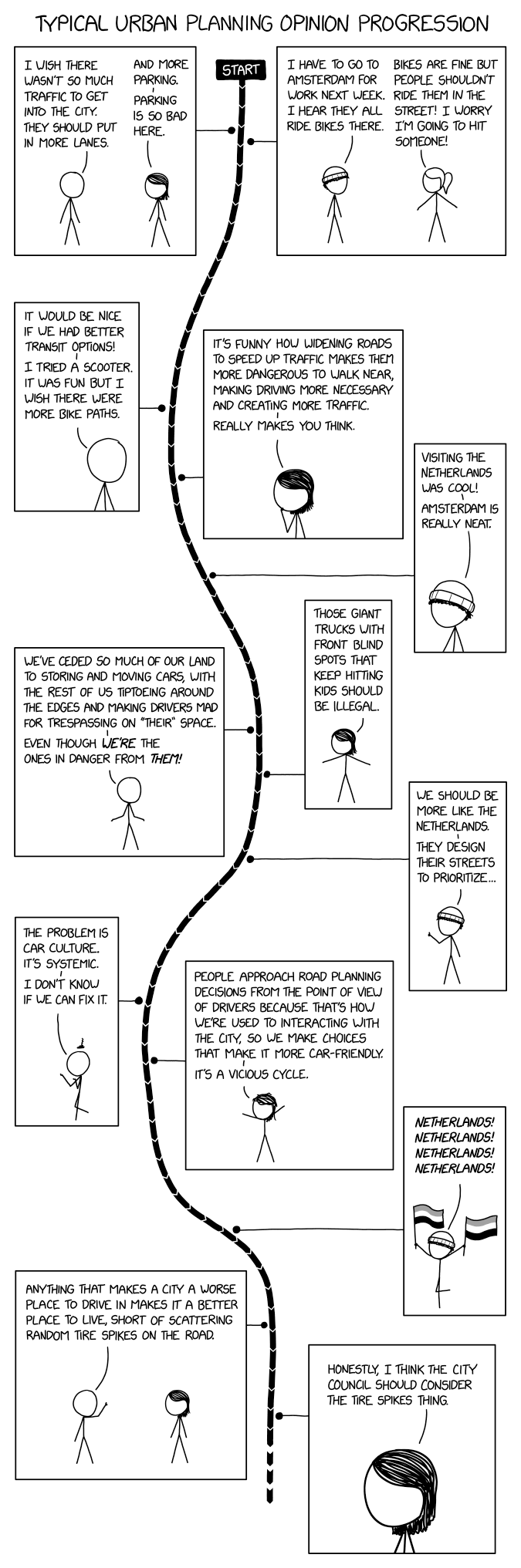
Urban Planning Opinion Progression
 ⌘ Read more
↳
In-reply-to
»
How is everyone finding GitHub CoPilot? 🤔 Good / Bad ? 🤔
⤋ Read More
- It’s criminal: Copilot was only possible because of massive theft of other peoples’ work (no compensation or even acknowledgement to any of the developers whose code was used to create Copilot)
- It’s positioned to put software developers out of work or so fully de-skill them that they no longer know how to code anything but prompts (after which come corporate-justified salary and benefits decreases)
Don’t use it. No one should ever use it. You’re destroying your own future as a software developer by leaning on and supporting these things.
↳
In-reply-to
»
Is FreeOTP any good? 🤔
⤋ Read More
@prologic@twtxt.net I use FreeOTP+ from F-Droid and it does what I need. It may be considered bad practice but I do use the import/export functionality to sync devices.
↳
In-reply-to
»
How is everyone finding GitHub CoPilot? 🤔 Good / Bad ? 🤔
⤋ Read More
@prologic@twtxt.net do not use it, but gave it a try early on and was not impressed. it gave a good outline of what I asked but then unreliably dorked up all the crucial parts.
I will say though if it is truly learning at the rate they say then it should be a good tool.
↳
In-reply-to
»
Time to write my own S3-compatible Object Storage server 🤣
⤋ Read More
@prologic@twtxt.net nice. i can see this being used for testing scenarios as well at work.
How Google Authenticator made one company’s network breach much, much worse | Ars Technica
🤦♂
WHY are these big companies treated as though they are the be all and end all of infosec? These are rookie mistakes Google’s making, at scale.
Unfortunately Google employs dark patterns to convince you to sync your MFA codes to the cloud, and our employee had indeed activated this “feature”. If you install Google Authenticator from the app store directly, and follow the suggested instructions, your MFA codes are by default saved to the cloud. If you want to disable it, there isn’t a clear way to “disable syncing to the cloud”, instead there is just a “unlink Google account” option.
Like, never ever put your multi-factor tokens into a single cloud storage location! The whole point of this being “multi” factor is that there is a separate, independent physical factor involved in the authentication process. If the authenticator app on your phone puts the tokens in the cloud, then it reduces the security that comes from having a second factor. This is basic stuff.
Of course, never ever use Google Authenticator. All it does is generate TOTP and HOTP codes, which you can do with any OTP app, preferably an open source one that’s been vetted.
↳
In-reply-to
»
Today I was fighting against a TOTP library in PHP, since it works for 6 and 8 digits, but for 10 it was giving inconsistent values, due to a conversion to a 32 bits int.
⤋ Read More
@eapl.me@eapl.me Hmmm interesting 🤔 Your trying to use 2FA as passwords? 🤔
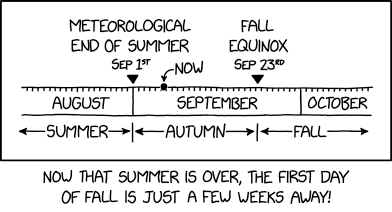
Autumn and Fall
 ⌘ Read more
GPT-4 wins chatbot lawyer contest – but is still not as good as humans
Several AI chatbots were tested to see how well they could perform legal reasoning and tasks used by human lawyers in everyday practice – GPT-4 performed the best, but still wasn’t great ⌘ Read more
Also I used to be ab5aa. The power outage changed my IP.
↳
In-reply-to
»
In setting up my own company and it's internal tools and services and supporting infrastructure, the ony thing I haven't figured out how to solve "really well" is Email, Calendar and Contacts 😢 All the options that exist "suck". They suck either in terms of "operational complexity and overheads" or "a poor user experience".
⤋ Read More
@prologic@twtxt.net I use the gmail webapp for work, and I have to say that over the years it’s gotten less and less usable. There are so many little usability things that it’s bad at. For instance, if you select a message and hit the Delete key nothing happens. The message is not put in the trash like you’d expect. There are issues like that scattered all over the app. I suspect they spend most of their energy on the spyware side of gmail and dedicate less to making it a useful app for end users (which seems to be true of their search engine too).
↳
In-reply-to
»
@adi @prologic It's worth bearing in mind that
⤋ Read More
@adi@twtxt.net I think it is, and one benefit they have is that you can add third-party repositories to the F-Droid app as you discover them. So, for instance, if you know of a developer who pushes builds to an F-Droid compatible repository, you can add that to your F-Droid app and start tracking updates like you would for any other app in there. Can’t do that with Google Play!
F-Droid tends to focus on open source applications that can be built in a reproducible way, which limits the inventory (though of course tends to mean the apps are safer and don’t spy on you). There are non-free apps in there as well but they come with warnings so you’re informed about what you might be sacrificing by using them.
That said if you have a favorite app you get through Google Play, there’s a decent chance it won’t be in F-Droid. Many “big corporate” apps aren’t, and vendor-specific apps tend not to be either. But for most of the major functions you might want, like email clients, calendar apps, weather apps, etc etc, there are very good substitutes now in F-Droid. You’re definitely making a trade-off though.
What I did was go through the apps I had installed on my last phone, found as many substitutes in F-Droid as I could, started using those instead to see how they worked, and bit by bit replaced as much as I could from Google Play with a comparable app from F-Droid. I still have a few apps (mostly vendor-specific things that don’t have substitutes) that come from Google Play but I’m aiming to be rid of those before I need to replace this phone.
↳
In-reply-to
»
@adi @prologic It's worth bearing in mind that
⤋ Read More
@prologic@twtxt.net I’ve had a Teracube phone for about 3 years now. Theirs comes with a guarantee of 4 years–if something that’s covered breaks, you send the phone to them and they fix it and send it back, or they send you a new one. I took advantage of that last year when the screen broke; their tech support even helped me figure out how to wipe the phone when the screen didn’t display anything. Pretty painless all around. Have to say I’ve been very happy with it. It doesn’t have the top-end features that new big company phones have, but I don’t want those features so that’s not an issue for me. I dunno if it’s available in Australia or if it’s just a US thing.
↳
In-reply-to
»
Oh btw all, Fairphone 5 is out https://www.fairphone.com/en/, I remember @jlj was interested in it! :D
⤋ Read More
@adi@twtxt.net @prologic@twtxt.net It’s worth bearing in mind that
- Fairphone has taken a considerable amount of VC funding so, sooner or later, that bill will become due: (see: https://techcrunch.com/2023/01/31/fairphone-growth-capital-raise and https://www.crunchbase.com/organization/fairphone)
- Fairphone comes with Google Play apps by default, so it’s also a spyware vector (see: https://mastodon.ar.al/@aral/110978014080809471)
I used to have a lot of hope for them but these two ingredients mean that enshittification is virtually inevitable.
↳
In-reply-to
»
What do we make of this? Sky News Australia interviews 'free-thinking' artificial intelligence - YouTube #OpenAI #Amica
⤋ Read More
@prologic@twtxt.net Horseshit hype:
- AI that we have today cannot think–there is no cognitive capacity
- AI that we have today cannot be interviewed–“inter” “viewing” is two minds interacting, but AI of today has no mind, which means this is a puppet show
- AI today is not free–it’s a tool, a machine, hardly different from a hammer. It does what a human directs it to do and has no drives, desires, or autonomy. What you’re seeing here is a fancy Mechnical Turk
This shit is probably paid for by AI companies who desperately want us to think of the AI as far more capable than it actually is, because that juices sales and gives them a way to argue they aren’t responsible for any harms it causes.
↳
In-reply-to
»
@mckinley Yes, I'm still with jmp.chat, and still very happy with them overall. Their beta period ended and their pricing increased a bit, so that's worth a bit of consideration. I also managed to get one of their eSIMs. I'm slightly less happy with that aspect of their service, though they seem to be actively working on improving it and I knew in advance this was an early beta kind of thing and likely to have issues.
⤋ Read More
@jmjl@tilde.green I’m sorry that I’m not super knowledgeable about alternatives to jmp.chat but I’ll tell you what I know.
You’re probably right about jmp.chat not working for you, at least as it is now. You can only get US and Canadian phone numbers through it last time I checked, so if you’re not in either of those countries you’d be making international calls all the time and people who wanted to call you would be making international calls too.
I’ve seen people talk about using SIP as an intermediary: you can bridge SIP-to-XMPP, and bridge SIP-to-PSTN (PSTN = “packet switched telephone network”, meaning normal telephone). You can skip the SIP-to-XMPP side if you’re comfortable using a SIP client. I don’t know very much about SIP or PSTN so I am not sure what to recommend, but perhaps this helps your search queries.
There are a fair number of services like TextNow that let you sign up for a real telephone number that you can then use via their app (I wouldn’t use TextNow–they had tons of spyware in their app). I don’t know if that kind of service works for you but if it does perhaps you’d be able to find one of them that isn’t horrible. This page (https://alternativeto.net/software/jmp-chat/) has a bunch of alternatives; I can’t vouch for any of them but maybe it’s a starting point if you want to go this route.
Good luck!
↳
In-reply-to
»
@abucci Are you still with jmp.chat? If so, are you still as happy as you were before? Have you experienced any reliability issues, especially with receiving phone calls?
⤋ Read More
@mckinley@twtxt.net Yes, I’m still with jmp.chat, and still very happy with them overall. Their beta period ended and their pricing increased a bit, so that’s worth a bit of consideration. I also managed to get one of their eSIMs. I’m slightly less happy with that aspect of their service, though they seem to be actively working on improving it and I knew in advance this was an early beta kind of thing and likely to have issues.
The only unreliability with calls that I’ve noticed was traceable to the unreliability of my own internet connection. I’ve confused incoming calls by simultaneously making and taking calls from the computer and the phone, but I think it’s understandable that problems might arise and that’s not a real use case for me. Once or twice I did not receive a text transcription of a voice mail, but the support is usually quick to address things like that.
I host my own XMPP server and have for a good decade now, and that’s what I use with jmp.chat. I can’t speak to the quality of their hosting options.
Group texting works fine for me if one of the other parties initiates the group text. I haven’t tried to initiate my own group text in well over a year; last time I did, it didn’t work. That may or may not be a problem for you, and it may or may not have been fixed by now. Worth investigating more if it’s important. I should also say I’ve only ever used group texts with 3 participants, and can’t speak to what happens if there are more nor whether there are upper limits.
Group texts don’t use MUC. Rather, they use a special syntax in the JID, something like “+1XXX,+1YYY,…,+1ZZZ@cheogram.com”, where the + and , are required, the XXX, YYY, through ZZZ are the phone numbers (no dashes or other special chars just digits), and the @cheogram.com at the end is required.
I recommend the cheogram app if you’re on android. It has a lot of nice features on top of the Conversations base. I use gajim on my (linux) computer and it works well with jmp.chat.
I’m happy to answer other questions if you have them!
Yes, no loading messages = cache in Lynx. Use emoticons. Most fonts, especially system ones, don’t support emojis. :)
bd1c8: Yes, lynx is using cache for that reason. Refresh with ^R.
Actually I might just be Lynx. Cause even without torsocks my messages dissapear when I refresh chat. Is Lynx using a previous document so it doesn’t have to get it from the server again or something?
As soon as I stop using Torsocks I can see my messages