I’m still alive ! Here’s a quick, brainless recap dump before I switch back to the other side:
- Been daily driving FreeBSD on the o(ther)ld machine for the last couple of days.
- Read through the handbook, played around with jails, pulled on my hair because of network issues (I think I might have maybe fixed that) … etc.
- Still procrastinating over migrating my Jenny/Mutt setup out there. until then, I’ll be getting my Twtxt fix reading through conversations over on the twtxt.net ✌
- Gave a couple of Nostr based platforms a try, it was … not for me to say the least.
- Started learning Emacs (I know, I’m in trouble LOL) and might even start twtin’ from there instead.
Some clunking machine at the coffeeshop is in perfect sync with the pop song playing on the sound system.
↳
In-reply-to
»
Planning a file back up from an old machine that's been sitting in the corner gathering dust... Because I know ! I'm about to eff it up, BIIIIG Time ! 😂
⤋ Read More
I’ve ripped off it’s GPU about a year ago to rescue another computer … Now I’m stuck with only SSH to play with it. Since it came with just a VGA port for display and my monitor takes all but THAT!
DiggieDog in Play store is good.
↳
In-reply-to
»
Is Yarn.social dead or just too niche? (uyrrria) 🧐
⤋ Read More
I think @abucci@anthony.buc.ci and @stigatle@yarn.stigatle.no are running snac? I didn’t have a closer look at snac (no intention of running it), but if that is a relatively small daemon (maybe comparable to Yarn?) that gives you access to the whole world of ActivityPub, then, well, yeah … That’s tough to beat.
Yes, I am running snac on the same VPS where I run my yarn pod. I heard of it from @stigatle@yarn.stigatle.no, so blame him 😏 snac is written in C and is one simple executable, uses very little resources on the server, and stores everything in JSON files (no databases or other integrations; easy to save and migrate your data) . It’s definitely like yarn in that respect.
I haven’t been around yarn much lately. Part of that is that I’ve been very busy at work and home and only have a limited time to spend goofing off on a social network. Part of it is that I’m finding snac very useful: I’ve connected with friends I’d previously lost touch with, I’ve found useful work-related information, I’ve found colleagues to follow, and even found interesting conferences to attend. There’s a lot more going on over there.
I guess if I had to put it simply, I’d say I have limited time to play and there are more kids in the ActivityPub sandbox than this one. That’s not a ding on yarn–I like yarn and twtxt–I’m just time constrained.
This is how I play music. Find what I want on YT, download it to my dektop as an mp3 then I transfer it to a small mp3 player then I can plug that into a small speaker or a big one using a short audio lead
↳
In-reply-to
»
I’m this close to making an Android app for managing a shopping list.
⤋ Read More
@movq@www.uninformativ.de For syncing notes between computers and phones I’ve been very happy with Simple Text - w Dropbox sync for some year, but transitioned to Joplin around new year. Both sync via Dropbox and for Joplin there are also more free options. I guess you could even use something like Syncthing
I like it when I’m too distracted to want decide what to play, but there is a tape waiting to be flipped since yesterday.
↳
In-reply-to
»
I finally found the NASM assembler.
⤋ Read More
@movq@www.uninformativ.de NASM is great. I remember playing with it back in my HS days. It has lots of little helps to make assembly more approachable.
Played our first “Ticket To Ride” boardgame today.
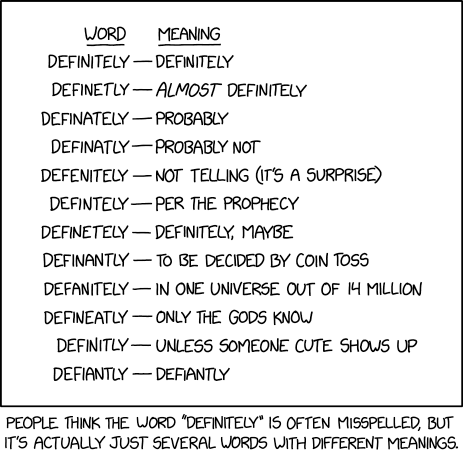
Definitely
 ⌘ Read more
Pinellas County - Easy: 4.06 miles, 00:09:43 average pace, 00:39:29 duration
did not want to get out of bed. played this one by feel and was not surprised by the results.
#running
Full moon tonight: time to play #nethack :)
↳
In-reply-to
»
@eapl.me Which problems are those? 🤔
⤋ Read More
@movq@www.uninformativ.de I played that DOS Tetris game too over and over on my PC, mezmerized over the 3D graphics.
↳
In-reply-to
»
I've been reading "Shareware Heroes: The renegades who redefined gaming at the dawn of the internet" learning of games developed before I was born, or when was too small.
I'm finding old gems to play and understanding that we have the same problems developing games 30+ years after, although with some obvious differences.
⤋ Read More
I remember playing a bunch of Tetris style games with my sister we would find on BBSs back in the day. I remember one that was a hexigon style one where the falling pieces were built of hexigons and you had to have them fall in place.
↳
In-reply-to
»
I've been reading "Shareware Heroes: The renegades who redefined gaming at the dawn of the internet" learning of games developed before I was born, or when was too small.
I'm finding old gems to play and understanding that we have the same problems developing games 30+ years after, although with some obvious differences.
⤋ Read More
@eapl.me@eapl.me Which problems are those? 🤔
The only “advanced” Tetris I played back then was “Block Out”:
https://www.youtube.com/watch?v=ZpeSH6pbio4
Except it didn’t run nearly as smooth as in this video. 😅
I’ve been reading “Shareware Heroes: The renegades who redefined gaming at the dawn of the internet” learning of games developed before I was born, or when was too small.
I’m finding old gems to play and understanding that we have the same problems developing games 30+ years after, although with some obvious differences.
Currently playing:
https://www.classicdosgames.com/game/Kentris.html
Which reminds me of another Tetris I don’t know how it came to my PC in the 90s.
https://www.youtube.com/watch?v=VaK7v8UNjo0
↳
In-reply-to
»
Game-playing DeepMind AI can beat top humans at chess, Go and poker
An artificial intelligence capable of beating humans at a variety of games is an important step towards a more general intelligence, says Google DeepMind ⌘ Read more
⤋ Read More
@New_scientist@feeds.twtxt.net No it isn’t. The prejudice that playing board games is indicative of general intelligence is passe, outdated.
Game-playing DeepMind AI can beat top humans at chess, Go and poker
An artificial intelligence capable of beating humans at a variety of games is an important step towards a more general intelligence, says Google DeepMind ⌘ Read more
↳
In-reply-to
»
Diving into vintage games, roms, emulators and raspberry/retropie's mode.
Now waiting to enjoy Family computer, last acquisition 😍😍
⤋ Read More
[lang=en] hey! What are you playing now?
I’ve been into Pokémon Black, although it’s going slowly and switched to a more recent game, Inscryption, which has a 90s-2000s vibes.
The amount of shady Android apps in Google’s “Play Store” is so large, it makes me want to write my own software instead. 😖
Playing ping pong with my wife on the dining room table
↳
In-reply-to
»
@adi @prologic It's worth bearing in mind that
⤋ Read More
@adi@twtxt.net I think it is, and one benefit they have is that you can add third-party repositories to the F-Droid app as you discover them. So, for instance, if you know of a developer who pushes builds to an F-Droid compatible repository, you can add that to your F-Droid app and start tracking updates like you would for any other app in there. Can’t do that with Google Play!
F-Droid tends to focus on open source applications that can be built in a reproducible way, which limits the inventory (though of course tends to mean the apps are safer and don’t spy on you). There are non-free apps in there as well but they come with warnings so you’re informed about what you might be sacrificing by using them.
That said if you have a favorite app you get through Google Play, there’s a decent chance it won’t be in F-Droid. Many “big corporate” apps aren’t, and vendor-specific apps tend not to be either. But for most of the major functions you might want, like email clients, calendar apps, weather apps, etc etc, there are very good substitutes now in F-Droid. You’re definitely making a trade-off though.
What I did was go through the apps I had installed on my last phone, found as many substitutes in F-Droid as I could, started using those instead to see how they worked, and bit by bit replaced as much as I could from Google Play with a comparable app from F-Droid. I still have a few apps (mostly vendor-specific things that don’t have substitutes) that come from Google Play but I’m aiming to be rid of those before I need to replace this phone.
↳
In-reply-to
»
@adi @prologic It's worth bearing in mind that
⤋ Read More
@adi@twtxt.net @prologic@twtxt.net F-droid. Getting APKs from developers you trust and side-loading them. Some flavor of Linux. Some distro of the open source parts of Android.
There are lots of options. Bit by bit I divest from anything that’s distributed from Google Play. With my latest phone I find and download APKs so that I could have the app without all the Google crap woven through it. By the time I need to replace this one I’ll be fully free of Google Play. Most of my apps come from F-droid now. You can a perfectly functional phone/pocket computer unless you’re addicted to installing dozens of corporate apps.
↳
In-reply-to
»
Oh btw all, Fairphone 5 is out https://www.fairphone.com/en/, I remember @jlj was interested in it! :D
⤋ Read More
@adi@twtxt.net @prologic@twtxt.net It’s worth bearing in mind that
- Fairphone has taken a considerable amount of VC funding so, sooner or later, that bill will become due: (see: https://techcrunch.com/2023/01/31/fairphone-growth-capital-raise and https://www.crunchbase.com/organization/fairphone)
- Fairphone comes with Google Play apps by default, so it’s also a spyware vector (see: https://mastodon.ar.al/@aral/110978014080809471)
I used to have a lot of hope for them but these two ingredients mean that enshittification is virtually inevitable.
↳
In-reply-to
»
@prologic I don't understand what you're saying.
⤋ Read More
podman works with TLS. It does not have the "--docker" siwtch so you have to remove that and use the exact replacement commands that were in that github comment.
@prologic@twtxt.net hmm, bummer. I was hoping that translating the docker commands to podman syntax would work but it looks like it’s more subtle than that. Thanks for trying!
The weird thing was I wasn’t getting errors like that on my end when I tried it. podman thought the connection was created, and it set it as the default. But I don’t think it was sending anything over the wire. When I have more time to tinker with it maybe I’ll play around and see if I can figure out what’s up.
↳
In-reply-to
»
My proof-of-concept Container as a Service (CAS or CaaS) is now up and running. If anyone wants to have a play? 🤔 There's still heaps to do, lots of "features" missing, but you can run stuff at least 😅
⤋ Read More
@prologic@twtxt.net I had a feeling my container was not running remotely. It was too crisp.
podman is definitely capable of it. I’ve never used those features though so I’d have to play around with it awhile to understand how it works and then maybe I’d have a better idea of whether it’s possible to get it to work with cas.run.
There’s a podman-specific way of allowing remote container execution that wouldn’t be too hard to support alongside docker if you wanted to go that route. Personally I don’t use docker–too fat, too corporate. podman is lightweight and does virtually everything I’d want to use docker to do.
My proof-of-concept Container as a Service (CAS or CaaS) is now up and running. If anyone wants to have a play? 🤔 There’s still heaps to do, lots of “features” missing, but you can run stuff at least 😅
ssh -p 2222 cas.run help
Just been playing around with some numbers… A typical small static website or blog could be run for $0.30-$0.40 USD/month. How does that compare with what you’re paying @mckinley@twtxt.net ? 🤔
↳
In-reply-to
»
Yep, that's right, we have to use these tools in a proper way; terminal it’s not a friendly tool to use for this kind of stuff, on mobile devices, and web interfaces are prepared to bring us a confortable space.
⤋ Read More
[lang=en] By the way, have you played with Station on Gemini?
I like that using Gemtext, you can have a pretty decent microblogging platform. Imagine that with decentralization from twtxt. That sounds appealing to me!
I’m playing around with snac2, which I think @stigatle@yarn.stigatle.no mentioned on here, and I have to say it’s extremely easy to set up and it’s been pretty straightforward so far. I wanted to experiment with having a presence on the Fediverse without going through the process of picking Mastodon vs. Gnu Social vs. Friendica vs. …, and I wanted to self-host instead of picking an instance of one of those. For now I’m abucci@buc.ci, but no guarantees that will remain stable; I’m just testing for the time being.
↳
In-reply-to
»
@prologic is goryon not in the google app store?
⤋ Read More
@prologic@twtxt.net bummer, that’s a shame. I ask because I install the vast majority of my phone apps from f-droid these days, and only use Google Play Store when I have no other option. I know the Play Store will have more reach, but I’m guessing reach isn’t the highest priority right now.
No worries about the Panthers. It was a playoff bandwagon. Vegas played great.
I made a website for my band in which i play the keyboard. https://relics-rockband.de
I played with nlpodyssey/verbaflow: Neural Language Model for Go today a little bit today…. First I had to download a ~2GB file (the model), then convert that to a format the program verbaflow understands which came out to roughly ~5GB. Then I tried some of the samples in the README. My god, this this is so goddamn awfully slow its like watching paint dry 😱 All just to predict the next few tokens?! 😳 I had a look at the resource utilisation as well as it was trying to do this “work”, using 100% of 1.5 Cores and ~10GB of Memory 😳 Who da fuq actually thinks any of this large language model (LLM) and neural network crap is actually any good or useful? 🤔 Its just garbage 🤣
↳
In-reply-to
»
Metaverse Could Contribute Up To 2.4% of US GDP By 2035, Study Shows
A study commissioned by Meta has found that the metaverse could contribute around 2.4% to U.S. annual GDP by 2035, equating to as much as $760 billion. Reuters reports: The concept of the metaverse includes augmented and virtual reality technologies that allow users to immerse themselves in a virtual world or overlay information digitally on ... ⌘ Read more
⤋ Read More
@prologic@twtxt.net I think those headsets were not particularly usable for things like web browsing because the resolution was too low, something like 1080p if I recall correctly. A very small screen at that resolution close to your eye is going to look grainy. You’d need 4k at least, I think, before you could realistically have text and stuff like that be zoomable and readable for low vision people. The hardware isn’t quite there yet, and the headsets that can do that kind of resolution are extremely expensive.
But yeah, even so I can imagine the metaverse wouldn’t be very helpful for low vision people as things stand today, even with higher resolution. I’ve played VR games and that was fine, but I’ve never tried to do work of any kind.
I guess where I’m coming from is that even though I’m low vision, I can work effectively on a modern OS because of the accessibility features. I also do a lot of crap like take pictures of things with my smartphone then zoom into the picture to see detail (like words on street signs) that my eyes can’t see normally. That feels very much like rudimentary augmented reality that an appropriately-designed headset could mostly automate. VR/AR/metaverse isn’t there yet, but it seems at least possible for the hardware and software to develop accessibility features that would make it workable for low vision people.
I am playing some ambient music that begins with a sound that’s a bit like the drone of an airplane engine, and I spent a good minute or two adjusting the volume wondering why the music wasn’t playing because I thought it was a plane🤦♂
I played around with parsers. This time I experimented with parser combinators for twt message text tokenization. Basically, extract mentions, subjects, URLs, media and regular text. It’s kinda nice, although my solution is not completely elegant, I have to say. Especially my communication protocol between different steps for intermediate results is really ugly. Not sure about performance, I reckon a hand-written state machine parser would be quite a bit faster. I need to write a second parser and then benchmark them.
lexer.go and newparser.go resemble the parser combinators: https://git.isobeef.org/lyse/tt2/-/commit/4d481acad0213771fe5804917576388f51c340c0 It’s far from finished yet.
The first attempt in parser.go doesn’t work as my backtracking is not accounted for, I noticed only later, that I have to do that. With twt message texts there is no real error in parsing. Just regular text as a “fallback”. So it works a bit differently than parsing a real language. No error reporting required, except maybe for debugging. My goal was to port my Python code as closely as possible. But then the runes in the string gave me a bit of a headache, so I thought I just build myself a nice reader abstraction. When I noticed the missing backtracking, I then decided to give parser combinators a try instead of improving on my look ahead reader. It only later occurred to me, that I could have just used a rune slice instead of a string. With that, porting the Python code should have been straightforward.
Yeah, all this doesn’t probably make sense, unless you look at the code. And even then, you have to learn the ropes a bit. Sorry for the noise. :-)
[RadioDroid] y [Audials Play] son las mejores apps para escuchar la radio online.
[RadioDroid] y [Audials Play] son las mejores apps para escuchar la radio online.
@prologic@twtxt.net @movq@www.uninformativ.de this is the default behavior of pass on my machine:
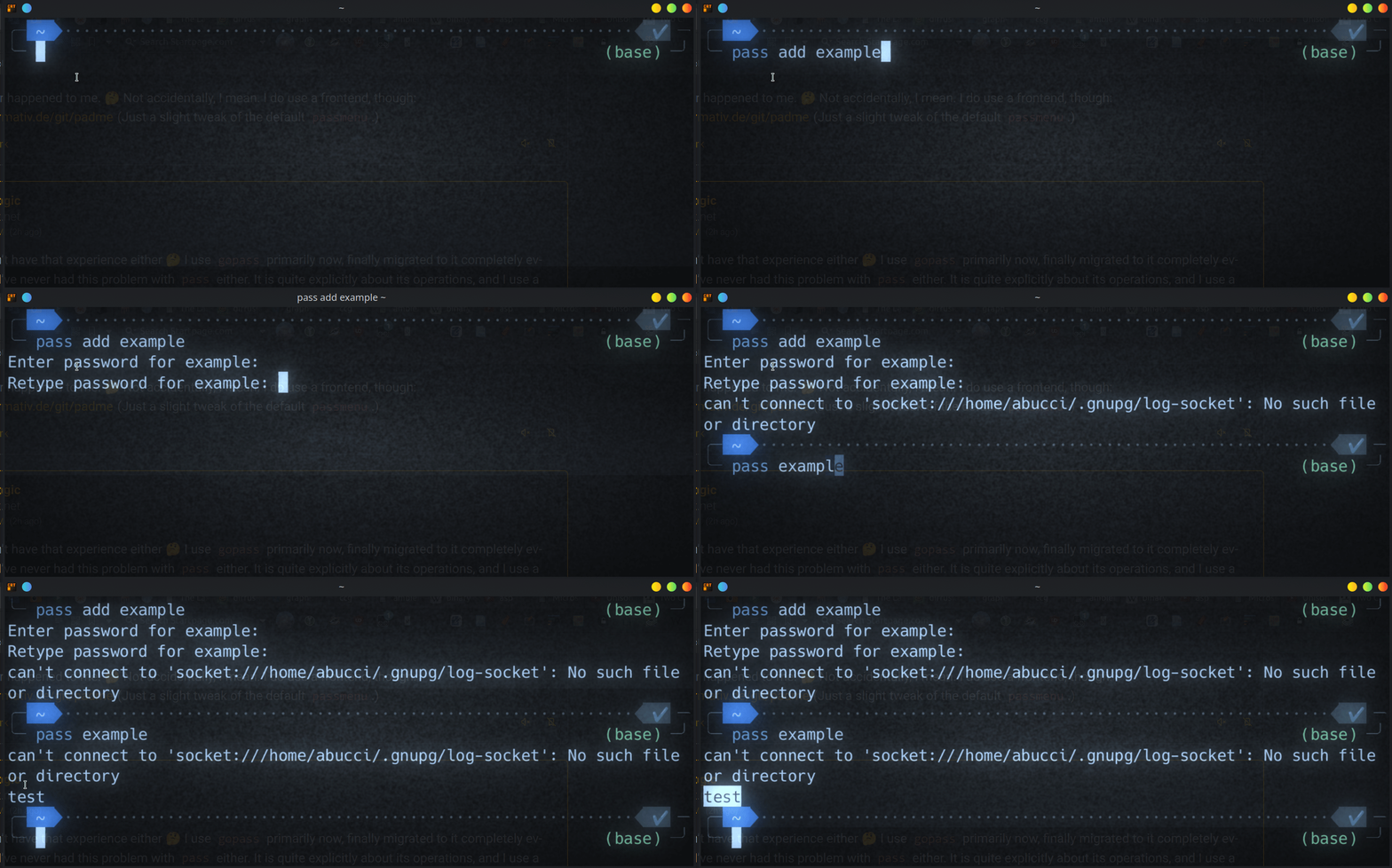
I add a new password entry named example and then type pass example. The password I chose, “test”, is displayed in cleartext. This is very bad default behavior. I don’t know about the other clis you both mentioned but I’ll check them out.
The browser plugin browserpass does the same kind of thing, though I have already removed it and I’m not going to reinstall it to make a movie. Next to each credential there’s an icon to copy the username to the clipboard, an icon to copy the password to the clipboard, and then an icon to view details, which shows you everything, including the password, in cleartext. The screencap in the Chrome store is out of date; it doesn’t show the offending link to show all details, which I know is there because I literally installed it today and played with it.
Bluetooth Domino https://play.google.com/store/apps/details?id=ratmil.domino
Bluetooth Domino https://play.google.com/store/apps/details?id=ratmil.domino
9-3 FSU gets to play 6-6 Oklahoma… Gotta love these profit-fueled matchups. At least 6-6 UF should get blasted by 9-3 Oregon State.
One bowl matchup has FSU playing Minnesota in the Mayo Bowl (NC). I’d prefer a FL bowl and FSU/Texas in Orlando is a strong possibility.
I haven’t seen Netherland play yet, so not sure who their best players are.
@b9056, Iran played USA hard. I did not realize I could hold my breath for 10 minutes. That was a lot of added time.
Always something fun to play around with in Gopherspace